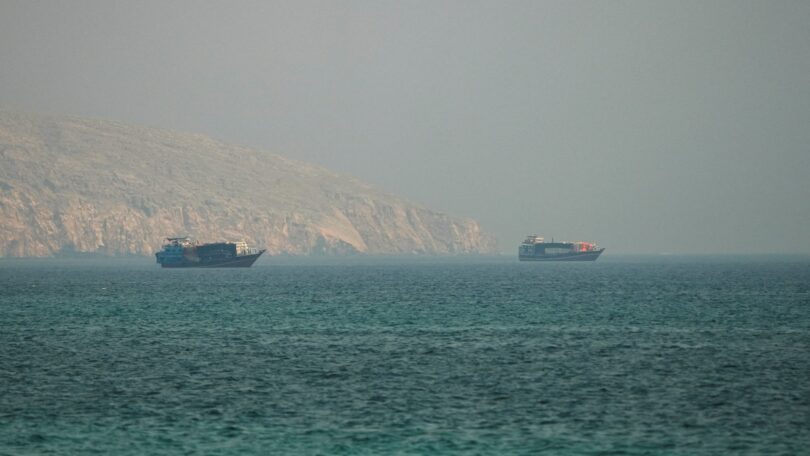
Iran has rushed out five supertankers and one Suezmax vessel carrying roughly 11 million barrels of crude in the past 24 hours, as strikes between the US and Iran threaten to escalate into another blockade on its ports, Bloomberg reported on Thursday.
Four of the vessels leaving Iranian ports today signalled positions in the Gulf of Oman, and another was transiting the Strait of Hormuz, according to Bloomberg’s tanker-tracking data.
The vessels were dispatched immediately after a second day that US military strikes targeted civilian infrastructure like railway bridges, killing 14 people and injuring 78, leaving 47 in hospital, according to Iranian health ministry spokesperson Hossein Kermanpour.
The renewed strikes threaten to shatter the Islamabad memorandum of understanding, bringing maritime traffic through the Strait of Hormuz to a cautious standstill.
The strikes have stirred the energy market, sending oil prices up nearly nine percent this week to trade near $79 a barrel on Thursday.
CLICK FOLLOW: TO FOLLOW US
Sign up to get the latest insights and analysis on
Israel-Palestine, alongside Turkey Unpacked and other eSPORTY
Eleven million barrels are close to a week’s worth of Iran’s pre-war exports, though it’s unclear whether there are buyers for the shipments.
On Tuesday, tens of millions of barrels of Iranian oil were halted after the Trump administration revoked a waiver that temporarily lifted oil sanctions on Iran after several vessels in Qatar and Saudi Arabia came under attack from Iran.
Iran’s Islamic Revolutionary Guard Corps (IRGC) navy said on Thursday that US attacks on Iran and intervention in redirecting shipping through the Strait of Hormuz were disrupting its reopening and warned that any further US intervention would draw a “crushing response”.
The Strait of Hormuz has become the most significant flashpoint between the US and Iran, overshadowing Iran’s nuclear programme, which has for years been the primary source of tension between the two countries.
Back and forth on the strait
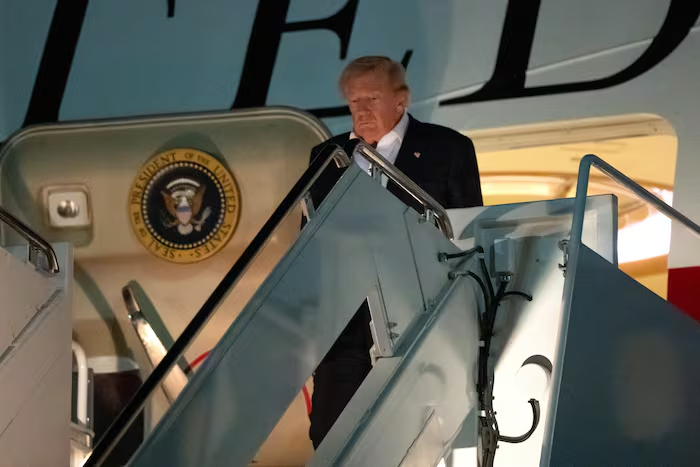
Ahead of signing the MoU in June, Trump said on the sidelines of the G-7 summit, “I didn’t want to see an economic catastrophe.”
Trump’s remarks at the time confirmed that Iran’s blockade of the Strait of Hormuz was inflicting enough economic damage that his administration was jolted into a 60-day ceasefire extension it announced on Sunday.
The White House said the talks would lead to a permanent end to the war through subsequent negotiations.
Iran, Oman to jointly charge fees along Strait of Hormuz: Report
Read More »
Under the MoU, the Strait of Hormuz would remain toll-free for 60 days, but its future would be negotiated, leaving the door open to potential fees and giving Iran more control over the essential waterway than it has had in the past.
“The Islamic Republic of Iran will conduct dialogue with the Sultanate of Oman to define the future administration and maritime services in the Strait of Hormuz, in discussion with other Persian Gulf littoral states in line with the applicable international law,” according to the briefing.
Since then, the US issued a waiver on Iran’s oil sales, a decision that was a major sticking point in negotiations between the two sides.
The waiver originally allowed the Islamic Republic to produce, sell and deliver crude oil and related products through 21 August. The US tied sanctions relief to progress in talks over a permanent end to the war. That waiver was cancelled when Iran attacked vessels in the strait on Tuesday.
Trump has been dismissive about the MoU’s strength in the past, foreshadowing what has taken place this week.
“It’s a memorandum of understanding. And if I don’t like it, we’ll go back to shooting at them, dropping bombs on their head,” Trump said in June.
“If I don’t like it, if they don’t behave, we’ll go right back to dropping bombs right smack in the middle of their head, OK?”