
Following unprecedented growth this year, the S&P 500 (^GSPC+0.00%), Nasdaq Composite (^IXIC0.80%), and Dow Jones Industrial Average (^DJI+1.14%) have experienced fluctuations in recent weeks, leaving many investors uncertain about future developments.
According to a June 2026 survey conducted by the American Association of Individual Investors, approximately 45% of U.S. investors express optimism regarding the market’s performance over the next six months, in contrast to 36% who hold a pessimistic view and 19% who remain neutral.
Simultaneously, CNN’s Fear and Greed Index, which gauges investor sentiment through various stock market indicators, has predominantly remained in the “fear” category throughout most of June.
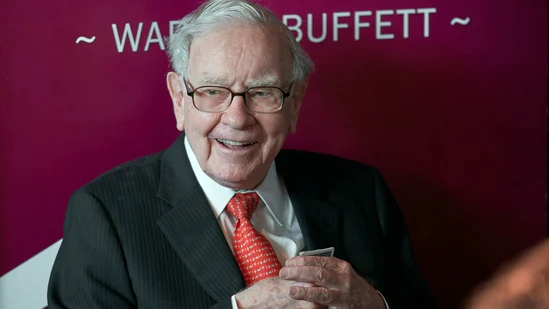
Moreover, Wall Street experts are divided on whether we are experiencing an AI bubble or if the market still possesses significant growth potential. Although investing icon Warren Buffett cannot foresee the future, he recently provided some cautionary advice, and historical trends suggest that investors ought to heed his words.
Also Read: Why Microsoft, Amazon, Google and Meta are spending billions on AI: Explained
Investors might be assuming unwarranted risks
In a discussion with CNBC at Berkshire Hathaway’s annual meeting earlier this year, Buffett compared the stock market to a church with an adjoining casino. The church symbolizes his long-term investment approach, while the casino signifies those who engage in short-term bets on volatile stocks.
He further cautioned that “we’ve never had people in a more gambling mood than now,” as an increasing number of investors are drawn to high-risk short-term investments.
Historical evidence indicates that Buffett’s perspective is accurate. While overvalued stocks may experience a temporary surge due to significant hype, such price levels are generally not sustainable over time. Acquiring these stocks at peak prices can be exceedingly perilous, as they tend to suffer the most during bear markets or economic downturns, The Motley Fool reported.
For example, during the dot-com bubble, several technology firms achieved unprecedented valuations only to plummet in the subsequent bear market. Despite their inflated stock prices, these companies were often devoid of robust foundations to rely on, leading many to fail when the bubble eventually burst.
What investors can do at this moment
No market indicator is infallible, thus there are no assurances that a downturn is imminent, as per The Motley Fool. Nevertheless, it is always prudent to prepare, and there are two essential strategies investors can adopt to safeguard their portfolios: invest in high-quality companies with strong fundamentals, and maintain their investments during the market’s turbulent periods.
Firms with solid foundations — including a sustainable business model and an effective leadership team — are most likely to succeed over the long term. The most promising stocks are typically either undervalued or fairly valued, as overvalued stocks generally tend to lag behind the market.
Secondly, maintaining a long-term perspective is essential. Buffett has consistently advocated for a buy-and-hold approach, famously declaring that his preferred duration for holding robust stocks is “forever.” The S&P 500 has achieved total returns exceeding 758% over the past 20 years (up to the first half of 2026), demonstrating that remaining invested in the market is significantly more advantageous than attempting to time it.
No one, not even Warren Buffett, can predict the market’s position in one or two years. However, given that many stocks are currently overvalued, focusing on high-quality companies with long-term growth potential will be crucial for navigating any forthcoming volatility.