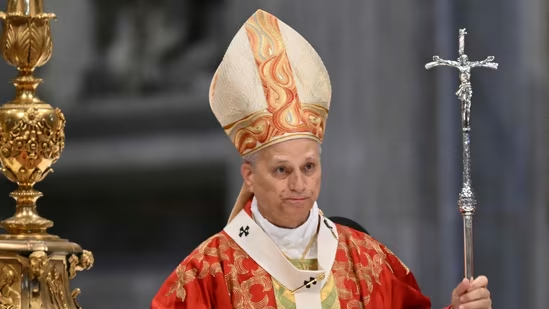
The Vatican has excommunicated members of the conservative Catholic group Society of St Pius X (SSPX). This came a day after it defied Pope Leo XIV by consecrating four new bishops without his approval, despite repeated warnings from the Vatican not to do so.
The papacy has now expelled SSPX priests and Catholics who officially identify with the group. The SSPX can no longer officially perform important Church ceremonies such as marriages and confessions, the Vatican said.
Also read: Pope Leo says Christians cannot promote war
What is the Society of St. Pius X?
The SSPX was founded in 1970 by French Archbishop Marcel Lefebvre. The group opposed many of the reforms introduced by the Second Vatican Council (Vatican II), a series of meetings held between 1962 and 1965 that modernised many aspects of the Catholic Church.
Among the biggest changes were allowing Mass to be celebrated in local languages instead of only Latin, encouraging dialogue with other Christian denominations and religions and giving common people a larger role in Church life.
The SSPX says these reforms moved the Church away from its traditions.
Today, the group operates hundreds of churches, seminaries and religious communities across dozens of countries. It has hundreds of priests and serves a worldwide community of traditionalist Catholics.
What happened?
On July 1, the SSPX held a large ceremony at its seminary in Econe, Switzerland, where it consecrated four new bishops without permission from Pope Leo.
Also read: Pope Leo urges global leaders to shun polarisation, listen to calls for peace
In the Catholic Church, appointing a bishop is one of the most important decisions. Normally, only the Pope can authorise the consecration of new bishops. Going ahead without that approval is considered a direct challenge to the Pope’s authority.
Before the ceremony, Pope Leo appealed to the group’s leader, Reverand Davide Pagliarani, asking him to stop. “I implore you and ask you with all my heart: Turn back!” he said, as quoted by the Religion News Service.
The Pope said that the consecrations would be a “sin of extreme gravity” because they threatened the unity of the Church.
The SSPX ignored the appeal.
At the start of the ceremony, the group declared that any punishment imposed by the Vatican “will have no validity”.
More than 16,000 people attended the five-hour Mass, which was celebrated almost entirely in Latin.
Why the Vatican responded so strongly
For Catholics, unity with the pope is a major part of the faith. The Vatican said the SSPX’s decision was rejecting papal authority. Because of that, the Vatican declared the group to be in schism, meaning it has formally broken communion with the Catholic Church.
The decree went further than many expected. Besides automatically excommunicating the bishops involved in the consecration, it also said SSPX priests and Catholics who knowingly remain part of the movement are outside the Church.
The Vatican, though, said former members can return if they reconcile with the Church. Only those who “habitually participate” in SSPX celebrations and “formally share its doctrinal positions” would be expelled, BBC reported.
SSPX stand
The SSPX says it consecrated the new bishops to preserve traditional Catholic teaching and ensure its future leadership, as only two of its senior bishops remain alive. The group insists it acted to protect the Church, not to rebel against it.
During the ceremony, SSPX superior general reverand Davide Pagliarani said, “We have to be ready to pay whatever price to serve the Church. And whatever the sacrifices God asks of us, even if it means we are treated as rebels,” NPR reported.
Claims that the group oppose the Pope were rejected.
“We are accused of not loving the Pope. It’s precisely because we love the Pope as the vicar of Christ that we do not want to see the Pope humiliated anymore, next to false priests representing false religions.”
Has this happened before?
The latest dispute closely mirrors events from 1988. That year, Archbishop Marcel Lefebvre also consecrated four bishops without permission from Pope John Paul II, according to Vatican News.
The Vatican declared the act schismatic and excommunicated Lefebvre and the four bishops. One of those bishops was Alfonso de Galarreta, who led this week’s consecration ceremony and has now been excommunicated again.
In 2009, Pope Benedict XVI lifted the excommunications of four SSPX bishops to try to improve relations, but the group never fully returned to the Catholic Church’s fold.
Pope Francis later allowed its priests to hear confessions and, in some cases, conduct marriages. The Vatican has now withdrawn those permissions, saying the SSPX can no longer officially perform those ceremonies.