Life saving efforts did nothing to stop the bleeding (Image: Getty Images)
A 41-year-old man suffered terrifying final moments after a “very large” shark tore off both of his legs as horrified onlookers watched from the beach.
Japanese surfer Tadashi Nakahara was lying on his surfboard waiting for a wave when the shark attacked on an Australian beach in 2016.
Fellow surfer Allan Baldock spotted Tadashi sitting on his surfboard roughly 10m from the shore. “It went whack and he was thrown into the air … it must have been a huge, huge shark,” Baldock told Guardian Australia.
His fellow surfers hauled him to shore and frantically tried to stem the bleeding using tourniquets and CPR, but tragically they could not save him.
Another surfer, Darren Rodgers, who was carrying out life-saving measures, told SBS: “The other two guys were attempting to put leg rope around his injuries like tourniquets, and I started giving him CPR. I was completely unprepared for just how devastating the incident was. I didn’t realise how intimate CPR is.”, reports the Irish Mirror.

The man is believed to have been attacked by a great white (Image: Getty Images/iStockphoto)
“I could hear sirens in the background, and after an eternity of breathing and looking into his eyes, I felt like I got a breath from him. The other two had lifted his legs to keep the blood flowing to his heart and his head.
“I yelled at everyone to be quiet and I put my ear to his mouth. I thought I saw his eyes move but the paramedics later told me that was just his brain shutting down, the final stages of passing away. Leaving the scene I was in complete shock.”
The fatal incident took place at Ballina, New South Wales, merely 12 miles from where fellow surfer Jabez Reitman, 35, had been attacked just hours earlier in February 2015.
It is understood Tadashi lived in the Ballina area, working in a surf shop and as a hotel cleaner, according to abc. David Wright, mayor of Ballina, said: “Because both legs were gone, he bled to death very quickly.”

Tadashi Nakahara worked in a nearby surf shop and hotel (Image: Facebook)
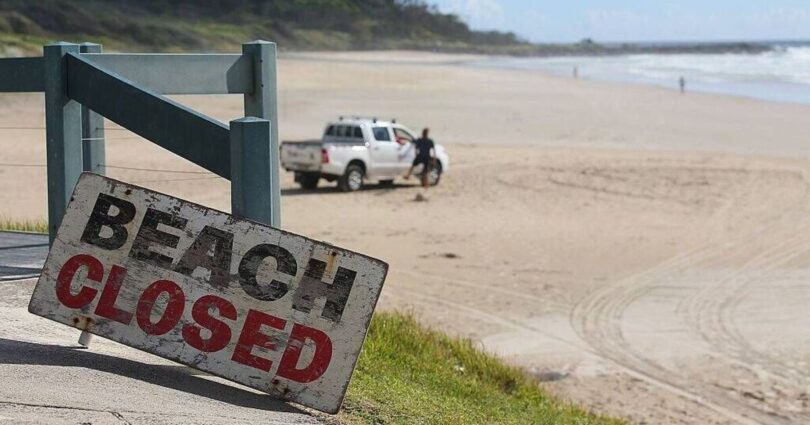
Shelly Beach, where the deadly attack occurred, was immediately closed, alongside a wider section of coastline, as authorities initiated a search for the shark.
The mayor said: “Some surfers were out on their boards … and during that time a shark has come up behind a board paddler who was just sitting on his board and it’s taken the back of the board and part of the gentleman.
“His mates quickly pulled him in and they tried to do resuscitation but he died. They tried everything they could but he was deceased.
“It’s a terrible tragedy. He’s a local man of Japanese origin. It hurts. Everyone in town is just dumbfounded. This shark is just cruising around. I’m a supporter of sharks but something has to be done about this one.”
Only hours before, another surfer was attacked just moments along the coast. Describing his own harrowing experience on nearby Seven Mile Beach, surfer Jabez Reitman said: “I just freaked out.
“I thought it was a dolphin at first until I started feeling and realized it was pretty significant lacerations.”
Reitman had been surfing off Seven Mile Beach, near the popular tourist destination of Byron Bay, when he was bitten by what he described as a 2-to-3-metre shark. “I should’ve stayed in bed,” he said of his decision to go surfing.
Reitman was subsequently transferred from Byron Bay to Gold Coast University Hospital, where his condition was reported as stable. Ballina’s mayor, Wright, suggested the two incidents were probably linked, given how similar and close together they were.

The beach is a popular surfing location for locals (Image: AFP via Getty Images)
However, he observed that locals, while subdued, were not overly concerned.
“It’s just an accident,” Wright said. In September, a 50-year-old swimmer lost their life in a shark attack at Byron Bay.
While sharks are regularly sighted off Australia’s coastlines, and this was the sixth in two months, fatal encounters remain uncommon; the country has recorded an average of fewer than two deadly attacks annually over recent decades.