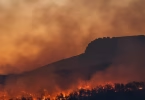
Utah Governor Spencer Cox declared a statewide emergency on Thursday as the Cottonwood Fire grew into the largest active wildfire.
The neighboring surroundings are covered in billowing smoke. Additionally, smoke columns are still visible from all over the state, which has an impact on the quality of the air at well-liked tourist destinations like Bryce Canyon and Zion National Parks, which are located far south of the flames.
As a heat wave engulfs the US West Coast, more fire danger is anticipated, with concerning circumstances for states like Colorado and Arizona.
Also read: Allentown, PA fire update: Massive blaze in Front and Gordon Streets area; scary videos emerge – watch
Utah’s largest fire
The fire started on June 22. In four days, it overtook every other active wildfire in the country by size. According to Utah’s wildfire monitor, nine active wildfires were burning over 143,000 acres as of Friday.
The Cottonwood fire, which officials found on Monday, is one of the ongoing fires. Cox called it the most devastating fire in the state’s history.
According to Utah fire information, it has burnt close to 72,000 acres thus far and is 0% contained. Additionally, it has destroyed several nearby properties and prompted the closure of Eagle Point Ski Resort, one of Utah’s destination mountain resorts.
The fire has also forced mandatory evacuations of the resort. The town of Eureka, population 1,000, was also temporarily evacuated Thursday due to a separate blaze, the Iron Fire burning southwest of Salt Lake City, which has scorched more than 40,000 acres.
The National Weather Service issued a “Particularly Dangerous Situation” warning, a unique alert that the Salt Lake City office has never previously issued.
Also read: Alum Rock Sierra Fire update: Massive blaze in San Jose; check map as scary videos emerge – watch
Fireworks are banned as the State’s emergency response
Cox has also announced that personal fireworks are temporarily prohibited until July 5th, ahead of Fourth of July celebrations.
In Utah, fireworks are typically permitted from June 24 to July 25. In the past, municipalities and cities were in charge of their own limitations. At first, Cox said he didn’t have the power to impose a statewide ban. That was altered by the proclamation of emergency.
The state forester may prohibit the use of fireworks anywhere in the state in accordance with the governor’s executive decree. A 2024 law that prohibited the forester from prohibiting pyrotechnics in cities around the state is temporarily suspended by the order.
In a press conference, Cox said, “It’s not about taking decisions away from local communities. In fact, we want to put local knowledge at the center of this process.”