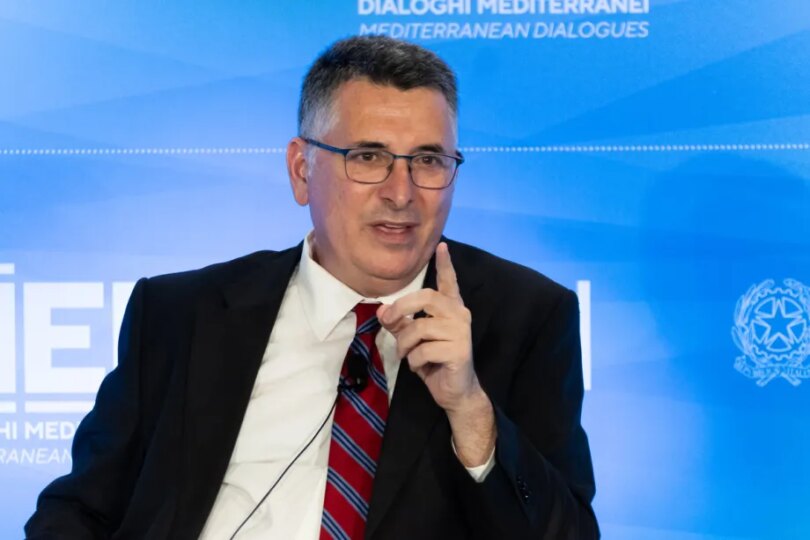
Israeli Foreign Minister Gideon Sa’ar has said he will bring a resolution before the Israeli government to recognise the Armenian Genocide, in a move that comes amid worsening ties with Turkiye and is likely to fuel criticism that Israel is turning Armenian suffering into a political weapon.
Sa’ar said on X that he would bring “a proposed resolution for the official recognition by the Government of Israel of the Armenian Genocide” before the government at its next meeting.
I will bring before the Israeli government at its next meeting a proposed resolution for the official recognition by the Government of Israel of the Armenian Genocide.
Recognizing the genocide perpetrated against the Armenian people in the final years of the Ottoman Empire is…
— Gideon Sa’ar | גדעון סער (@gidonsaar) June 25, 2026
“Recognising the genocide perpetrated against the Armenian people in the final years of the Ottoman Empire is both a moral and historical duty,” he said, adding that Israel must also condemn “any denial, minimisation, or distortion of the historical truth.” The resolution would then be brought before the Knesset for a vote.
The announcement comes as relations between Israel and Turkiye have deteriorated sharply over Gaza, Syria and Israel’s confrontation with Iran. Turkish President Recep Tayyip Erdogan has repeatedly condemned Israel’s assault on Gaza, while Ankara has restricted trade with Israel and positioned itself as one of the strongest regional critics of Prime Minister Benjamin Netanyahu’s government.
Israel has also increasingly cast Turkiye as a strategic threat with Ankara increasingly described in Israeli discourse as the “next Iran”. Israeli spy Jonathan Pollard suggested that Turkiye and Egypt could become Israel’s next military targets, echoing a growing Israeli narrative that casts Ankara as the “new Iran” and a future strategic enemy.
The timing of Sa’ar’s proposal is likely to be met with cynicism. Israel has for decades stopped short of formally recognising the Armenian Genocide, a position critics say has been shaped less by historical fact than by political interest, including the desire to preserve ties with Turkiye and Azerbaijan.
Read: Turkish top diplomat says Netanyahu seeking to designate Turkey as a new enemy
Critics are likely to argue that the sudden push for recognition, at a moment of open confrontation with Ankara, risks turning Armenian suffering into a political tool in Israel’s dispute with Turkiye.
The Armenian Genocide refers to the mass killing, deportation and persecution of Armenians during the final years of a weakened Ottoman Empire, when secular nationalists from the Young Turk movement and the Committee of Union and Progress held state power.
Many historians say the campaign formed part of a nationalist project to remake the empire from a multi-ethnic order into a more homogeneous Turkish state. Around 1.5 million Armenians are estimated to have been killed. Turkiye rejects the genocide label, acknowledging mass deaths during the First World War but denying that the killings formed part of a systematic extermination campaign.
Israel’s record on the issue has long drawn criticism from Armenian communities and human rights advocates. Parliamentary efforts to recognise the genocide have repeatedly failed or stalled, often amid concerns that doing so would damage relations with Turkiye or Azerbaijan.
For Turkiye, the move is likely to be viewed as a hostile political gesture. For Armenians, it may raise a different concern: that long-denied recognition of their suffering is being advanced only because it is seen as being useful in Israel’s feud with Ankara.