
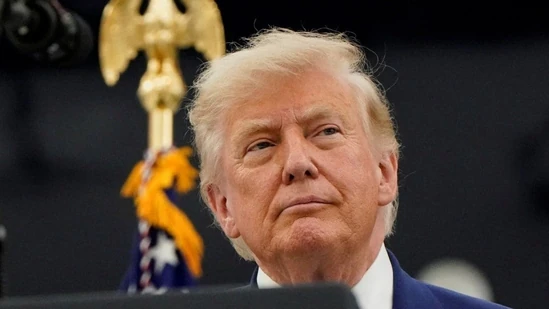
US President Donald Trump on Tuesday said that any Iranian funds released under sanctions relief would be placed in a US-controlled escrow account and could only be used to buy food and medical supplies from the United States.
“The Money and/or Sanctions that the US Treasury is releasing goes into escrow, controlled by the USA, and will be used for the purchase of food and medical supplies, exclusively from the United States, including Corn, Wheat, and Soybeans from our great American Farmers,” Trump posted on his Truth Social platform.
“This is a humanitarian crisis, and I feel it is necessary to help, NOW, before it is too late.”
Follow here for live updates on US-Iran peace deal
Meanwhile, Iran said $12 billion of its frozen funds are set to be released as part of ongoing talks, according to a report by the Mehr news agency, citing Deputy Foreign Minister Kazem Gharibabadi.
What is happening in US-Iran negotiations?
Washington and Tehran are negotiating key issues, including the future of Iran’s nuclear programme, after signing a deal aimed at ending the Middle East war.
As part of the agreement, Iran is expected to receive some sanctions relief and gain access to frozen assets.
The US Treasury Department said on Monday that it was temporarily easing sanctions on Iran to allow the production, sale and delivery of crude oil and related products through August 21 while negotiations continue.
Iran, which has faced decades of sanctions and trade restrictions imposed by the United States, the United Nations, the European Union and other countries over its nuclear programme, human rights record and support for groups across the region, is hoping for broader sanctions relief as talks move into the next phase, according to a Reuters report.
What sanctions has the UN imposed on Iran?
UN sanctions on Iran are linked to its nuclear programme and alleged violations of obligations under the Nuclear Non-Proliferation Treaty, the Reuters report said.
The UN Security Council adopted sanctions resolutions in 2006, 2007, 2008 and 2010. These included an arms embargo, restrictions on the supply of certain nuclear-related materials and technology, and asset freezes targeting several companies and individuals.
The resolutions also prohibited Iran from activities related to developing ballistic missiles capable of delivering nuclear weapons.
While the measures froze the funds and assets of the Islamic Revolutionary Guard Corps (IRGC) and Iran’s state shipping company, they did not ban Iranian oil exports.
Following the 2015 Joint Comprehensive Plan of Action (JCPOA) nuclear deal, the UN Security Council laid out a timetable for lifting sanctions.
However, after Trump withdrew the United States from the agreement in 2018 and Iran ceased complying with some of its commitments, UN sanctions were reinstated last year through a “snapback” mechanism.
Also Read | ‘Bibi is hysterical’: Israel worried over US boosting Iran’s strength in Lebanon
Can Trump lift US sanctions on Iran?
The United States first imposed sanctions on Iran in 1979 after revolutionary students seized the US embassy in Tehran and held American diplomats hostage.
Since then, Washington has introduced several additional measures, including extensive restrictions on Iran’s oil and gas exports, sanctions over support for groups designated as terrorist organisations by the US, and penalties linked to Tehran’s nuclear programme, according to Reuters.
One major complication is the designation of the IRGC – a powerful force deeply integrated into Iran’s economy — as a terrorist organisation by Washington.
Although the US Treasury administers the sanctions regime, the measures stem from different legal authorities and mechanisms, making it difficult to remove them all quickly.
Also Read | ‘Will do what I have to’: Trump draws red line for Iran, says preventing nuclear weapon ‘supersedes’ depression risk
Why can’t all US sanctions be removed quickly?
The authority to impose sanctions comes from emergency powers granted to US presidents under laws passed in the 1970s, which must be renewed annually, as well as legislation enacted in 1996 and 2017 specifically targeting Iran and other countries.
Sanctions imposed through presidential executive orders can be revoked by Trump. These include the freezing of billions of dollars in Iranian assets, an arms embargo, bans on trade and investment, and restrictions on countries purchasing Iranian oil.
More difficult to undo are sanctions enacted by Congress, many of which do not contain waivers or exceptions tied to changes in Iran’s behaviour regarding human rights or support for groups considered terrorist organisations by Washington.
In addition, numerous companies, individuals and government entities have been specifically designated, and removing those sanctions could take considerable time.
What sanctions has Europe imposed on Iran?
The European Union imposed embargoes on Iranian oil exports in 2012, froze assets belonging to the Central Bank of Iran and halted trade in precious metals and petrochemicals with the country.
It also introduced restrictions on foreign trade, financial services, as well as the energy and technology sectors.
The EU has also sanctioned the IRGC and imposed fresh sanctions this year over Iran’s blockade of the Strait of Hormuz.