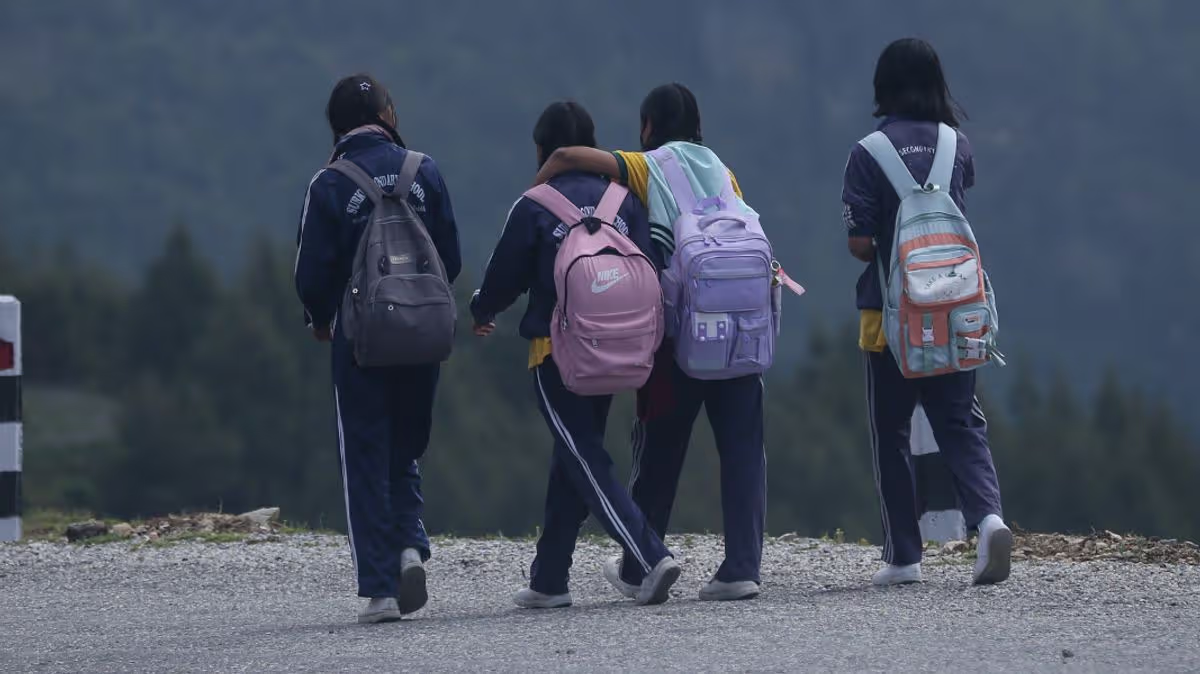
EXCLUSIVE: The consequences of a war thousands of miles away is being felt by many in the Global South, who have had to regularly skip school and food since the war in Iran started
Across the world, young girls are finding it harder to attend school and are skipping meals, and it might just be because of Donald Trump’s war on Iran.
When the US and Israel unleashed military action on Iran in late February, Trump hoped for a swift end to the operation, even for regime change after American strikes killed Iranian Supreme Leader Ali Khamenei. Instead, a bruised but defiant Iranian regime, known for murderous crackdowns on its own citizens, bit back, and closed the all-important Strait of Hormuz.
The strait is a vital waterway for the world’s oil supply. A fifth of the world’s traded oil and natural gas transits these waters. Oil prices reached dizzying highs and only tentative steps to reach a settlement have been made.
As different sides in the conflict exchanged fire, the true range of the shockwaves from bombs bursting in the skies of Tehran, Tel Aviv and Beirut, went unseen. Families in the Global South were left reeling as fuel prices soared and supply dwindled.
Some families stopped being able to pay for meals, for transport, for rides to school or health clinics. Everyday life, in areas where welfare is limited and wages are low, became even harder.
ActionAid, a UK-based international charity that works with women and girls in the Global South, said colleagues across Africa and Asia began to report major spikes in local fuel prices.
“For many low-income households, higher fuel prices are translating directly into hunger, lost income and interrupted education,” said Dr Selina Pasirayi, country director of ActionAid Zimbabwe. “A 40 percent increase in fuel prices can mean a girl missing school, a woman skipping meals, or a farmer struggling to produce enough food.
“The war on Iran did not create these inequalities, but it has deepened long-standing vulnerabilities rooted in colonial land inequality, patriarchal care burdens and dependence on imported fuel.”
In Nepal, for instance, a conflict thousands of miles away led to the cost of petrol increasing by around 40 percent. Diesel, vital for public transport, increased by more than 70 percent at its peak.
‘Sleepwalking’ into crisis
The problem isn’t just fuel. Disruption to agricultural fertiliser supplies could mean a poorer-than-expected harvest later this year. Throw in the effects of climate change and many farmers across the world are already fighting something of a losing battle.
There are already warnings about the potential impact to the Global South. In May, Foreign Secretary Yvette Cooper warned that Iran’s blockade of the Strait of Hormuz could risk “sleepwalking into a global food crisis”.
The damage won’t just be felt this year, Ms Cooper also said. Tehran’s blockade of the vital shipping lane had sent oil prices spiralling, but also shut off access to some of the world’s most significant fertiliser factories, threatening to push up food prices.
“The world risks sleepwalking into a global food crisis, and we cannot risk tens of millions of people going hungry because Iran has hijacked an international shipping lane,” she said, speaking at the Global Partnerships Conference in London, which was convened after the UK cut its target for aid spending to just 0.3 percent of GDP. Donald Trump’s administration has also effectively gutted the US aid agency.
Experts are worried. Writing for the British-based international affairs think tank Chatham House, the chief economist for the UN World Food Programme has said “billions of meals are under threat”.
“The stakes are extraordinarily high,” wrote Arif Husain. “If the current disruption continues, it has been claimed that as many as 10 billion meals a week could effectively disappear from the global food system. Meanwhile, the UN’s World Food Programme estimates an additional 45 million people could face acute hunger because of the Persian Gulf crisis.”
The looming crisis, Mr Husain warns, could be further exacerbated by a poor harvest, pushing up the price of food even further. He called for further international coordination, increased resources and for food not to be treated “simply as a humanitarian concern”.
The problems are already being felt in Somaliland, which is also suffering from aid cuts, drought and conflict.
ActionAid estimated that the price of petrol rose by 67 percent, and is still 47 percent higher than before war broke out. Local bus fares have increased by around 50 percent. Many low-income workers depend on public transport to reach their place of work, markets, health clinics or schools.
“Fuel costs have skyrocketed for us,” said Saynab Dahir Mohamoud, a farmer in the Togdheer Region of Somaliland said.
“The expenses of the farm, whether for labour, fuel, or equipment have risen drastically. Because of this, instead of the two hectares we used to cultivate before, today, we are forced to farm just half a hectare in order to sustain ourselves and our families. When it comes to [selling our produce], we are hindered by poor roads and the increased cost of fuel for vehicles, which has doubled our expenses.”
Women, Saynab says, are particularly feeling strain, adding: “As women, our workload both at home and on the farm is immense. While busy with the fields, we are also managing our children, [their] education, cooking and other household chores, which has put a heavy burden on us.”
Mohamed Sillah, Country Director of ActionAid International Somaliland, said people’s “earning power” has been affected, forcing them to reduce food portions and use cheaper food.
Mr Sillah said: “Somaliland is a country that highly depends on imported goods, particularly through the regional supply chain linked to the Gulf, the ongoing tension has affected food availability, transportation costs, field prices, and the general cost of living. A five-litre cooking oil container increased from around $7 to $9, while some imported foods are even out of stock… Drinking water costs have increased in Somaliland by 10% for a 200-litre water barrel that people used to buy in their houses.”
Tendai Nkhoma, who runs a small shoe shop in Kapiri, Malawi said the fuel crisis already has her worrying she could be pushed into debt.
The 27-year-old said: “For my business, transport costs have increased, so bringing in stock is more expensive. I now order fewer shoes at a time, which means I sometimes run out of popular stock. Recently I had a supplier ready to send me a batch of shoes from Tanzania, but transport cost had doubled from K90,000 [US$50] to K180,000 [US$100] per batch. I couldn’t afford it at the time, so I had to cancel the order.”
Mitigating this problem comes in the form of skipped meals.
“Some days I don’t make enough to cover daily expenses; it’s stressful because I depend on this business and I have had to put aside plans to expand,” she said.
She now worries that her business may close down altogether. Fellow business owner Virgina Gonzo presides over a grocery shop in Nyazura, in eastern Zimbabwe.
“What worries me most is that if things continue like this and prices keep rising, I might be forced to close my shop,” she said. That shop is my only source of income.”
A parent, one of her main concerns now is paying her children’s school fees, something that, with business very tight, she does not know how she will do. Dr Pasirayi said families are skipping meals just so they can afford to travel. Women eat less so children can eat.
“Some families are withdrawing girls from school to save transport costs, while women are spending more time collecting firewood as LPG and paraffin prices increase,” said Dr Pasirayi.
Again, it is Zimbabwe’s women that often feel the brunt of the pain.
“Rural women face a 60 percent global surge in urea fertiliser costs and a projected 31 percent increase in overall fertiliser costs. As women make up the majority of Zimbabwe’s smallholder farmers but often have the least access to credit and financial support, many are being forced to reduce planting, which threatens future harvests and incomes.”
In Thailand’s rural communities, teachers have been “badly affected” by disruptions to fuel supplies.
Rattana Buedang, a primary school teacher in Ratchaburi Province in central Thailand, said teachers at her school have resorted to helping each other out. As soon as a fuel truck goes past, one teacher will take over the class of another so they can go and fill up their tanks.
“It even got to the point where teachers at the school helped each other out. If we saw a fuel truck pass, we would take turns going to refuel at the nearest gas station. One of us would take over another’s class for a while because they had gone to queue up to fill the tank.”
No guarantees over strait
US vice president JD Vance was in Switzerland today to help formally launch negotiations with Iranian leaders over curbing Tehran’s nuclear programme and building the fragile interim deal to end the war in Iran. These are some of the issues at play as the two sides try to build on a framework for peace from which issues like the Strait of Hormuz can be settled.
The framework was signed last week with US and Iran negotiators in a 60-day sprint to reach an agreement.
The agreement, signed by Trump and Iranian President Masoud Pezeshkian says commercial vessels can pass through the Strait of Hormuz for 60 days without charge, but does not preclude future fees imposed by Iran.
But the first days of that two-month period were complicated by the heavy exchange of fire in Lebanon between Israel and the Iranian-backed militant group Hezbollah — and by the subsequent announcement by Iran’s military that it had closed the strait again.
US Central Command disputed Iran’s claim it had once again shuttered the strait and said US forces continued to monitor the situation to ensure traffic continues to flow through the waterway. Vance has said millions of barrels of oil have moved through the strait in recent days.
A renewed ceasefire in Lebanon, brokered on Saturday, appeared to be holding. Vance stressed that “great progress” had been made on Lebanon. But minutes after he finished speaking, Trump took to social media to threaten Iran if it did not rein in Hezbollah.
“If they don’t, we’ll hit Iran very hard again, just like we did last week, only harder!!!” Mr Trump wrote.
Iran is cautiously approaching the talks given its previous experience with US negotiations on the nuclear issue, which twice in the past year were interrupted by massive military strikes against the country. For now, negotiations in Switzerland will continue to hold high stakes for vulnerable people in the Global South.
Anish Raj Shrestha, communications manager at ActionAid International Nepal, said: “Global crises should not force vulnerable communities to pay the highest price. This moment highlights the urgent need for stronger social protections, fair economic policies, investment in local food systems, and climate-omaaresilient livelihoods that protect people during these kinds of global shocks.”