The latest conversation between HT’s Shishir Gupta and Aayesha Varma paints a picture of a Middle East locked into a long, uneasy stalemate: low‑intensity conflict, weaponised chokepoints, and proxy wars that suit the politics of Tehran, Washington and Jerusalem more than they serve peace.
Talks in Switzerland, no peace on the Horizon
The starting point of the discussion is the first round of US-Tehran talks in Switzerland, held under the shadow of a new memorandum of understanding and an Iranian move to close the Strait of Hormuz for two days. US President Donald Trump’s opening bid, as described in the conversation, was maximalist: an “unconditional surrender” by Tehran, coupled with demands that Hezbollah back down. On paper, this looks like diplomacy; in practice, HT Executive Editor Shishir Gupta argues it changes very little on the ground.
Also Read: Is Strait of Hormuz open or closed? Trump’s ‘takeover’ threat to Iran as Vance attends Switzerland meet
His assessment is blunt: the region is not any closer to peace, and what lies ahead is prolonged low‑intensity conflict. The structural reasons are political. Iran is framed as an Islamic authoritarian state locked in confrontation with two democracies, the US and Israel, each driven by its own electoral timelines. Trump wants to “exit out of this war as soon as yesterday,” with a clear Strait of Hormuz and a rolled‑back Iranian nuclear programme as his benchmarks. In Israel, Benjamin Netanyahu faces an election on October 27th, 2026, with his political fortunes deeply tied to perceptions of security in Gaza, southern Lebanon and the Golan Heights.
Elections, security zones and proxy wars
Gupta’s core argument is that domestic politics in Washington and Jerusalem harden strategic positions that were already difficult to reconcile. Israel today holds security zones in Gaza and in southern Lebanon up to the Litani River, as well as the Golan Heights in Syria. It has “made it very clear” it cannot vacate these zones without exposing its northern and southern frontiers to Hezbollah fire and other threats. If it pulls back, the odds of Netanyahu returning to power diminish sharply, so withdrawal is not an option in the near term.
Across the table, Iran cannot accept the “emasculation” of Hezbollah or other clients, because its influence in the Arab world runs through these non‑state actors: Hezbollah in Lebanon, the Houthis in Yemen, Kataib Hezbollah, Hamas and a broader constellation of militias stretching from the Levant to the Gulf. Tehran, in Gupta’s reading, is comfortable playing for time. The precedent he cites is telling: the Iran–Iraq War dragged on for eight years, with the regime willing to absorb pain and “talk, talk and more talk” while delivering little in terms of concessions. That same slow‑burn approach is being applied now.
Also Read: Pakistan now realizes the perils of dealing with mercurial President Trump
Because Israelis were not present in the Swiss talks, Gupta suggests the negotiations lack the key stakeholder whose security dilemmas and election calendar will shape any real settlement. Netanyahu has already signalled that he will not allow Iran to cross the nuclear threshold or accept persistent Hezbollah attacks, even if that means acting without Washington’s blessing.
Hormuz, Bab el‑Mandeb and a new “normal” of instability
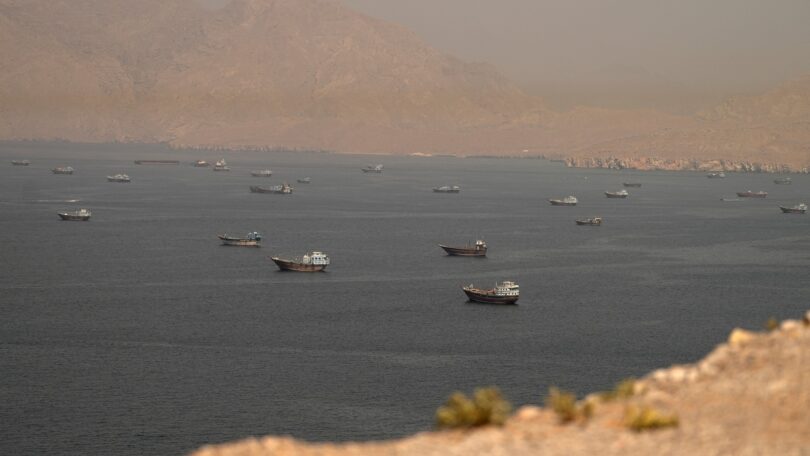
The most immediate pressure point is the Strait of Hormuz, where Iran has demonstrated both capability and willingness to disrupt maritime traffic. Gupta argues that Tehran understands Hormuz as “huge leverage,” a tool to inflict pain not only on Gulf adversaries but on the global economy, forcing wider international pressure on Washington to compromise. The strategic stakes are enormous: roughly a quarter of global seaborne oil and large volumes of LNG and other critical commodities move through the strait, making it one of the world’s most vital energy chokepoints.
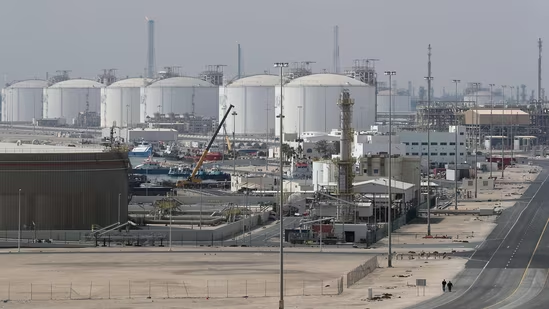
Gupta links this to fresh explosions at Qatar’s Ras Laffan gas complex, officially described by Doha as an internal accident but widely perceived in the region through the prism of the ongoing confrontation. Ras Laffan is central to global LNG supply, and recent attacks there have already rattled gas and oil markets. The combination of a vulnerable Hormuz and a hit on Ras Laffan underscores how quickly regional incidents can translate into global price spikes.
Also Read: How India joined the elite club of nations with advanced ballistic missile defence capability
Gulf states, he says, have internalised that this is a “new normal.” Those with geography on their side, like the UAE, are turning to ports on the Gulf of Oman such as Fujairah and Khor Fakkan and building pipelines that bypass Hormuz altogether. Others-Kuwait, Iraq, Bahrain, Qatar-are geographically trapped inside the Gulf and must either negotiate arrangements with Iran or absorb the costs of persistent risk. Across the board, you see moves towards hardened infrastructure: underground desalination plants to shield water supplies from missile and drone strikes, expanded pipeline networks, and investments in better anti‑ballistic‑missile and anti‑drone defences.
The other major choke point is Bab el‑Mandeb at the mouth of the Red Sea, where the Houthis-another of Iran’s proxies-sit athwart the route to the Suez Canal. This narrow strait is already recognised as a strategic artery for global oil and container traffic, and recent disruptions have shown how quickly attacks there can ripple into freight costs and supply chains. Between Hormuz, Bab el‑Mandeb, the Red Sea and even the broader North Arabian Sea where Iranian forces have previously harassed shipping, Gupta sees a deliberate Iranian strategy of using geography as a weapon.
A weak MOU and the limits of American power
The memorandum of understanding underpinning the current 60‑day ceasefire is, in Gupta’s view, “generic” and full of holes. It can easily be extended for another 60 days, but crucial issues are conspicuously absent: there is no cap on Iran’s ballistic missile arsenal, no real checks on its burgeoning drone, loitering munition, underwater drone or “kamikaze boat” capabilities, and no mechanism to roll back control over proxies. As long as these tools remain intact, Tehran can calibrate pressure at will.
Against this backdrop, he is dismissive of ideas floated in Washington, like Senator Lindsey Graham’s suggestion that the US “capture” the Strait of Hormuz and levy a toll for security. Gupta points out that true control would require “boots on the ground” on the Iranian side of the strait, not just standoff strikes from air and sea. Given that Iranian positions sit on higher ground along much of their coastline, any US attempt at physical domination would be costly and politically toxic at home.
This flows into a broader critique of the notion that pressure alone can change the character of the Iranian regime. For Gupta, the Islamic Republic remains an outgrowth of the 1979 revolution, driven by hardliners and “political Islam” with no meaningful moderates in charge. Absent regime change or a willingness to deploy ground forces-neither of which Trump publicly embraces-Washington’s leverage is limited. The practical result is a pattern of “good days” and “very bad days” in Hormuz, recurring supply‑chain shocks, and an arms race in defensive technologies rather than a durable solution.
Mediators, rival empires and the beneficiaries of chaos
When the conversation turns to mediation by Qatar and Pakistan, Gupta is sceptical. He describes the true power structure of the region as a contest among three legacy poles: Iran as heir to the Persian Empire and standard‑bearer of Shia Islam, Turkey as the successor of the Ottoman Empire, and Saudi Arabia as custodian of the two holy mosques and the Sunni heartland. Qatar and Pakistan, in his framing, are “side players” whose relevance stems largely from American backing and, in Qatar’s case, gas wealth and links to movements like the Muslim Brotherhood.
These smaller states can host talks and pass messages, but they do not set the strategic terms. That rests with the larger actors pursuing their own versions of political Islam and regional dominance-Shia, Sunni or neo‑Ottoman. Under such conditions, endless dialogue is possible, but “permanent peace” in the Middle East remains elusive.
One of the most striking points comes near the end, when Aayesha Varma asks who might actually welcome America’s predicament. Gupta’s answer is straightforward: Russia and China. For Moscow, the way Iran is bogging down the US through Hormuz mirrors how Ukraine has tied up Russian military and political bandwidth. For Beijing, the crisis is an opportunity. China is the ascendant power, a major supplier of weapons to Iran, and a beneficiary of the distraction and polarisation that Middle Eastern turmoil creates for Washington in Asia. Instability in West Asia, he suggests, will echo into North and Southeast Asia as China leverages the opening to entrench its position.
The one “good” scenario: Iranian oil back on the market
In a coda after the formal wrap‑up, Gupta identifies a single potentially positive outcome: if, as part of any negotiated framework, Iran is allowed to resume large‑scale oil exports. Iranian crude-he mentions the high‑quality “Basra sweet”-requires minimal refining and could meaningfully increase global supply. In theory, that would push down oil prices and, by extension, ease inflation worldwide.
But even here there is a catch. If sanctions relief and financial incentives are de‑linked from firm constraints on Iran’s ballistic missiles, drones and proxies, Tehran could walk away with as much as 300 billion dollars, in his estimate, while retaining all the instruments that make it such a disruptive actor. That would turn the outcome into a “win‑win for Iran,” funding the very capabilities that keep the region unstable.
Taken together, the conversation sketches a Middle East in which war is too costly for outright victory yet too useful for the principal actors to abandon. Chokepoints become bargaining chips, proxies become the preferred tools of influence, and outside powers-from China to Russia-quietly profit from America’s strategic entanglement. In that sense, the real memorandum of understanding in the region is an unwritten one: everyone plays the long game, and peace can wait.