US President Donald Trump has suggested that Syria could assume a greater role in efforts against Hezbollah, while expressing frustration with Israel’s ability to weaken the Lebanese group.
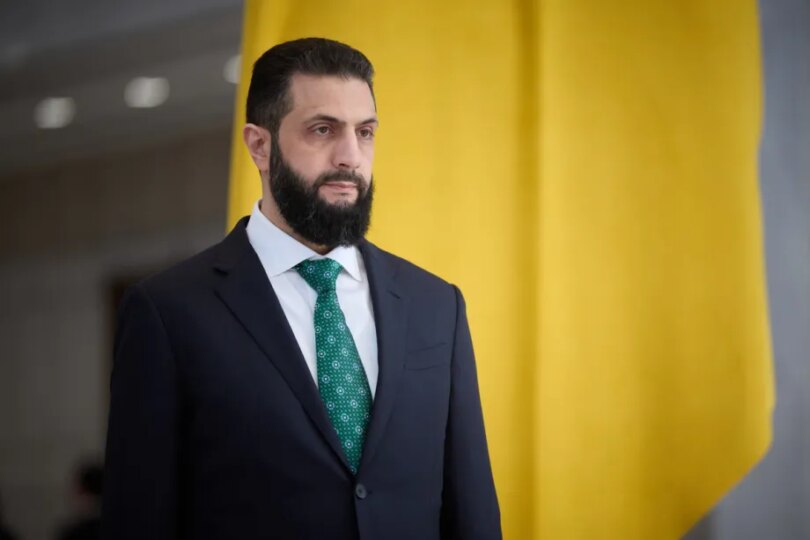
In an interview with Fox News, Trump said he was considering giving Syrian President Ahmed al-Sharaa a broader role in addressing the Hezbollah issue.
“I’m about to give the order to enter southern Lebanon to Ahmed al-Sharaa because he will do a more precise job,” Trump said.
The US president also criticised Israel’s military campaign against Hezbollah, arguing that Israeli operations had failed to achieve their stated objectives.
Trump said he was disappointed that Israel “cannot eliminate Hezbollah” and claimed that the Israeli military “cannot do anything without demolishing buildings.”
The remarks came days after Trump revealed that he had discussed Hezbollah and regional security issues with Syrian President Ahmed al-Sharaa during meetings held on the sidelines of the G7 summit.
Earlier, Trump suggested that Syria might be capable of doing a “better” job than Israel in confronting Hezbollah, although he did not provide details about the nature of any potential Syrian role.
READ: Trump says Israel unable to ‘put Hezbollah away,’ suggests Syria could do it
The comments have prompted mixed reactions across the region.
Al-Sharaa has previously denied that Syria intends to intervene militarily in Lebanon, while the Lebanese government has not publicly commented on Trump’s latest remarks.
Israeli Defence Minister Yisrael Katz rejected the suggestion that Syria could play a role in confronting Hezbollah, saying Israel does not require Syrian assistance and remains capable of addressing the threat independently.
Trump’s comments have also revived debate over Syria’s historical involvement in Lebanon. Syrian forces maintained a military presence in the country from 1976 until their withdrawal in 2005, following growing domestic and international pressure.