
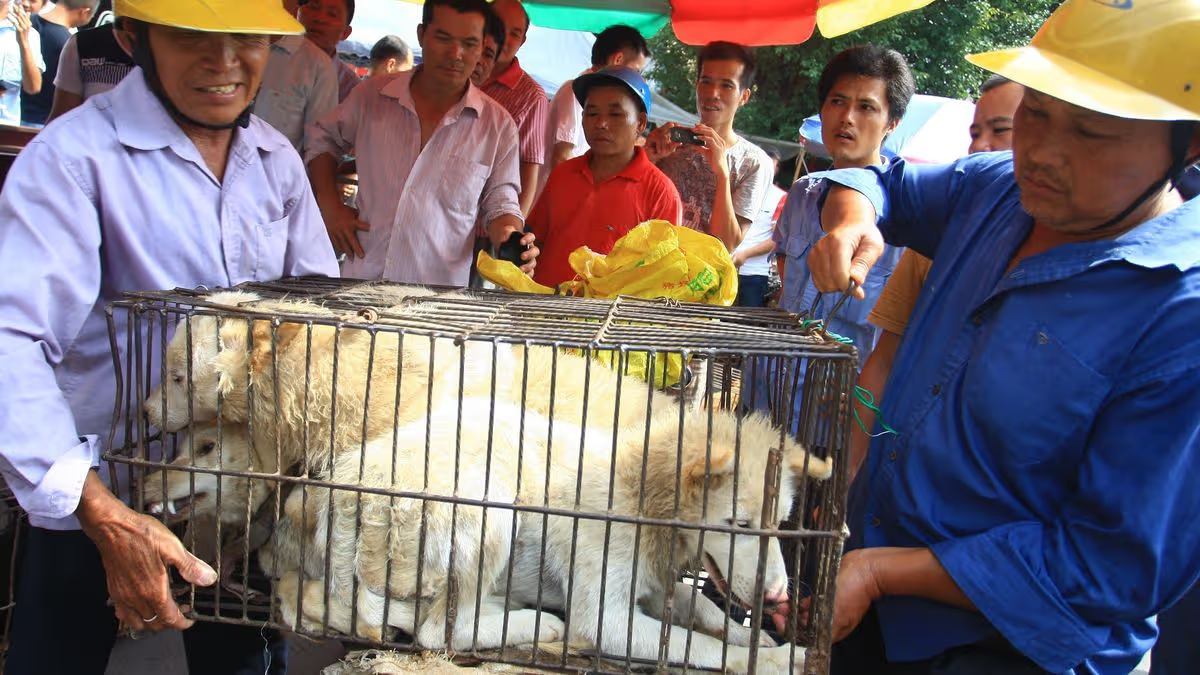
At the festival’s peak, around 10,000 dogs and cats were killed and eaten after the frightened animals were crammed into cages, often without food or water
An infamous dog and cat eating festival has returned to a city in southern China despite widespread local and international opposition.
The Yulin Lychee and Dog Meat Festival has once again started in Yulin as animal welfare advocates have warned thousands of animals could be killed before it ends on June 30.
The 10-day festival was first introduced in 2010 and has drawn widespread criticism for more than a decade, with local authorities disassociating themselves since 2014.
Thousands of dogs and cats are transported long distances in poor conditions, often without food or water, to then be slaughtered, the Express reports. At the festival’s peak, about 10,000 animals were killed and eaten.
Campaigners have stated that dogs and cats are stolen from their loving homes or simply snatched from the streets as pictures released by activists over the years have shown frightened animals crammed into wire cages with no food or water.
The latest footage of this kind was released last month by Humane World for Animals. The group said: “Beginning June 21st, the dog and cat meat trade intensified in China’s city of Yulin. Truckloads of dogs and cats will be driven long distances in horrific conditions to be brutally slaughtered for their meat.
“Please urge China to end the animal welfare and public health nightmare of Yulin’s dog and cat meat trade.”
According to critics, the festival, which takes place during the summer solstice, has become emblematic of the wider trade in dog and cat meat.
In a recent breakthrotional activists. Nine dogs were rescued, including three wearing collars and thought to be stolen pets.
Animal welfare groups say national and global pressure campaigns have helped reduce the number of dogs killed during the festival’s peak period of 20–22 June, with estimates now standing at around 2,000 to 3,000 dogs.