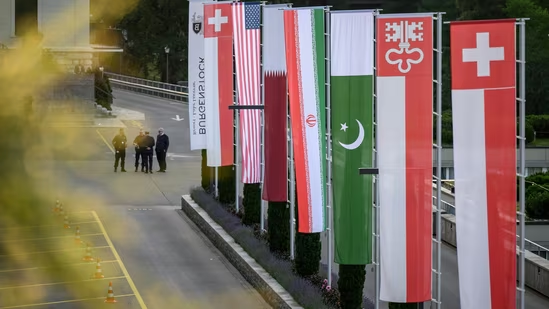
As delegations from the United States and Iran arrive in Switzerland for the next round of negotiations, Tehran has stated that the key talking points will be regarding the ceasefire in Lebanon and the sale of Iranian oil.
Ahead of the talks, spokesperson for the Iranian Ministry of Foreign Affairs, Esmail Baghaei, has stated that the ongoing Israeli strikes in Lebanon will be raised with the US, as a truce in the region was a key requirement of the 14-point peace agreement signed earlier this week.
Follow LIVE updates on the US-Iran war here
“The US has been unable to ensure a ceasefire in Lebanon,” said Baghei while addressing a press conference.
Along with Lebanon, the spokesperson added that waivers regarding the sale of Iranian oil and the release of Tehran’s frozen assets will also be on the agenda.
Baghei added that the meeting in Switzerland will be a follow-up on the implementation of the memorandum of understanding with the United States.
What does the US want from the talks?
With US Vice President JD Vance in Switzerland for talks with Iran, Washington is expected to focus on Iran’s nuclear programme and enrichment of uranium.
As per an Axios report, the US is looking for inspectors to visit Iranian nuclear sites and assess the programme and enrichment.
Meanwhile, based on this, Washington will also mull the release of a certain amount of Iran’s frozen funds, starting with a $6 billion account in Qatar.
As per Vance, the goal in the first round of talks is to establish an “actual structure” for the negotiations.
Also Read | $6 billion funds release in turn for nuke sites inspection: What US wants from first round of peace talks with Iran
US-Iran sign truce agreement
Earlier this week, the US and Iran signed the 14-point memorandum of understanding, which calls for an end to hostilities in the region, including Lebanon and the reopening of the Strait of Hormuz.
However, with Israel still firing at Lebanon, particularly Beirut, Iran announced it will be closing the key strait in response to the Israeli attacks.
However, US President Donald Trump stated that the strait remains open.
The MoU between Washington and Tehran will also set the stage for a 60-day period of negotiations on Iran’s nuclear programme.
Ahead of the talks, Trump on Friday said the two sides have time to make a deal but still issued a veiled threat to Iran.
“Otherwise, we will do things that won’t make them happy, but I don’t think it’s going to get to that,” he said. “I think it’s going to be very good.”