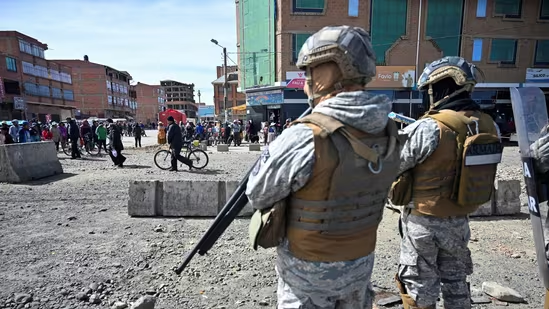
After nearly 50 days of anti-government protests, Bolivia declared a state of emergency and deployed the military as a crisis gripped the Andean nation.
Bolivian President Rodrigo Paz, in a televised address on Saturday, declared a 90-day state of emergency and deployed soldiers as part of an attempt to curb the protestors.
The protests, which started as a call for the President’s resignation, led to roadblocks and barricades that disrupted food and fuel supplies across the country.
What led to the mass protests?
Over the past six weeks, mass protests erupted in Bolivia against the austerity measures introduced by the Paz administration.
Under these measures, the President announced the cancellation of fuel subsidies. These measures also resulted as part of an effort to reduce the fiscal deficit of the nation amid discussions with the International Monetary Fund (IMF) and worsening shortage of US dollars.
Along with this, the government’s land reforms, which allow land to be used as collateral, also sparked outrage as many feared land grabbing and illegal practices by large conglomerates.
While the government introduced measures to stabilise fuel prices and roll back the land reforms, violent confrontations between protestors and riot police ensued.
As per authorities, at least 365 arrests have been made during the demonstrations, and around 37 people have been injured.
In addition to this, due to the unrest and blockades caused by the protest, at least 17 deaths were reported due to the lack of medical care and the disruptions in traffic and roadways.
While the protests started out with land reforms and fuel prices in focus, it later expanded to a call for better wages and Paz’s resignation.
Worker unions of miners, transport workers, teachers, rural communities and more joined in the protests, accusing the government of failing to address the economic hardships in the country, which included rising living costs, inflation and more.
The demonstrations gained traction after supporters of former President Evo Morales joined in and organised road blockades.
These blockades have resulted in a shortage of food, fuel and medical supplies.
‘Giving the people back their freedom’
In response to the protest, President Paz declared a state of emergency and announced the deployment of the military and bulldozers to raze the roadblocks.
“Bolivians cannot continue to be held hostage by blockades that prevent them from working, studying, receiving medical care, getting supplies and bringing food to their homes,” Paz said in a social media post, adding that the state of emergency has been declared in order to “give back the people their freedom”, as opposed to taking away normalcy.
“We are restoring peace of mind to the country. With the State of Exception [sic], banks and financial services operate with full regularity so that the effort of Bolivia does not stop. We protect the productive apparatus and ensure that the fruit of this work reaches every corner,” wrote Oscar Mario Justiniano, the minister for Productive Rural Development and Water, on X.
Many have welcomed the government’s move, hoping for ease in transportation and movement in the country. But several continue to call for Paz’s resignation, a year after he took office.
(With inputs from AFP)