
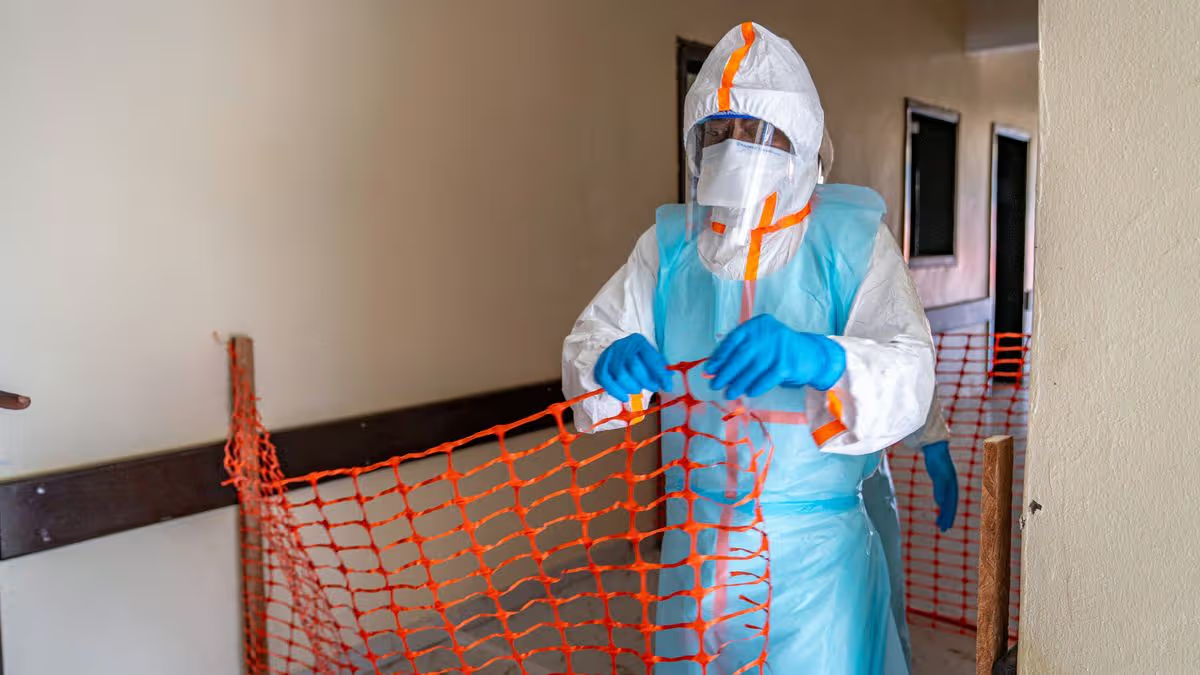
New research has found that the virus may continue replicating in brain tissue even after patients appear to have recovered, helping explain rare relapses and long-term complications.
Scientists have uncovered new clues about how the deadly Ebola virus can linger in the body long after a patient appears to have recovered.
Researchers found the virus was able to remain active and infectious in lab-grown mini brain-like structures for months, potentially helping explain why some Ebola survivors suffer serious complications years after their initial illness.
Ebola virus disease is a severe and often fatal infection that causes symptoms including fever, vomiting, bleeding and organ failure. While some patients survive the acute stage of the disease, scientists have long known that the virus can sometimes remain hidden inside the body.
While some patients survive the acute stage of the disease, scientists have long known that the virus can sometimes remain hidden inside the body.
Scientists believe some previous Ebola outbreaks may have been linked to survivors carrying the virus long after they appeared to recover. One 2021 outbreak in Guinea was traced to a survivor infected during the 2014-16 epidemic, suggesting the virus may have persisted in the body for more than five years before re-emerging.
The latest study, published in Nature Microbiology, suggests the brain may provide a refuge where the virus can evade the body’s immune defences.
A team from the Icahn School of Medicine at Mount Sinai, the Bernhard Nocht Institute for Tropical Medicine and other international collaborators used tiny lab-grown “brain organoids” to investigate what happens after infection. The organoids are made from human stem cells and contain several of the cell types found in the central nervous system, allowing researchers to study how the virus behaves in human brain tissue.
The researchers found that Ebola and several related viruses were able to infect the brain-like tissue and continue replicating for up to 120 days.the virus was not simply lying dormant. Scientists found it continued spreading between cells while remaining capable of producing infectious viral particles.
The study also showed that although the infected tissue mounted an immune response, it was unable to completely eliminate the virus.
Researchers believe this persistent infection may help explain why some Ebola survivors later develop inflammation affecting the eyes, meninges or brain. In rare cases, Ebola relapses have occurred months or even years after an individual appeared to have recovered.
The team also identified genetic changes that emerged as the virus persisted, which may help it survive for longer periods inside the body.
Lead author Dr Lina Widerspick said the organoids allow scientists to investigate “the mechanisms that Ebola virus and other filoviruses use to persist in the human central nervous system.”
“Through experiments in this model system, we can gain insights that help us improve our understanding of the long-term effects of persistence, like the severe and sometimes fatal inflammation seen in Ebola virus disease survivors with meningoencephalitis,” Dr Widerspick said.
Ebola remains a serious threat in parts of Africa. The researchers hope the findings could eventually help improve treatments for survivors and provide a better understanding of how future Ebola outbreaks may emerge from persistent infections. They also hope to widen their scope to other viruses.