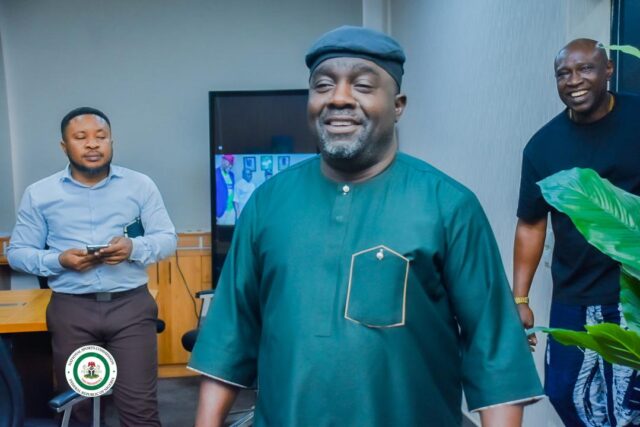
Director General of the National Sports Commission, Bukola Olopade, has defended the leadership of the Nigeria Football Federation amid criticism following the Super Eagles’ failure to qualify for the 2026 FIFA World Cup.
READ ALSO: National Sports Commission Dissolves Boards of National Para Sports Federations
Olopade insisted that he would not support any attempt to force leadership changes within the federation, stressing that the current administration has recorded notable achievements despite the World Cup setback.
“I will not push for a change of leadership undemocratically,” Olopade said.
According to the NSC boss, judging the NFF solely on World Cup qualification would ignore several positive developments achieved under the current board.
“They have done a lot of good work that should not be overlooked,” he implied.
Olopade pointed to the successes of the Nigeria women’s national football team as evidence that progress is being made within Nigerian football.
“The Super Falcons have continued to achieve success,” he noted.
He also highlighted the Super Eagles’ second-place and third-place finishes at the 2023 and 2025 Africa Cup of Nations respectively as achievements worthy of recognition.
“The national teams have still delivered notable results,” he added.
While acknowledging the disappointment of missing the World Cup, Olopade argued that the federation should be assessed on its overall performance rather than one outcome.
“We must look at the bigger picture,” he stressed.
His comments come amid ongoing debate about the future direction of Nigerian football following consecutive World Cup qualification failures.
“The NFF remains under intense scrutiny despite recent successes,” many football observers believe.
The Gusau-led administration continues facing pressure to ensure Nigeria returns to the World Cup and remains competitive on the continental stage.
For Bukola Olopade, the message is clear.
The World Cup failure was disappointing.
But the NFF’s achievements should not be ignored.
And stability remains important for the continued growth of Nigerian football.
Because lasting progress often requires balance, patience, and objective assessment rather than emotional reactions.