The harsh experiences that groups and individuals go through affect the subconscious in ways that may extend across generations.
A Dutch woman told me that her elderly mother still stores large quantities of food because she experienced famine during World War Two in the winter of 1944.
My body left Gaza nine months ago, which is theoretically enough time for new feelings to be born. Yet sometimes I observe my feelings and notice that the effect of living through genocide in Gaza for two years – and before that, many long years of siege and occupation – is still active within me.
From my very first days in safe exile, I felt a subtle unease at the fact that electricity is available 24 hours a day, and that at any moment I could plug in a charger. If I were on a train or travelling, it would also be no problem: I could charge my phone whenever I wanted, anywhere.
In my new residence, I now own three chargers. In Gaza, several people would share a single charger, since Israel prevented the entry of most goods, including phones and accessories. One of us would keep their charger as a precious commodity, to be carefully protected.
CLICK FOLLOW: TO FOLLOW US
Sign up to get the latest insights and analysis on
Israel-Palestine, alongside Turkey Unpacked and other eSPORTY
When the time came for me to leave Gaza, I felt it would be selfish to take mine with me, since I could easily get one abroad while people in Gaza desperately needed it.
So I gave my charger to my brother.
Even though electricity is now readily available, there is still a compulsion that drives me to fully charge my phone whenever it drops slightly. I feel more at ease when the battery is at 100 percent.
Land of plenty
Charging a phone in Gaza is a daily, exhausting battle. Israel has completely cut off the electricity supply for more than two and a half years. The only available source of electricity is the few solar panels, so people send their phones to charging points in the morning and retrieve them several hours later.
If the battery runs out, they have to wait until the next day to recharge it; and if the sun disappears behind the clouds in winter, they may have to wait an additional day or two until the sun shines again.
In Europe, I went into a shop with a Spanish friend to buy a razor. We had several options. I pointed to the battery-operated one, while my friend suggested that the one powered directly by electricity was of better quality.
In Gaza, one of the most important quality criteria we look for in any electrical device is a reliable battery that lets us use it for longer periods without being plugged in.
Food discarded in one place is a matter of survival for people elsewhere
It took me a moment to convince myself that I could trust that electricity was always available here before I accepted my friend’s suggestion.
For months, Israel imposed starvation on the people of Gaza. We struggled daily to secure a single loaf of bread or a packet of biscuits.
On the rare occasions when relatively better quantities of goods entered Gaza, those who were financially able would rush to buy extra amounts to store, knowing that this abundance was temporary and that storing food was necessary for food security.
After I came to the land of plenty, some of that effect remained active at first – the same effect the Dutch woman had told me about her mother’s experience of the famine during World War Two. I found myself unconsciously buying extra food.
After several weeks, I began to recover from this effect and started buying only enough for two or three days. However, my sensitivity to food waste remained, a feeling I view as positive and would like to preserve.
I once read that hundreds of thousands of tonnes of bread are thrown away. This reflects a profound lack of moral responsibility. Food discarded in one place is a matter of survival for people elsewhere.
Once, I kept a plate of rice in the refrigerator for several days because I felt moral discomfort about throwing it away, especially with the memory of the urgent need for food among the people of Gaza.
Eventually, a Syrian friend visited and relieved me of the discomfort, telling me he would take the plate to feed animals and birds.
Planes of life and death
The skies over Gaza are forbidden to civilian planes but open around the clock to Israeli warplanes.
Most of the new generations in Gaza have never seen a single civilian plane in their lives.
Hundreds of thousands of deaths and injuries in Gaza were mostly caused by bombs dropped from planes.
During the first nights after I survived the genocide, I slept peacefully for the first time in two years: the sky was free of the buzzing of drones, F-16s and Apaches that had been disturbing our rest.
But the sky in the safe country is not completely calm. Planes roam overhead as soon as they take off, or just before landing at the airport, which is only a few kilometres from where I stay. I cannot resist looking up at the sky whenever I hear a plane, while people walk around me indifferently.
What it’s like to survive in Gaza when your children are killed
Read More »
I subconsciously become anxious. Sometimes I close the window to shield my ears from the noise. I have an internal dialogue with myself: if I had several options for where to live next, I would choose a place far from the flight paths.
I am old enough to know that not all planes drop bombs and sow death, and that some carry life and activity. But it is not easy to escape the heavy burden of a past where the sound of an aircraft is always associated with death.
Finally, I obtained enough papers to travel to meet my 12-year-old son, who has been living for more than two years in another country with his grandmother, far from his parents and his two injured siblings.
The circumstances of the genocide imposed a forced separation on our family, as they did on thousands of other Palestinian families in Gaza.
I booked a flight. Yet anxiety is present.
Some who have lived their entire lives in safe and secure countries ask me, “When are you travelling?” I answer them with some unease and worry.
Where does this anxiety come from? And why do I hesitate before answering a question asked of me so spontaneously?
Travelling in stable countries is almost a matter of certainty; everything usually goes according to plan. People here even feel comfortable planning the exact day and hour of travel months in advance, and arranging appointments and meetings accordingly.
For example, if their flight arrives at 6pm, they can arrange a meeting at their destination for 7pm. They have the freedom to travel without obstacles, and therefore they feel in control of their time and activities, with few surprises.
What about the experience of travelling from Gaza?
A realm of uncertainty
In the last two and a half years, since the genocide began, travelling has been almost impossible, except under exceptional circumstances like my own departure. But even before the genocide, travel was complicated.
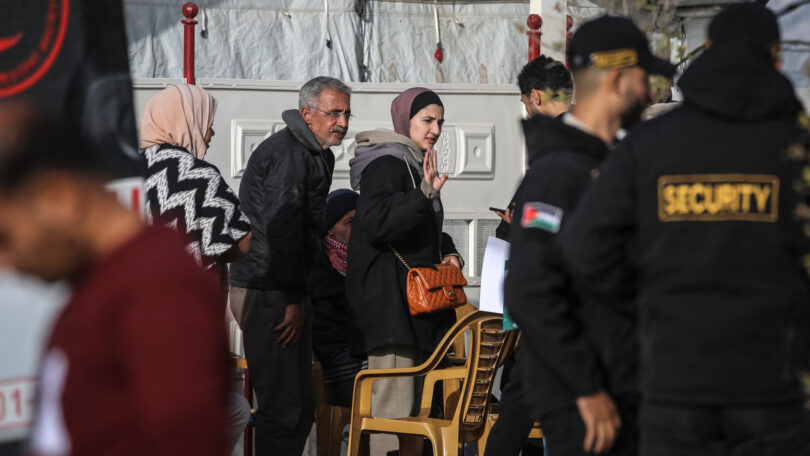
My attempts to travel continued for five years without success, between 2013 and 2018, when the Rafah crossing – the only window connecting Gaza to the world – was closed, opening for only about three days every two months.
Follow Middle East Eye’s live coverage of Israel’s genocide in Gaza
On those days, only a few hundred people left, while tens of thousands were on waiting lists. I tried in every way to travel many times, but those attempts did not succeed until the end of 2018.
Even when you finally found your name on the list of travellers, it brought no sense of certainty. We were forced to endure long days of anxiety and anticipation, waiting for our travel day. Of course, no commitments or fixed appointments could be made, as long as you did not have control over your time and decisions.
For this reason, thousands of students lost their studies, academics missed opportunities to participate in conferences, residents in various countries lost their residency permits and hundreds of patients died due to travel restrictions.
Even if a person manages to overcome all these complications and reach the Rafah crossing, they can still be turned back by an Egyptian officer without any reason given.
Because of these complex circumstances, travelling from Gaza belongs to a realm of uncertainty, doubt and anxiety. The traveller is not truly free; their freedom is conditional on an unpredictable external decision.
The brutality of the occupation is not just in the headlines covered by the media, but in the millions of small, overlooked details
How can a person who has grown up in an environment full of such complications finally believe that travel can happen, that one can decide whenever they wish and then act on their decision without obstacles?
There is an Arabic saying: “He who lives in fear sees safety as a trap.”
I do not intend, by sharing these feelings, to elicit sympathy. My personal experience remains modest compared to the pain of those who are still trapped in the reality of death and despair inside Gaza, without any window of hope for a near end to the tragedy.
I am personally fortunate because I survived and because I observe, analyse and express my emotions, which helps me overcome them and recover. But what about those who live harsher experiences that shape their behaviour and carve deeply into their subconscious awareness without them even being aware of it?
What about the hundreds of thousands of children in Gaza who have been stripped of all their human rights and are living in unimaginable conditions of terror, loss, grief, hunger and the absence of their homes and stability?
The brutality of the occupation is not just in the headlines covered by the media, but in the millions of small, overlooked details.
Each one of these details is further reason to feel anger at the occupation, and to take a moral stand that rejects the violations against human beings – the control of their lives, the seizure of their freedom and dignity and the deprivation of their safety.
The views expressed in this article belong to the author and do not necessarily reflect the editorial policy of Middle East Eye.