
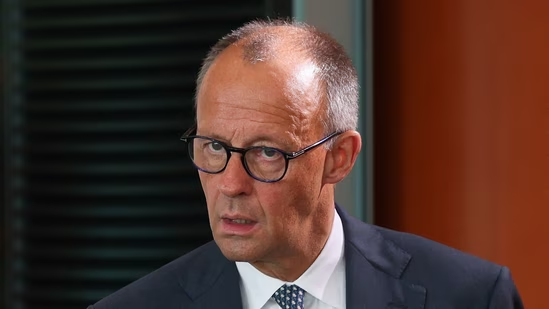
Chancellor Friedrich Merz brushed aside talk that his plummeting popularity could prompt a bid to replace him as head Germany’s government as he vowed to press ahead with a reform agenda.
“Germany has the strength for a new beginning,” Merz told a gathering of his Christian Democratic Union late Wednesday. “And I am personally determined with all my strength to make this new beginning possible together with my government.”
Merz’s chancellery is pushing back on reports that the CDU could put forward a new leader as his popularity reaches record lows. Such a scenario is politically naive and plays into the hands of the far right, according to a government official who declined to be identified in line with protocol.
There’s no indication that a plan to replace Merz has taken shape, but the prospect of such a move is a matter of open debate. Germany’s Bild newspaper and a raft of other media organizations reported on the “chancellor swap” notion on Wednesday, many citing leading officials within the conservative CDU.
Replacing a sitting German chancellor isn’t straightforward. The chancellor is elected with a Bundestag majority, meaning that a successor would have to have the support of coalition partners. The last time that happened was 1974, when West German Chancellor Willy Brandt was succeeded by SPD ally Helmut Schmidt. In that case, Brandt was hit by scandal after his chief of staff was outed as an East German spy.
Merz has repeatedly said that his partnership with the Social Democrats is the only viable path to a stable administration. He’s ruled out the option of ending the coalition to govern in a minority government, an option that would open the possibility of pushing through legislation with the help of the far right.
The coalition has sought to lift itself out of the turmoil by delivering on a sweeping overhaul of Germany’s healthcare, tax and pension systems by this summer, part of an effort to get Europe’s biggest economy back on track. But the process has been weighed down by deep disagreements between the CDU-led bloc and the SPD and a fresh economic hit from the war in Iran.
Merz’s bloc had 22% support, five percentage points behind the far-right Alternative for Germany, according to a Forsa survey published Tuesday. The SPD’s support has been at 12% since March, according to the poll.
“I feel the responsibility of this office — especially in times of such profound change and major upheaval,” Merz told the CDU meeting in the western German city of Arnsberg in his home district.