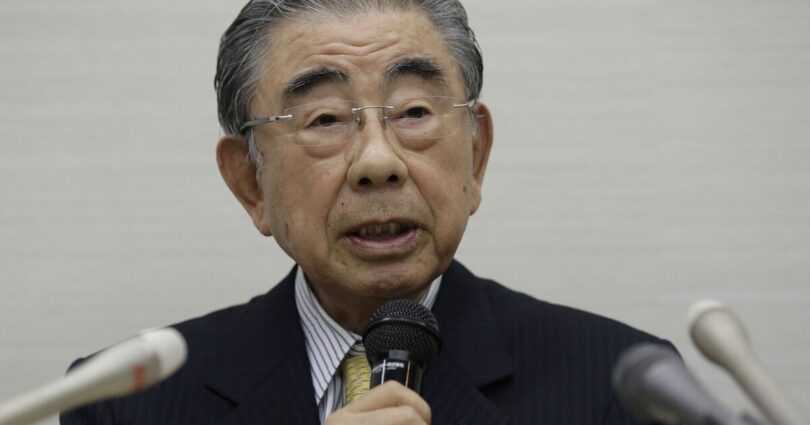
Toshifumi Suzuki, the founder of Seven-Eleven Japan and widely regarded as the father of Japan’s convenience store industry, died of heart failure on May 18, Seven & i Holdings 3382.T said on Monday. He was 93. Born in Nagano in 1932, Suzuki joined retailer Ito-Yokado in 1963 after working at a book wholesaler.
Defying scepticism at the time, Suzuki partnered with Southland Corp, the US operator of 7-Eleven, to launch Seven-Eleven Japan in 1973, opening the first store in Tokyo the following year. He pioneered the use of data to tailor inventory and built a business model centred on ready-to-eat meals and rapid inventory turnover, helping transform convenience stores into a cornerstone of Japan’s retail landscape.
Suzuki also led the successful restructuring and rescue of Southland in the early 1990s after the 7-Eleven parent filed for bankruptcy due to massive debt from a leveraged buyout.
Suzuki went on to establish Seven & i Holdings in 2005 and oversaw its expansion into a retail conglomerate.
The avid book reader stepped down as chairman in 2016, but remained an influential figure in Japan’s retail industry.
His business acumen led him to being dubbed “god of retail” in his country.
There are now around 80,000 7-Eleven stores worldwide – and the chain is the biggest convenience store brand in Japan.
Convenience stores, or ‘konbini’ as they are known in Japan, are seemingly ubiquitous in the Asian nation, and provide shoppers with everything from hot meals to clothing.
Other well-known chains in the country are Family Mart and Lawson.