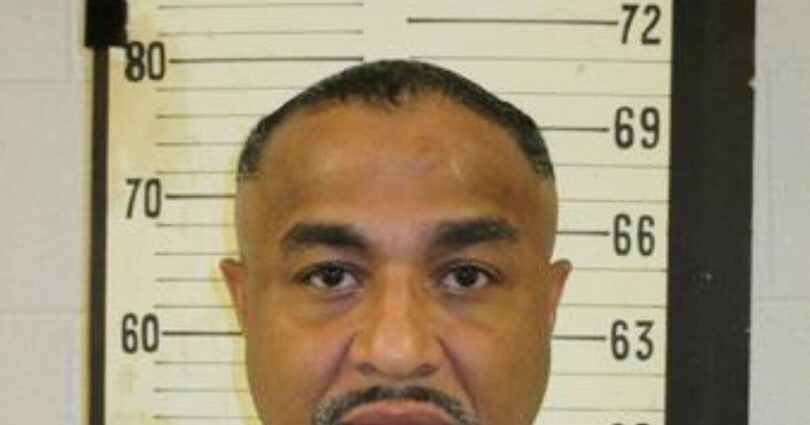
The lethal injection of a man convicted of kidnapping and murdering three people was called off on Thursday after staff tried and failed for over an hour to find a suitable vein. Tennessee officials said medical personnel quickly established a primary IV line ahead of the execution of Tony Carruthers.
However, they were unable to find a suitable second vein for a backup line as required by the state’s execution protocol. Efforts to insert a central line also failed, and officials called off the execution. Tennessee Governor Bill Lee said afterwards that the state would not try again for at least a year.
Maria DeLiberato, an American Civil Liberties Union attorney representing Carruthers, said that after establishing an IV line in Carruthers’ right arm, medical personnel tried his other arm, his left hand and his left foot before trying to establish a central line.
Unable to establish a central line, the medical team accessed a vein in his right shoulder before the warden received a phone call and announced the execution was off, she said.
Carruthers, 57, was found guilty of the 1994 kidnappings and murders of Marcellos Anderson, his mother Delois Anderson and Frederick Tucker.
Carruthers himself has consistently maintained his innocence.
In the run-up to the now-called off execution, national attention was brought upon his case, with advocates like the American Civil Liberties Union (ACLU) claiming there were significant problems with his trial.
The nonprofit group also collected more than 130,000 signatures calling for the execution to be halted to allow for “necessary fingerprint and DNA testing”.
Last week, influencer Kim Kardashian urged her fans on social media to call the governor’s office and ask for DNA evidence to be tested.
Carruthers was forced to represent himself at trial after repeatedly complaining about court-appointed attorneys and threatening to harm several of them.
Carruthers’ attorneys have argued that he has mental health issues that render him too impaired to be executed.
The number of executions in the US surged from 25 in 2024 to 47 last year, driven by a sharp increase in Florida. That state carried out 19 executions in 2025, up from one the previous year, according to the Death Penalty Information Center.