The 1877 climate disaster sparked prolonged droughts, triggering a global famine (Image: Getty)
In 1877 and 1878, an El Niño-driven famine claimed the lives of millions across the tropics.
Now, over 140 years on, the world is bracing for a fresh El Niño, an extended climate phenomenon characterised by abnormally high temperatures that emerges every few years. Scientists caution it could rank among the most powerful on record, triggering significant instability and suffering in particular regions globally.
A Wall Street Journal report suggests the warm phase could push ocean temperatures up by as much as 5.4 degrees, causing extensive droughts in some locations, devastating floods in others, and turmoil in worldwide food supplies.
The 1877 climate disaster sparked prolonged droughts, triggering a global famine that claimed at least 50 million lives, with some estimates putting the death toll at 60 million – roughly 3 per cent of the Earth’s entire population at that time.
“It was arguably the worst environmental disaster to ever befall humanity and one of the worst calamities of any sort in at least the last 150 years, with a loss of life comparable to the World Wars and the influenza epidemic of 1918/19,” climate researchers wrote in a 2018 study of the famine.
Read more: Air-con will be ‘essential’ for one major reason
Read more: Nostradamus 2026 prediction includes one city which will ‘overflow with blood’
Because nations are now far better prepared to monitor El Niño events through oceanic sensors and advance warning systems, and farming practices have become more advanced, a large-scale famine is not anticipated.
However, experts warn the weather phenomenon is likely to heap further pressure on an already fragile global system.
Farmers are already struggling with fertiliser shortages triggered by the effective closure of the Strait of Hormuz, while energy prices have surged due to the war in Iran and the Ukraine-Russia conflict.
Laurie Laybourn, who heads the Strategic Climate Risks Initiative, a British-based think tank, told the New York Times there is potential for “a perfect storm of factors.

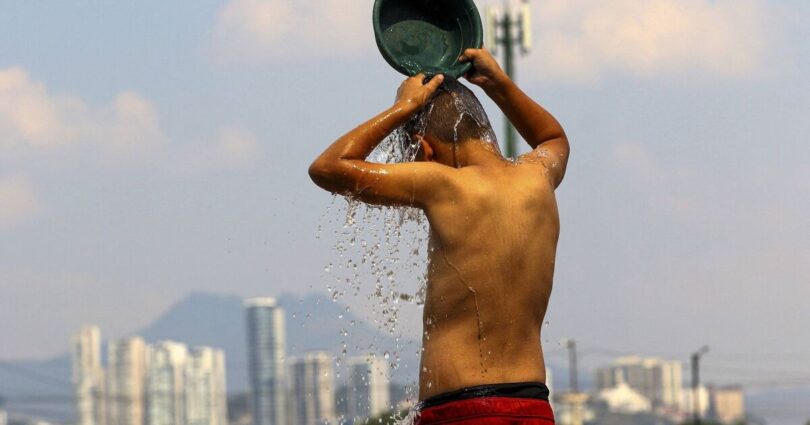
Experts say the weather event is likely to add pressure to an already precarious global system. (Image: Getty)
“You could see an increase in poverty, malnutrition, conflict, indebtedness, and all of the domino effects that come from that.”
Researchers estimate the previous super El Niño, which struck between 2015 and 2016, inflicted roughly £2.9 trillion in damage on the global economy.
Should the impending event prove as severe as predicted, experts suggest the world could experience comparable losses during an already volatile period.