When Hurricane Melissa hit Jamaica in October 2025, it caused widespread destruction across the island, and Unicef estimated about 280,000 children still need humanitarian assistance
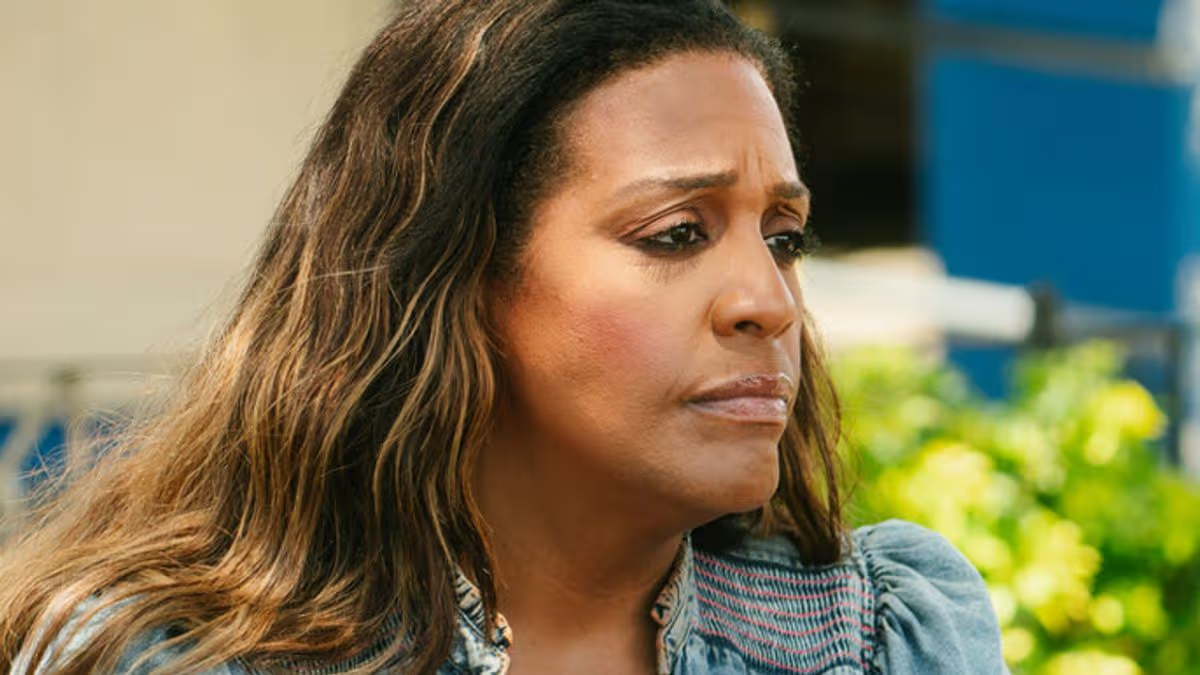
Alison Hammond today told how she was devastated after seeing the fall-out of Hurricane Melissa, which tore through Jamaica and left thousands homeless.
The This Morning presenter, 51, said she was haunted after seeing the remnants of people’s lives – including cars, sofas and clothes – strewn across the streets after the 185mph destroyed large swathes of the Caribbean island. Alison – born in Birmingham to Jamaican parents – visited the island just seven months after the tropical cyclone left wide-scale destruction and killed at least 45 people.
She visited the port city of Black River, one of the worst affected areas where people were left scavenging for food and desperately searched for loved ones after the storm. Alison witnessed some of the worst damage during the trip with Unicef ahead of Soccer Aid.
READ MORE: Missing Ben Needham’s mum fears Greek Police won’t fight for her son and just want case ‘gone’READ MORE: Dad ‘shaking with happiness’ as boy, 5, found alive three days after disappearing into bear-infested woods
At Black River Primary School, large parts of the building were left unusable, with some children still unable to return to in‑person learning. Pupils spoke about the fear they felt as homes were damaged or swept away, and the uncertainty families continue to face months later.
Alison also saw widespread destruction across the town, including homes, churches and the historic market reduced to rubble. She said: “Coming to Black River has been for me the biggest eye opener. As we approached in the car, I couldn’t believe the devastation, and it just didn’t stop. I saw everything from cars, people’s clothes, sofas, it was unbelievable. No tree was standing straight, no greenery left.”
Alison made the trip to help raise awareness and vital funds ahead of Soccer Aid for Unicef on Sunday May 31. In a video diary released today, she shared a candid account of her visit, including time spent with 11‑year‑old Orecia, a pupil at Darliston Primary School located in Westmoreland, whose life was turned upside down by the hurricane.
Orecia showed Alison around her severely damaged school, where classrooms lost their roofs and learning was brought to a halt. Alison also visited UNICEF‑supported temporary learning spaces, which are enabling children to return to education despite the devastation.
Orecia and her classmates spoke about losing homes and belongings, fleeing the storm and living with fear in its aftermath. Alison also visited Orecia’s family home, which was left uninhabitable by the hurricane, forcing Orecia, her mother Alicia and baby sister Octavia to move in with her grandmother.
Despite everything, Alison saw Orecia’s resilience first‑hand, sitting in on lessons and hearing pupils perform songs in a Unicef-funded centres as they begin to recover and rebuild their lives.
Alison said: “Meeting Orecia and her family at her home that they’ve rebuilt was just incredible. Her mum is so positive. Seeing that resilience in these people has really floored me. I knew they were going to be resilient, and they have to push forward but seeing how much they just want to get back to normality is inspiring to see. Through this trip, I’ve really seen how Unicef supports families during their hardest moments.”
She added: “It’s made me think about families, when houses are broken down and stripped away, nobody can strip away the solid foundation of a family sticking together and pulling through this.”
When Hurricane Melissa hit Jamaica in October 2025, it caused widespread destruction across the island. Unicef estimated around 280,000 children need humanitarian assistance, with more than 100,000 experiencing disruption to their education due to damaged schools and unsafe learning environments.
Temporary classrooms, school supplies and psychosocial support, helping tens of thousands of children return to learning and begin to recover from trauma, have been arranged. At a Unicef‑supported Child Friendly Space, Alison saw how children are being helped to cope with their traumatic experiences through play, routine and psychosocial support.
Alison said: “When something as horrific as a hurricane happens and your school is destroyed and you’ve lost your home, places like this are a lifeline.”
A Unicef film from Alison trip will be shown during Soccer Aid for Unicef, broadcast on ITV1, ITVX, STV and STV Player at 5pm on Sunday May 31. Philip Goodwin, Unicef UK CEO, said: “Alison’s visit to Jamaica is a powerful reminder of the human cost of extreme climate events and the extraordinary resilience of children and families rebuilding their lives.
“Hurricanes don’t just destroy homes and schools, they disrupt childhoods. Through temporary classrooms and safe spaces to learn and play, UNICEF is helping children recover and regain a sense of normality for the future.
“For 20 years Soccer Aid for UNICEF has shown what’s possible when people come together to support children around the world. Every pound raised helps children affected by crises like this get the education, protection and care they need to have the childhood they deserve.”
The Children’s Investment Fund Foundation (CIFF) has committed to double every donation received up to £6 million, for this Soccer Aid for UNICEF campaign. CIFF’s matched funding will go directly towards the Child Nutrition Fund, tackling challenges such as severe forms of malnutrition and anaemia and helping children to get the nutrition they need to grow up healthy and able to play.
Donations can be made ahead of the match at socceraid.org.uk/donate