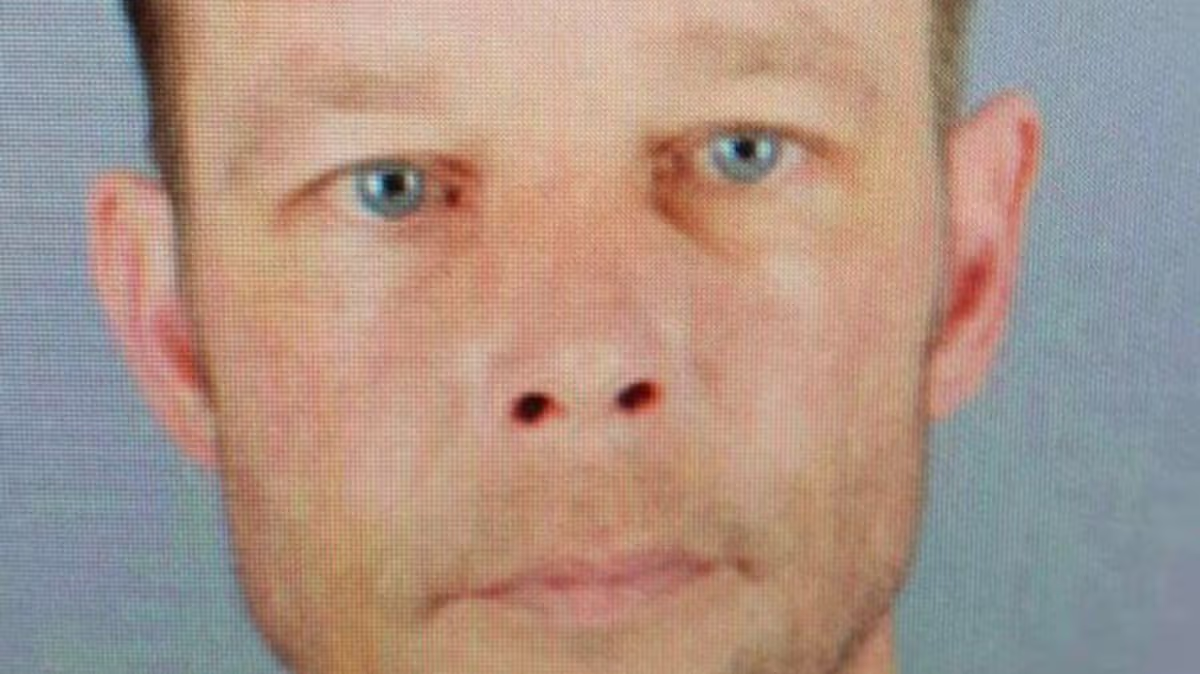
Convicted rapist Christian Brueckner – prime suspect in the disappearance of Madeleine McCann – was supposed to be under 24-hour watch in his native Germany. But now a huge blunder has been revealed
The prime suspect in the disappearance of Madeleine McCann has been at the centre of a shocking breach in security.
Christian Brueckner was supposed to be under 24-hour surveillance in his native Germany – but the convicted rapist was able to give police officers the slip.
During the time he vanished in the northern German port city of Kiel, Brueckner managed to become involved in a violent confrontation – and was later arrested.
READ MORE: School horror as teacher dies in front of her pupils in classREAD MORE: Great white shark horror as diver torn to death by 13ft monster
The explosive revelation emerged after emergency talks in the regional parliament of the northern federal state of Schleswig-Holstein on the debacle surrounding the man identified by German prosecutors as the prime suspect in three-year-old Madeleine’s disappearance in Portugal in 2007.
Enraged opposition politicians demanded answers over how one of Europe’s most notorious criminal suspects could evade officers despite wearing an electronic ankle tag and supposedly being watched 24 hours a day at an enormous cost to the German taxpayer.
German Interior Minister Magdalena Finke admitted the surveillance operation had failed.
She confirmed Brueckner disappeared from police view on April 20 — even though officers had been tailing him constantly since his release from prison.
The suspect, who returned to Kiel in March after completing a seven-year sentence for the brutal rape of an elderly American woman in Portugal in 2005, is currently living inside a fenced-off container accommodation under strict monitoring conditions.
Yet despite the massive security operation, police admitted he managed to move around 200 metres away from the site before entering private property and becoming embroiled in a vicious fight with the owner.
Authorities described the clash as “mutual bodily harm” and said criminal investigations are continuing.
The humiliating lapse has now triggered alarm inside German political circles amid growing fears over what critics called a shocking and highly “dangerous surveillance gap”.
Finke insisted authorities were taking public fears “very seriously” and claimed intense extra security measures had now been introduced.
Police also admitted the suspect they describe as “Christian B.” has repeatedly tried to shake off surveillance teams.
Officials revealed he deliberately cycles into narrow paths and side routes where police cars cannot follow him — forcing officers to rely on his electronic tag before scrambling to relocate him.
The extraordinary disclosures sparked outrage because the suspect remains under intense international scrutiny over Madeleine’s disappearance from Praia da Luz, Portugal, nearly 20 years ago while on a family holiday with her parents Kate and Gerry.
German prosecutors still officially regard Bruckner as the prime suspect in the case, although he has still never been charged over Madeleine’s disappearance and denies any involvement.
Earlier this month it emerged British police are pushing for Brueckner to be extradited to the UK to stand trial at the Old Bailey.
A top Scotland Yard officer is said to be leading efforts to charge the German suspect on suspicion of abduction and murder ahead of the 20th anniversary of Madeleine’s disappearance next year.
But there’s a major obstacle standing in their way following Brexit; the German constitution prevents the extradition of its citizens to non-EU countries. According to Article 16 of the constitution, German citizens may not be extradited to any foreign countries that are outside of the bloc.
Before Brexit, it would have been much easier to have Brueckner sent over to the UK to stand trial for a suspected crime against a Bruckner decided to leave Germany and made himself vulnerable to arrest. Instead, the Met is said to be determined that he will someday face charges in Germany.