
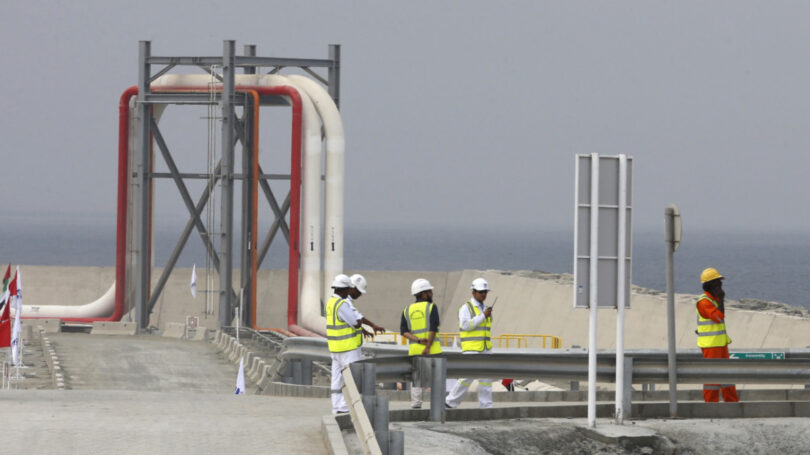
The UAE says it will double the amount of oil it can export by bypassing the Strait of Hormuz via a new pipeline set to be operational in 2027.
The Abu Dhabi National Oil Company (Adnoc) said in a statement on Friday that it is accelerating construction of a pipeline that runs to the port of Fujairah in the Gulf of Oman.
Abu Dhabi Crown Prince Sheikh Khaled bin Mohamed bin Zayed announced the project in a committee meeting, Adnoc said in a statement, adding that the pipeline was already under construction.
The UAE’s Habshan-Fujairah pipeline already has a capacity of 1.8m barrels per day (bpd). The new pipeline would double the amount of oil the UAE could export while bypassing the Strait of Hormuz amid the US-Israeli war on Iran.
The UAE was exporting around 3.4 million bpd of oil before the war on Iran. Its exports were cut by roughly 60 percent after Iran seized control of the Strait of Hormuz and imposed its own passageway system.
CLICK FOLLOW: TO FOLLOW US
Sign up to get the latest insights and analysis on
Israel-Palestine, alongside Turkey Unpacked and other eSPORTY
The construction of an additional pipeline would allow the UAE to practically export all of its pre-war capacity without traversing the Strait of Hormuz. However, the Gulf state says that its target is to export nearly five million bpd of oil by 2027.
In the early days of the war, Iran prevented Gulf states from exporting oil, while its own shipments continued. The US imposed its own blockade on Iran last month, and since then, its exports have dried up.
‘Swinging into action:’ The Saudi Arabian pipeline designed to bypass Hormuz
Read More »
The UAE made a historic departure from the Saudi Arabian-led energy cartel Opec this month. Abu Dhabi said the move would give it the freedom to fulfil its pledge.
The UAE has been in a years-long spat with Saudi Arabia over how to manage production. Until recently, Riyadh wanted to limit supply to support prices while the UAE favoured looser production. The UAE has invested heavily in infrastructure to increase its capacity.
The UAE’s geographic proximity to Iran still makes its pipeline infrastructure a target. Iranian drones hit a gas-processing facility near the pipeline’s starting point at Habshan during the war. Fujairah was also attacked, with activity at the port briefly suspended.
The UAE is not the only country looking to boost its pipeline capacity as a workaround to the Strait of Hormuz. Saudi Arabia’s East-West pipeline has allowed the kingdom to export five million bpd of oil via the Red Sea port of Yanbu.