
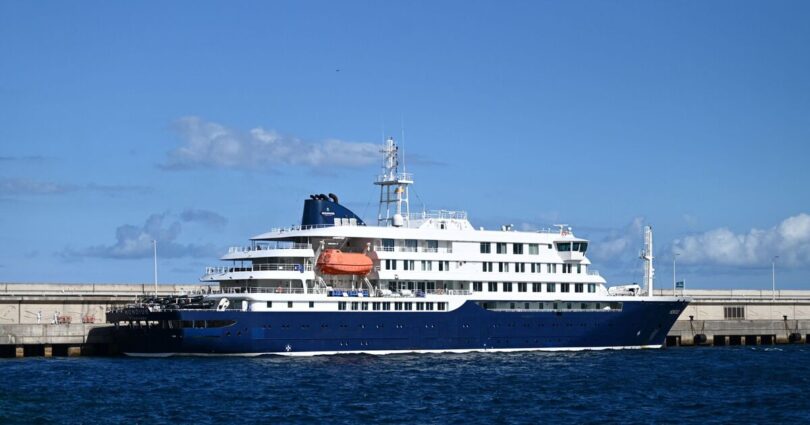
The hantavirus-stricken cruise ship MV Hondius is pictured docked in the port of Granadilla de Abona (Image: AFP via Getty Images)
A woman is in isolation on the Pitcairn Islands, one of the most remote inhabited places on Earth, after contact with a hantavirus-exposed passenger on the stricken MV Hondius cruise ship. The British Overseas Territory in the South Pacific, home to roughly 50 residents, has become the latest flashpoint in a global health scare.
The woman, who has not been named, shows no symptoms of the rodent-borne virus but is following a 45-day isolation protocol for close contacts, UK Health Security Agency guidelines confirm. She flew from San Francisco on May 7, transiting through Tahiti and Mangareva in French Polynesia before reaching Pitcairn. French Polynesian authorities criticised her for failing to notify officials and have barred her from re-entering the territory while she poses any risk.
Read more: Britons evacuated to Wuhan facility as Hantavirus ‘jumps beyond cruise ship’
Read more: Major hantavirus update as European country makes chilling ‘mutation’ admission
The UK Foreign Office said it is coordinating with local leaders and UKHSA to protect both the woman and the tiny island community.
A Pitcairn government spokesperson told the BBC: “The woman’s wellbeing and that of residents remains the top priority.” Officials stress she is not a suspected case and the risk to the public is low.
The outbreak linked to the Dutch-flagged MV Hondius has already claimed three lives. The ship departed Ushuaia, Argentina, on April 1 with 147 passengers and crew from 23 countries.
A 70-year-old Dutch man died on board on April 11. His 69-year-old wife died days later in South Africa after disembarking at St Helena. A German woman also died on the vessel.

Pitcairn is one of the world’s remotest islands (Image: Getty)
The World Health Organization has confirmed nine cases, with two more suspected. WHO chief Tedros Adhanom Ghebreyesus said: “There is no sign of a wider outbreak after passengers were evacuated,” but warned the situation could evolve.
Hantaviruses, typically spread by rodents, can cause severe illness with symptoms including fever, fatigue, muscle aches, vomiting, diarrhoea and breathing difficulties. The Andes strain involved here can transmit between humans.
The drama has thrust renewed attention on Pitcairn, a volcanic outcrop best known as the refuge of HMS Bounty mutineers and their descendants who settled there in 1790. The community has faced its own dark history.
In the early 2000s, a string of prosecutions for underage sex offences rocked the islands, resulting in several convictions including among long-term residents.
The cases sparked intense controversy over governance, isolation, and safeguarding in one of Britain’s smallest overseas territories.
British army medics were recently parachuted onto another remote UK territory, Tristan da Cunha in the South Atlantic, to assist a resident with suspected hantavirus who left the same cruise.
The MV Hondius is now heading to Rotterdam after leaving Tenerife. As fears ripple across continents, the lone woman on Pitcairn symbolises the virus’s reach into the planet’s most inaccessible corners.
Local authorities continue to monitor the situation closely, balancing strict health protocols with life on one of the world’s tiniest societies.