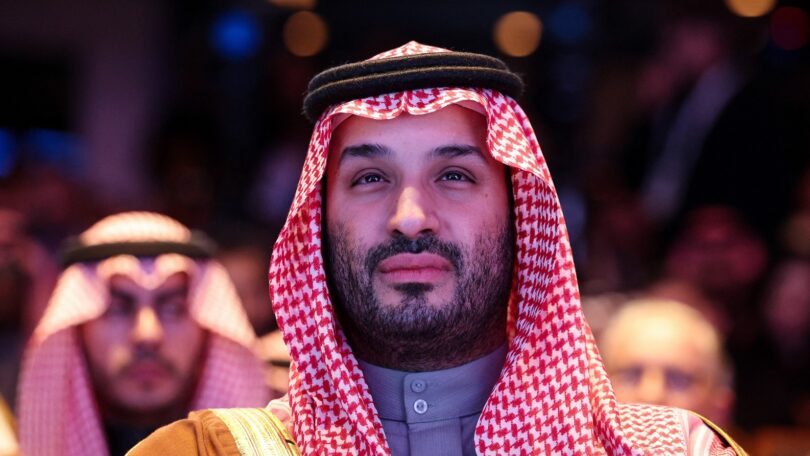
Saudi Arabia has floated a non-aggression pact between Iran and Middle Eastern states based on a 1970s agreement that eased tensions in Europe during the Cold War, The Financial Times reported on Thursday.
The Saudi Arabian efforts have gained the support of European capitals and EU institutions, but it’s unclear if Israel and the US would support it.
The UAE has taken a hawkish position on Iran and moved substantially closer to Israel since the US-Israeli war on Iran started.
Saudi Arabia is modelling its framework on the 1975 Helsinki Accords, which were signed by the Soviet Union and its allies, the US, and European states.
The agreement secured a common acceptance of Europe’s post-WWII borders. Signatories also agreed to respect human rights and cooperate on economic, scientific, and humanitarian issues.
CLICK FOLLOW: TO FOLLOW US
Sign up to get the latest insights and analysis on
Israel-Palestine, alongside Turkey Unpacked and other eSPORTY
An Arab diplomat told The Financial Times that a similar agreement for the Middle East would be welcomed “by most Arab and Muslim states, as well as by Iran”. The latter has called on Gulf states to close US military bases in the region.
Israel would likely oppose any formal agreement that seeks to reduce tensions between Arab states and Iran. It’s also unclear whether the US would support the move.
It’s unclear how the agreement would handle sensitive issues like the Strait of Hormuz. Tehran wants to exert its influence over the waterway and has imposed its own system for navigating the crucial strait, including a toll.
A divided Gulf, stalled peace talks
Saudi Arabia and other Gulf states lobbied the US against attacking Iran, in part because they believed the war would leave Iran battered but emboldened, with the Islamic Republic still in power.
A CIA report suggests that is what has played out. The intelligence document said Iran retains most of its pre-war arsenal of ballistic missiles, and the government shows no sign of collapsing.
‘Ideology, family and history’: The UAE-Saudi Arabia feud explained
Read More »
The Gulf has been divided over how to respond to the war. Iran pummelled the Gulf states with thousands of drones and missiles despite their efforts to prevent a conflict. The Trump administration lobbied Gulf states to join the war on Iran.
Reuters reported this week that Saudi Arabia launched strikes on Iran in March.
The UAE also launched strikes, but Abu Dhabi’s response has been more hawkish. For example, Saudi Arabia has also supported mediation efforts by its close partner, Pakistan, which have been opposed by the UAE.
Talks between the US and Iran mediated by Pakistan have stalled.
The UAE and Saudi Arabia have also staked out different positions on Israel.
Whereas voices close to the Saudi Arabian royal family have criticised Israel, the UAE has moved closer to it.
Israel dispatched Iron Dome batteries to the UAE during the war, according to US ambassador to Israel Mike Huckabee, and Israeli Prime Minister Benjamin Netanyahu made a secret wartime visit to the small Gulf State, his office said on Wednesday. However, Abu Dhabi denied that the visit took place.