
Authorities have confirmed a third British national contracted hantavirus but added the Brit was on the world’s most remote island
A third British national has been diagnosed with hantavirus on the world’s most remote island – which has a population of just 250 people.
The UK Health Security Agency (UKHSA) said two British nationals have confirmed hantavirus but there is now “an additional suspected case of a British national on Tristan da Cunha”. Seven Brits disembarked the luxury MV Hondius cruise ship, at the centre of the rat virus outbreak, on the neighbouring remote island of St Helena on April 24 – it is thought this third Brit was not among the seven other Brits.
The cruise ship operator, Oceanwide Expeditions, said the first case of the deadly virus was not confirmed until May 4.
READ MORE: ‘I treated hantavirus passengers on doomed cruise – there’s one big fear about disease’READ MORE: Hantavirus map: Every country linked to killer condition in cruise ship drama
The luxury cruise, which set off from Argentina, made several stops including the remote British Overseas Territory of Tristan da Cunha, on April 13.
Three people on the MV Hondius liner, an elderly Dutch couple and German woman, have died. A 70-year-old Dutch man was the first person to die, on April 11 and his body was removed from the vessel on April 24, in St Helena.
A total of 29 people left the cruise ship at this point, including seven Britons. The Dutch man’s wife, aged 69, deteriorated during a flight to Johannesburg, South Africa, and died on April 26 upon arrival at an emergency department.
A German woman also died while a British passenger was evacuated to South Africa where he remains in a critical condition.
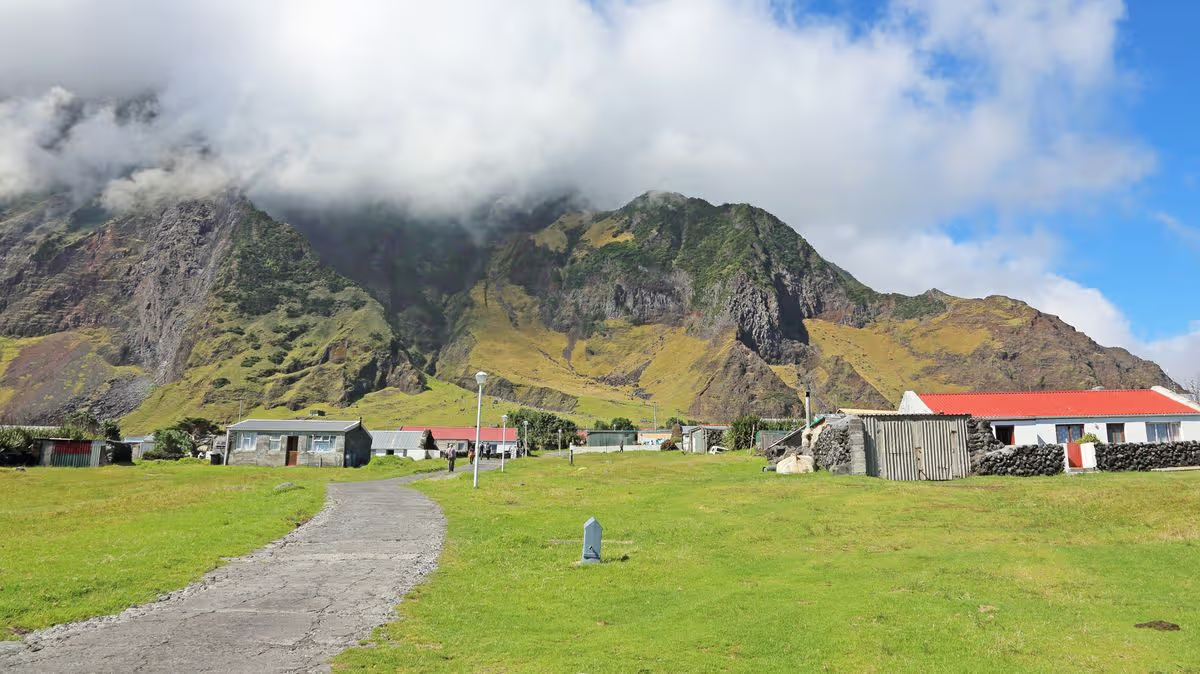
Tristan da Cunha, in the South Atlantic Ocean, is home to just 250 people, had one pub and no airport. The island is more than 2,400km away from the closest inhabited island of St Helena and 2,800km away from South Africa.
Hantavirus can spread from animals to humans when people come into contact with infected rodents and their droppings, saliva or urine. This current outbreak has been connected to a birdwatching trip in Argentina which two of the passengers went on before boarding the ship.
Tristan is also home to invasive black rats that cause devastation of birds on the island. The island therefore has a tradition of “ratting day” where locals group together to hunt these rats down.
British national remain on the MV Hondius, which is still at sea. Following the outbreak and deaths, the cruise attempted to dock in Cape Verde but was refused and is now travelling to Tenerife, Spain.
The UKHSA said none of the British citizens on board the ship are currently reporting symptoms but they are being closely monitored. The ship is expected to dock on Sunday with evacuations starting on Monday.
The UKHSA added: “UK Government staff will be on the ground ready to support the British nationals disembarking. British passengers and ship crew not displaying any symptoms of hantavirus will be escorted by UK Government staff to an airport and given free passage back to the UK.”
Despite this, the president of the Canary Islands, Fernando Clavijo, protested this move and said: “I cannot allow [the boat] to enter the Canaries.” Workers at the port in Tenerife, expected to receive the vessel, have protested against the move.