
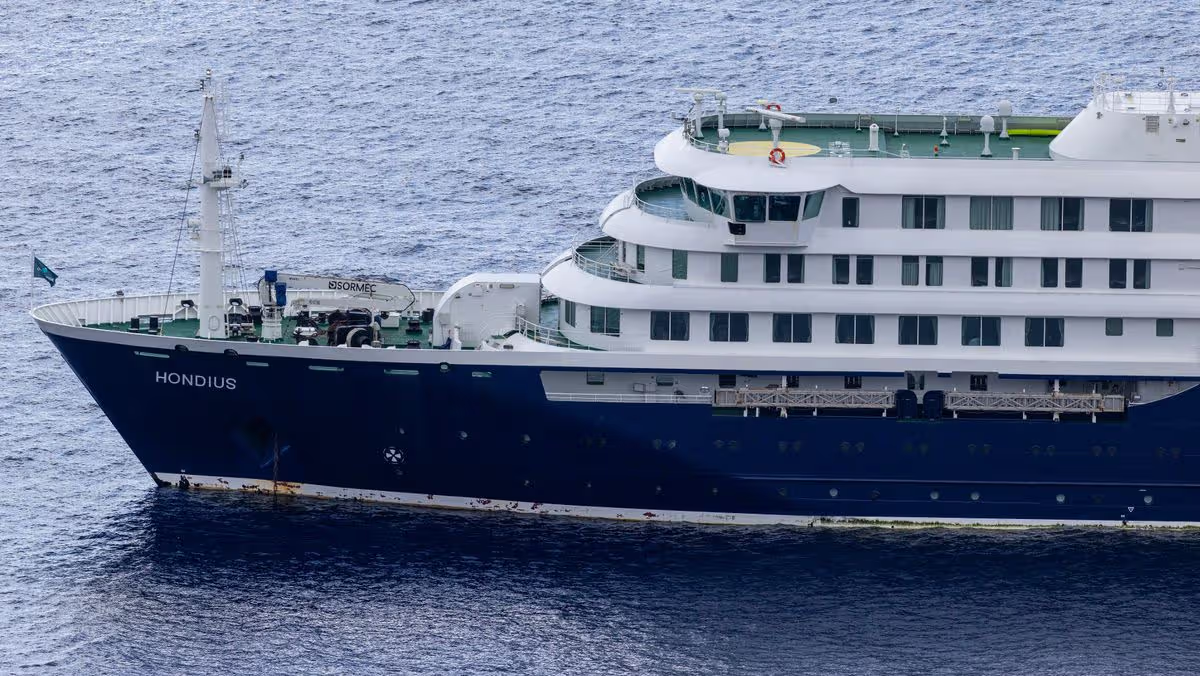
Another country has joined the list of places that have tracked down passengers from the rat virus cruise ship who returned home – three people have died amid the outbreak
Officials in several countries have rushed to track down potential hantavirus patients as another country reveals it has found people who left the cruise prior to the deaths of passengers.
Three people have died after an outbreak of the rat virus on the luxury MV Hondius liner – a 70-year-old man, his 69-year-old wife and a German woman died. Around 150 people, from 23 countries, were on the cruise ship which has been stuck at sea, unable to dock, despite the deaths.
Officials in the United States have now revealed people in three states are being monitored after they returned to the US from the impacted Dutch cruise ship.
READ MORE: Hantavirus spread fears as plane passenger NOT on Hondius ship infected after flight with patientREAD MORE: Inside the isolation hospital ward where hantavirus cruise ship passengers are to be taken
Health officials in Georgia said they were looking at two people who had been on the liner but returned home. The Georgia Department of Public Health said the two people “are currently in good health and show no signs of infection”.
The California Department of Public Health said it was also made aware of several residents who had also been on the MV Hondius, but did not confirm the number, according to The New York Times.
A spokesperson said: “There is no information that the California residents are ill or infected. At this time, the risk to public health in California is low.”
Health officials in Arizona also confirmed it was told it also had one resident who had returned from the rat virus liner. A spokesperson said: “This individual is not symptomatic and is being monitored.”
The US Centers for Disease Control and Prevention, on May 6, said: “The Department of State is leading a coordinated, whole-of-government response including direct contact with passengers, diplomatic coordination, and engagement with domestic and international health authorities.”
Hantavirus can spread from animals to humans when people come into contact with infected rodents and their droppings, saliva or urine. This can include breathing in particles from infected droppings and touching infected parts with hands. It can also be contracted through rodent bites but this is very unlikely. Authorities confirmed the virus was the Andes strain of hantavirus, which spreads between close contacts.
A case of hantavirus has been confirmed, on May 7, from someone who had been on the MV Hondius. This man visited a hospital in Zurich after receiving an email from the cruise operator about the outbreak.
The World Health Organisation, after confirming this case, said: “In line with the International Health Regulations (IHR), WHO is working with relevant countries to support international contact tracing, to ensure that those potentially exposed are monitored and that any further disease spread is limited.”
Health officials in other countries have also acted to track down other passengers who disembarked the liner. This includes the UK where authorities said two people were self-isolating at home – neither had symptoms of the virus.
A British man, who tested positive, was evacuated and taken to a hospital in South Africa, where he is receiving treatment.
Another British man, Martin Anstee, 56, was among three people evacuated from the ship and flown to The Netherlands for treatment. The other two were a 41-year-old Dutch crew member and a 65-year-old German.


