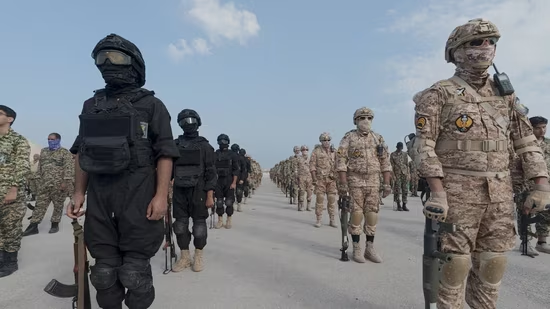
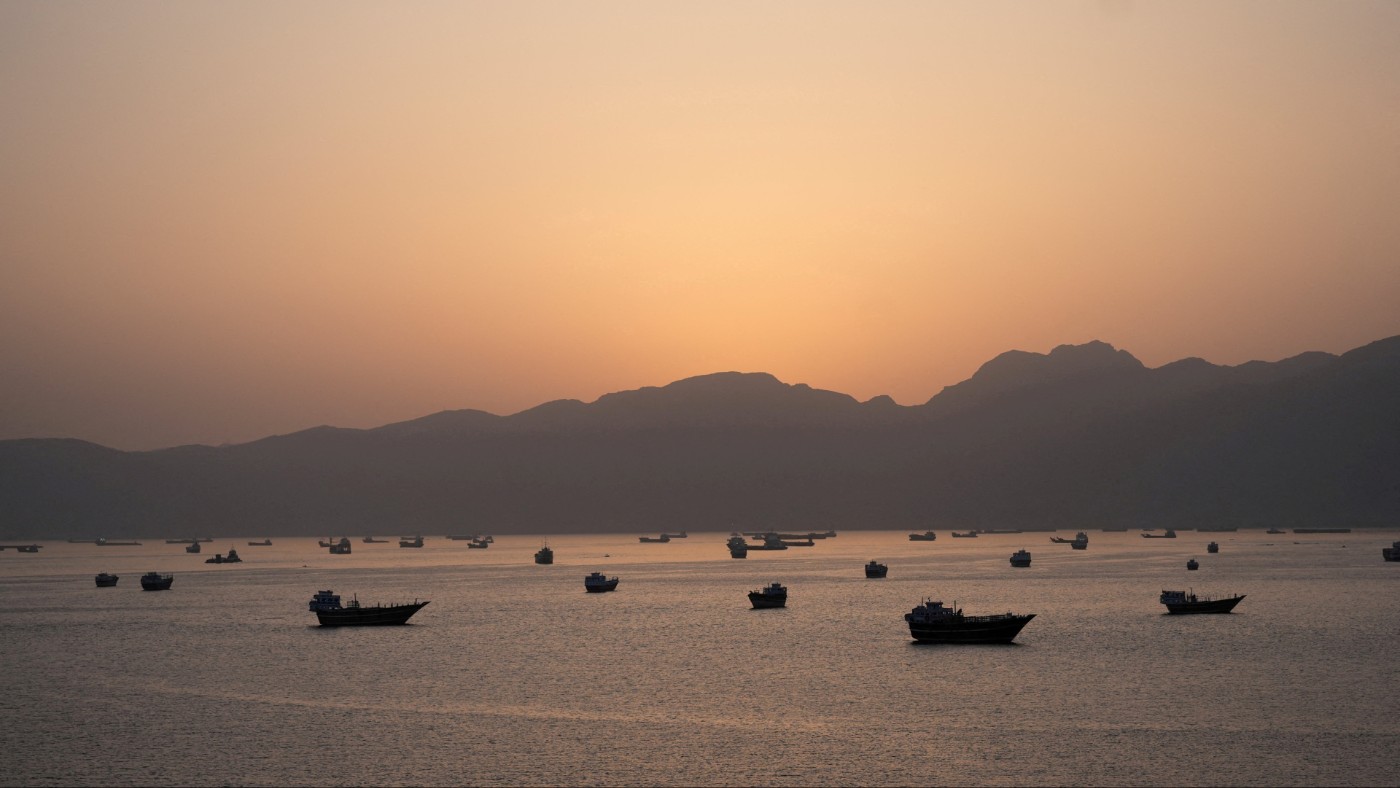
Iran has warned the US that it will attack any of its vessels that enter the Strait of Hormuz after US President Donald Trump announced that the US navy will accompany trapped ships out in the area.
The warning reported on Monday morning by Reuters was made by Ali Abdollahi, who heads the unified command of the Iranian military.
“We warn that any foreign armed forces, especially the aggressive US army, will be attacked if they intend to approach and enter the strait of Hormuz.
Earlier an Iranian army spokesman singled out the US when warning against entry into the strait.
“We warn that any foreign armed force, especially the aggressive US army, will be attacked if they attempt to approach and enter the Strait of Hormuz,” it added.
CLICK FOLLOW: TO FOLLOW US
Sign up to get the latest insights and analysis on
Israel-Palestine, alongside Turkey Unpacked and other eSPORTY
Trump, who has ordered his own blockade of Iranian ports, has thus far refrained from sending US ships into the strait for fear of Iranian attack.
On Sunday, he announced “Project Freedom”, which he described as a humanitarian mission to retrieve ships that have been barred from leaving the body of water by Tehran.
The US president warned Iran that any interference in the operation will result in a military response.
A key energy chokepoint, through which about a fifth of the world’s crude oil and liquefied natural gas flows, the Strait of Hormuz is bordered on one side by Iran and on the other by Oman.
The closure of the waterway has resulted in the largest supply loss in history: more than 10m barrels of oil per day and a 20 percent cut in global liquefied natural gas supply, the International Energy Agency has said.
Slow moving negotiations
The tit-for-tat threats over the Strait of Hormuz, comes as a US and Iranian diplomats, mediated by Pakistan, ostensibly try to reach a deal to end the war.
A ceasefire came into effect on 8 April, but Iran views Washingtons sincerity to bring an end to the conflict with scepticism.
Iranian commentators, such as the academic Mohammad Maraandi, who is seen as being close to government officials, have stated that they expect hostilities to resume and that the US is using the cover of diplomacy to prepare itself for the next wave of attacks on Iran.
Why the war on Iran matters for the global AI energy race
Read More »
Iranian Foreign Ministry spokesperson Esmail Baghaei has blamed the US for the slow pace of diplomacy to end the war, calling its demands in negotiations “excessive”.
“The other side must resolve to adopt a reasonable approach and abandon excessive demands regarding Iran,” Baghai told reporters on Monday.
Baghei also said that all countries that have taken part in the war both directly and indirectly are “responsible”.
According to Al Jazeera, Iran delivered a list of proposals to end the war to the United States through Pakistan.
The plan sets out three phases and aims to turn the current ceasefire into a full end to the conflict within 30 days.
Sources said the proposal centres on a non-aggression commitment across the region, including from Israel, to prevent a return to fighting and bring hostilities to a halt throughout the Middle East.
The first phase would see a gradual reopening of the Strait of Hormuz alongside the lifting of US restrictions on Iranian ports.
Tehran would also assume responsibility for clearing sea mines as part of efforts to restore safe navigation.