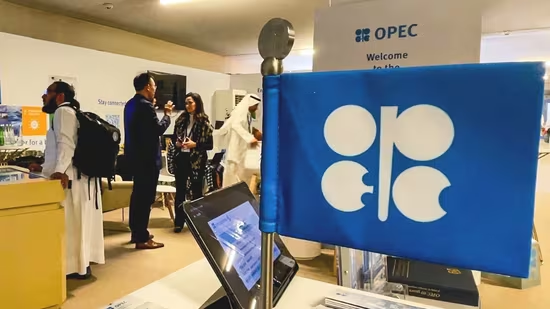
The United Arab Emirates has announced on Tuesday that it will leave OPEC (Organization of the Petroleum Exporting Countries) and its wider OPEC+ alliances effective from May 1, 2026. And this decision marks the most significant shifts in global oil politics in years.
What is OPEC and why does it exist?
OPEC was founded on September 14, 1960 in Baghdad, Iraq by five countries: Iran, Iraq, Kuwait, Saudi Arabia and Venezuela. Its headquarters shifted from Geneva to Vienna in Austria, in 1965 and it’s still there.
The number of countries in the cartel has been changing over the years but in addition to the five founding members it also includes Algeria, Equatorial Guinea, Gabon, Libya, Nigeria and the Republic of the Congo.
The UAE joined the OPEC in 1967 and now its departure will leave the cartel with 11 members.
So in early days, OPEC controlled how much oil was produced and how much it cost.
It was created so that oil-producing countries could take control of their own resources. This meant they could decide how much oil to produce, set prices and have more power over their economies.
So, if its member countries produce less oil, there is less supply in the world, so prices go up. If they produce more oil, supply increases and prices go down. This gives OPEC a strong influence on the global economy.
Also Read: US-Iran war: Iran is knocking on Putin’s door as Pakistan talks stall; here’s why
What is OPEC+?
OPEC is the main group of oil-producing countries.
OPEC+ is a bigger group that includes OPEC countries plus some other major oil producers like Russia, Kazakhstan, and Azerbaijan.
This larger group was formed in 2016 so more countries could work together to control how much oil is produced and keep prices stable. And in 2019, they made a long-term agreement called the Charter of Cooperation to keep cooperating, as per Gulf News.
Who left the OPEC in the past?
UAE is not the first one to leave OPEC. Qatar left in January 2019 to focus on natural gas rather than oil. Indonesia has suspended its membership twice, first in 2009 and then again in 2019. Ecuador also left in 2010 because of the financial burden of the membership. Angola took exit in January 2024. Gabon walked away in 1995 but came back in 2016 and is still a member today, according to Gulf News.
Also Read: Did Jimmy Kimmel get fired? What we know after Trump and Melania’s push to cancel him over ‘widow’ joke
Why is the UAE leaving?
The UAE’s energy minister said stepping away from the group would give the country greater flexibility as it will not have to follow shared rules anymore, according to BBC.
The decision came after years of disagreements with Saudi Arabia. The UAE wanted to produce more oil, while Saudi Arabia wanted to limit supply. These tensions had almost made the UAE leave earlier but it stayed until now.
As per reports, the UAE said there is currently less oil supply in the market, so it needs to respond faster to demand and it will get easier to do without the group.
“This is a decision that we took after a very careful and long review of all our strategies,” he said. “The decision is taken at the right time in our view because it’s not going to hugely impact the market: the market is undersupplied,” Energy Minister Suhail Al Mazrouei said in an interview.