
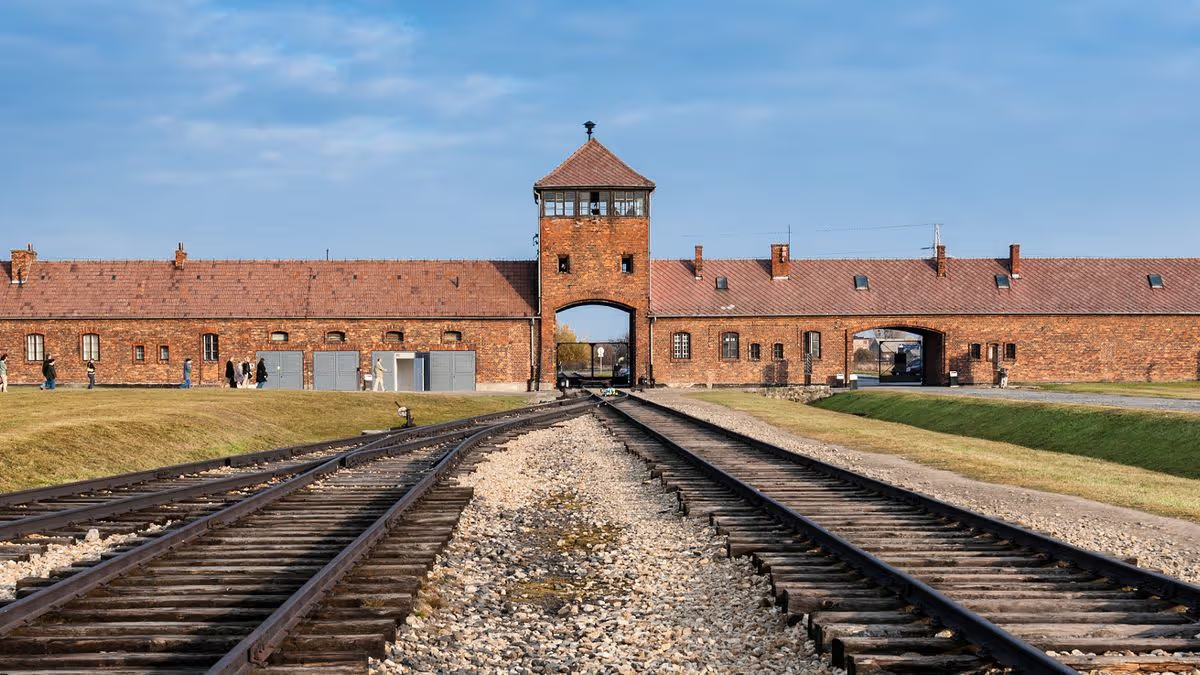
New law is being proposed in Germany to ban sale of items belonging to Holocaust victims after an auction house in Neuss tried to sell 600 objects including Gestapo files and personal letters
Germany is planning a ban on the controversial sale of the personal effects belonging to Nazi victims of the Holocaust. Germany wants to stop people making profit from such shocking sales. The first move for a ban will be heard in a regional parliament this Friday, May 8. Minister Nathanael Liminski said: “Where remembrance becomes a commodity, dignity is at risk.”
The government of North Rhine-Westphalia, Germany’s biggest state, has tabled a draft law to outlaw the commercial sale of items linked to Holocaust victims. These include, for example, letters, diaries and clothing taken from Nazi concentration and death camps.
READ MORE: Plymouth WW2 bomb detonated in ‘big bang’ as thousands evacuated and schools closedREAD MORE: Jewish primary school launches extra security appeal as ex-Marines drafted in to protect kids
The push follows a sickening scandal in the city of Neuss, where an auction house tried to sell more than 600 Holocaust-related objects. Among them were deeply personal and disturbing items — letters written from concentration camps, Gestapo files, anti-Jewish propaganda, and even a yellow Star of David badge worn by a prisoner at Buchenwald concentration camp.
This was the horrific site where around 280,000 people were imprisoned and more than 56,000 died through forced labour, starvation, medical experiments and execution. The planned sale sparked fury across Germany and beyond, with critics accusing organisers of cashing in on genocide and human suffering.
Under intense pressure, the auction was halted at the last minute, with around 460 items seized and secured. These were later handed over to the Auschwitz-Birkenau Foundation.
Supporters say the timing is critical, as the last Holocaust survivors pass away and physical evidence becomes even more vital. Wojciech Soczewica warned that a growing global market in Nazi-era objects risks distorting history and stripping these items of their human meaning.
He said: “We owe it to future generations to ensure these names are preserved and uncovered.” NRW justice minister Benjamin Limbach warned the current system fails to protect victims’ dignity and allows a growing international market to thrive.
The proposed law would shut that down. Anyone who buys or sells documents, clothing or personal belongings linked to Holocaust victims would be committing a criminal offence. The penalties are tough. Offenders could face up to three years in prison or a fine — with even attempted sales punishable. Any such deals would also be automatically void.