The UAE confirmed on Monday that it is discussing a currency swap line with the US, framing it as part of entry into an “elite group” of US allies, as fresh Iranian air strikes roiled the country.
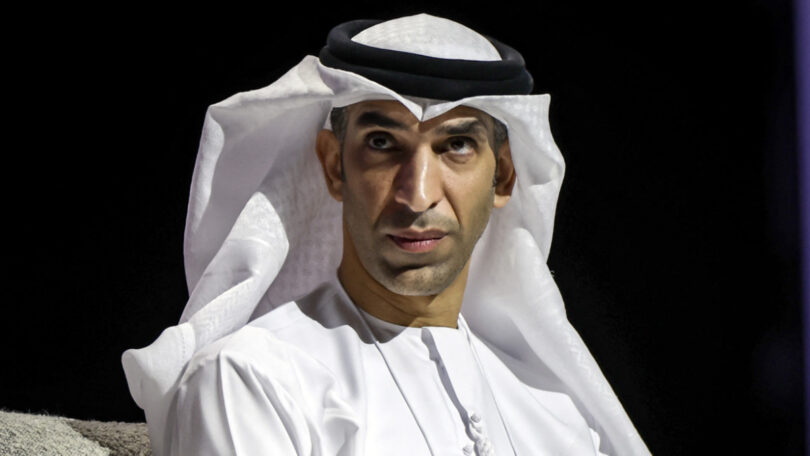
“We have this discussion and conversation with many, it’s part of an elite group that the US is having this swap policy with. They are only having it with five countries,” UAE Trade Minister Thani bin Ahmed al-Zeyoudi said at a conference in Abu Dhabi.
“Being part of that group means that transactions… trade, investments between both nations reach a level where that swap is highly needed…so it is an elite matter, [it] is not about bailing out,” he told attendees at the “Make It In The Emirates” event, a government initiative to encourage manufacturing in the UAE.
Zeyoudi’s comments are the first public confirmation from the UAE that it is in talks with the US for access to emergency dollar loans.
Amid the US-Israel war on Iran, a fragile ceasefire in the Gulf was cast into uncertainty on Monday after Iran launched missiles and drones at the UAE. The attack appeared to be in response to the US attempting to send warships through the Strait of Hormuz.
CLICK FOLLOW: TO FOLLOW US
Sign up to get the latest insights and analysis on
Israel-Palestine, alongside Turkey Unpacked and other eSPORTY
The UAE’s ambassador to the US, Yousef al-Otaiba, did not deny that talks were taking place but, in a lengthy post on X last month, said that the UAE had enough wealth to stand on its own, citing its $2 trillion in sovereign wealth investments and roughly $300bn in foreign exchange reserves.
“Any suggestion that the UAE requires external financial backing misreads the facts,” he wrote.
Despite those comments, US President Donald Trump said last month that talks were taking place. Treasury Secretary Scott Bessent said that several Gulf states, as well as Asian countries, had requested swap lines.
Zeyoudi’s framing of the deal also sought to tamp down any rumours that the UAE’s finances were shakier than they might appear.
Access to dollars during economic distress
Swap lines are generally used to provide foreign countries’ central banks access to dollars during times of economic distress. The UAE is still selling oil through the port of Fujairah, which bypasses the Strait of Hormuz, but its exports are down by more than half compared to pre-war levels.
The US has generally extended swap lines to countries during financial crises. Washington has used the short-term dollar loan to help poorer countries like Mexico and Argentina, as well as wealthier countries whose overall financial stability is viewed as key to the health of the global economy, such as Canada, the UK and Japan.
‘Empowered’: UAE’s exit from Opec appeases Trump, delivers blow to Saudi Arabia
Read More »
Experts have said the UAE, a wealthy Gulf state with just 1 million nationals, falls into neither camp.
Brad Setser, a former US Treasury economist who is now at the Council on Foreign Relations, said that the UAE’s request for a swap line was “slight[ly] strange”, given its central bank’s deep pockets and the heft of its sovereign wealth funds.
The discussions come as the UAE lobbies in public and private for the US to take a more muscular approach to Iran, in contrast to Saudi Arabia, which has supported mediation efforts by Pakistan.
The swap line discussions came as the UAE decided to pull out of the Saudi-led energy alliance dubbed Opec, or the Organization of Petroleum Exporting Countries. Some analysts speculated that leaving the energy cartel could have been part of its agreement for a swap line with the Trump administration.
“It is possible that this break could also be [the] result of some sort of ‘deal’ between [the] UAE and Israel [and the] US, wherein they helped defend the UAE from Iran in exchange for delivering a major blow to Opec, which Trump has long sought,” Ellen Wald, a senior fellow at the Atlantic Council and author of Saudi Inc, a history of Aramco, wrote in a LinkedIn post.
“I would not be surprised if we see some sort of defence agreement announced in the near future,” Wald said.