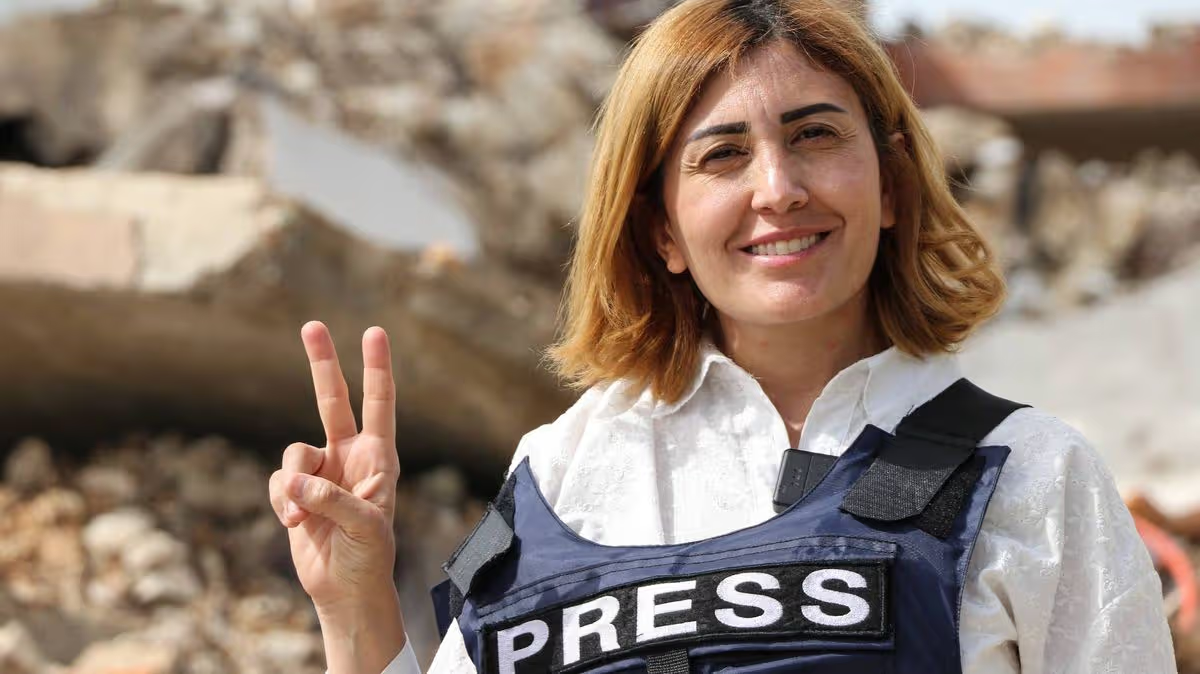
Amal Khalil, a reporter for Lebanon’s Al-Akhbar newspaper, was killed when an Israeli airstrike hit the house in the southern village of al-Tiri where she had taken cover while reporting on the Israel-Hezbollah war
A Lebanese journalist was killed on Wednesday when an Israeli airstrike hit a house in southern Lebanon where she had sought refuge.
Amal Khalil was covering the Israel-Hezbollah war before the strike. Rescue workers confirmed her body was not pulled from the rubble until several hours later.
The daily Al-Akhbar newspaper confirmed its reporter was killed in the southern village of al-Tiri. Khalil had been reporting on the fighting in Lebanon between Israel and the Lebanese Hezbollah militant group, which had resumed in early March against the backdrop of the US-Israeli war in Iran. She had sought shelter in the house in al-Tiri after an earlier Israeli airstrike struck close to the vehicle she was travelling in alongside a fellow colleague.
The Lebanese health ministry confirmed the initial strike claimed two lives. A subsequent Israeli airstrike then targeted the house in al-Tiri where Khalil and her colleague Zeinab Faraj had taken cover.
READ MORE: Iran supreme leader Mojtaba Khamenei ‘needs plastic surgery’ after airstrike burnsREAD MORE: Lebanon family ‘feared they would die travelling’ home and think Israel could bomb at any moment
Rescue workers initially managed to reach Faraj, who sustained serious injuries, and recover the bodies of those killed in the first strike. However, they came under fire from Israeli forces, compelling them to abandon their efforts to reach Khalil, the ministry said.
Khalil remained trapped beneath the rubble for several hours before the Lebanese army, civil defence teams and the Lebanese Red Cross were eventually able to access the scene. Her body was recovered shortly before midnight, at least six hours after the strike.
Israel’s military claimed individuals in the village had breached the ceasefire, putting its troops at risk. Israel denied that it deliberately targets journalists or that it prevented rescue teams from reaching the area, adding that the matter was under review.
“Killing of journalists is a crime and a flagrant violation of international and humanitarian law,” said Lebanon’s Information Minister Paul Morcos.
Khalil’s death came on the eve of the second round of direct talks between Israeli and Lebanese officials in Washington on extending the ceasefire that went into effect last Friday. US President Donald Trump later claimed the ceasefire had been extended for three weeks.
Khalil, who hailed from southern Lebanon, had been reporting on the region since 2006 for al-Akhbar. Her most recent coverage focused on Israeli demolitions of Lebanese homes in villages where Israeli troops are currently stationed inside Lebanon.
Her death brings the total number of journalists killed in Lebanon this year to nine. At least 2,300 people have lost their lives in Israeli strikes, with more than 1 million displaced since the latest Israel-Hezbollah conflict broke out on March 2.
Earlier on Wednesday, Reporters Without Borders urged the international community to pressure the Israeli army into permitting Khalil’s rescue. The Committee to Protect Journalists expressed its “outrage” at the apparent targeting of the two journalists, warning that obstructing rescue efforts “may amount to a war crime.”
Lebanon’s President Joseph Aoun called upon the Lebanese Red Cross to work alongside the Lebanese army and UN peacekeepers “to carry out the rescue operation” as swiftly as possible.
In late March, an Israeli airstrike on southern Lebanon claimed the lives of three journalists covering the conflict. Al-Manar TV confirmed the death of its long-serving correspondent Ali Shoeib. Israel’s military stated it had deliberately targeted Shoeib, claiming he was a Hezbollah intelligence operative, though offered no evidence to support the allegation.
Killed in the very same strike was journalist Fatima Ftouni, who worked for Beirut-based Al-Mayadeen TV, alongside her brother Mohammed Ftouni, a video journalist.
Just days prior, an Israeli airstrike targeting an apartment in central Beirut claimed the life of Mohammed Sherri, head of political programmes at Hezbollah’s Al-Manar TV, as well as his wife.