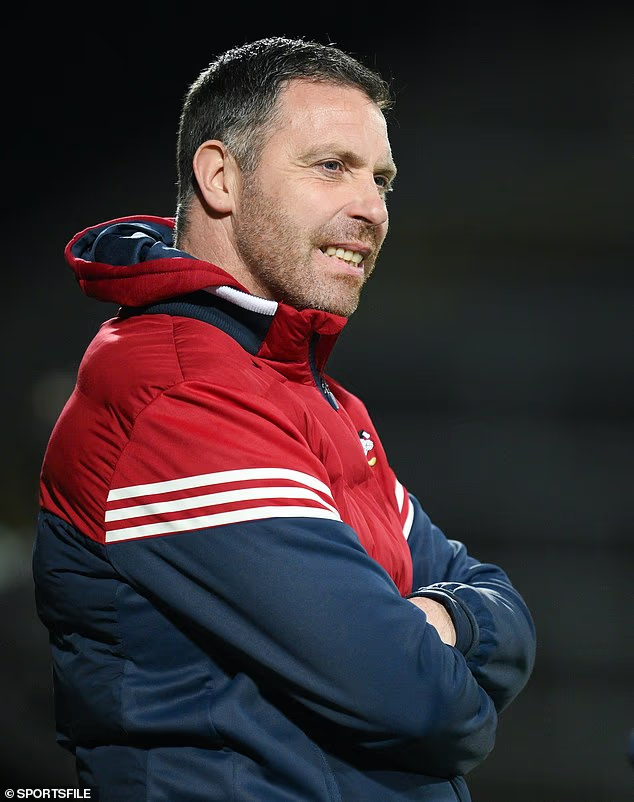
Ronan Curran said the quiet bit out loud.
‘There’s so many podcasts around and stuff like that, and a lot of fellas are playing their own agendas for their counties,’ the Cork selector said this week.
‘That gets a bit annoying at times. We kind of think maybe sometimes we could get a bit more help out there from our own lads.’
Curran addressed the unspoken but widely acknowledged role of the pundit: looking after their own.
He managed to both lament the trend and ruefully sigh that the Cork contingent on the media circuit don’t play their part in it.
Annoyed: Cork selector Ronan Curran says some GAA pundits are following ‘their own agenda’
Bias is officially a no-no for pundits, especially those on the biggest stage provided by the national broadcaster.
But in practice there is a long tradition of former players fighting as tenaciously for their team off the field as they did on it, and not just on RTÉ.
Curran’s mention of podcasts is timely, because their arrival has transformed the market for jobbing ex-players.
The profile mightn’t be as dazzling as that provided by the Sunday Game studio, but there are squads of retired footballers and hurlers happy to be paid for their views on any amount of podcasts.
Quality control is in the ears of the beholder, but suffice to say that when obliged to pay for a subscription, supporters eager for the insight that a former player is expected to provide, will be more attentive to the content.
Insight is still supposed to be the point of pundits. They should give an opinion shaped by knowledge of the dressing room that the great majority will never know.
The hit rate in delivering those secrets is patchy at best.

Transformative: (l-r) Giles, O’Herlihy and Dunphy set the bar very high for Irish sports punditry
Punditry in this country was transformed by the Charlton years and how they were analysed by the RTÉ soccer panel. Their approach was eventually aped in Gaelic games, to diverting but not especially enlightening effect.
Where podcasts serve a useful purpose is in making room for more thoughtful analysis, but that trend was anticipated by the national broadcaster, too, when moving away from the attention-grabbing – and attention-seeking – style of punditry, and back to a more traditional format where recently retired players swap jerseys for slim-fit cotton.
Brian Fenton was this week revealed as the newest big name to join The Sunday Game.
In the vanishingly rare instances of Dublin players speaking to the media during their years of dominance, Fenton was unfailingly among the most interesting.
And if he could shine a light on the workings of the most successful team in the history of the game, he would not only do a service to viewers, but he would also break ground that none of his erstwhile team-mates who have moved into punditry have yet done.

Insight: Former Dublin footballer Brian Fenton has the makings of an excellent GAA pundit
We know almost as little about the story behind the teams that Jim Gavin built now as we did at the time, when their approach to public relations was seasoned with North Korean levels of suspicion and disdain.
Dublin are going to be one of the stories of this summer, because of who they are and because of what they’ve achieved.
If Fenton succeeds as a pundit, he will not only fairly analyse the current side, but draw on his vast experience in a record-breaking team to reveal how winning cultures are created.
Fenton won All-Irelands with three of Ger Brennan’s management team, and one of them might be minded to grumble about not getting favours from their old comrade.
If so, then Fenton will have done his job.
Curran didn’t say who of ‘our own lads’ should be doing more for the Cork cause, but Dónal Óg Cusack is the highest-profile pundit in hurling.
He won All-Irelands with Curran and Ben O’Connor, but if issues can be taken with his punditry style – think cartoonish evangelist with a weakness for Old Testament flourishes – he isn’t a company man, be that company RTÉ or Cork inc.

Know-how: RTÉ Sport presenter Joanne Cantwell with analysts, from left, Liam Sheedy, Anthony Daly and Dónal Óg Cusack before last year’s All-Ireland hurling final
Cusack has as many critics as he has fans, which should be taken as another compliment.
Conviction is his strength: he believes what he’s saying, which makes him credible.
Playing safe, like looking after your own, is dull and transparent.
Telling the truth is what shines on TV.