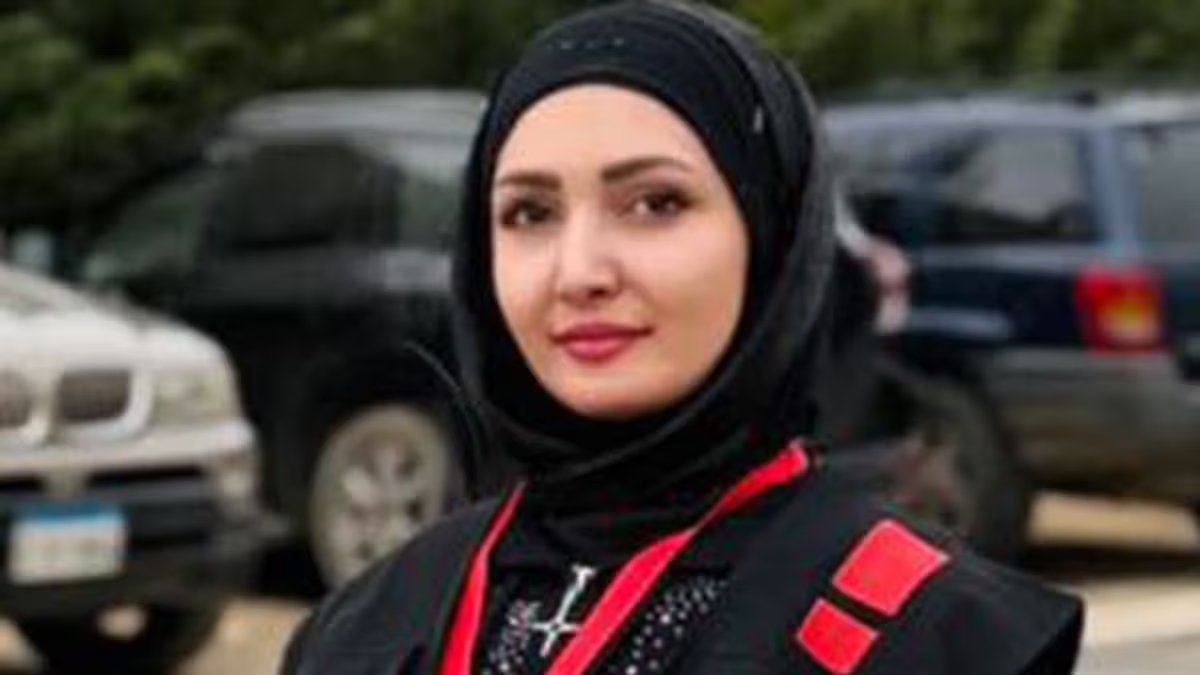
“We’re tired – tired of fear, displacement, and the constant feeling of being threatened. We just want to live, to live with dignity like everyone else in this world”
A family in Lebanon feared they would die from Israeli bombs while travelling to their new home, after being displaced from their village during the Iran war.
Samia, 24, was forced to leave her family home last month, along with 17 other members of her family. They were told their village was placed on a “warning list”, which meant they could be bombed at any point.
Despite a so-called ceasefire agreed between Israel and Iran-backed Hezbollah in Lebanon, Samia told the Mirror that they still live in constant fear. Drones were constantly buzzing “right about your head”, and she feared the ceasefire could collapse at any moment.
About 2,300 people have died in Lebanon since the start of the Middle East war, whereas 23 have died in Israel. On Wednesday last week alone, Israel bombed more than 100 targets across Lebanon in 10 minutes, killing more than 300 people – the worst mass-killing in the country since civil war 36 years ago.
Lebanese officials said the strikes mainly killed civilians, despite Israel claiming it was targetting Hezbollah fighters. Lebanon’s prime minister, Nawaf Salam, accused Israel of targetting “densely populated residential neighbourhoods” and killing unarmed civilians in breach of international law.
READ MORE: Peace talks on hold after US finds ‘close personal ties’ between Pakistan and Iran chiefsREAD MORE: What’s left of Iran’s stockpile of weapons revealed in new intelligence report
‘Bombing and fear’
Samia and her family were first displaced from their home in 2024. They were temporarily re-located to Tripoli in northern Lebanon after war erupted following October 7.
Samia said: “It was one of the hardest periods of my life. But as if the pain wasn’t enough, we are experiencing it again.”
The day after US President Donald Trump and Israel launched an illegal attack on Iran, Samia was told to leave their home for a second time. She, and the 17 other members of her family including a five-month-old baby, were told to flee their village urgently.
“We were displaced again on March 3, 2026,” said Samia. “Our village was placed on the warning list, so we were forced to leave everything behind.”
The entire family left their home as soon as possible, but faced a harrowing journey to the mountains in the Matn region; a 34-mile section of central Lebanon. They were surrounded by the spine-chilling sound of bombs raining down during the trip.
“We didn’t know if we would arrive safely or die on the road,” she said. “That feeling is enough to break a person from the inside out.”
Even when they did arrive, they found their new home was completely unliveable. It was a tiny apartment with just two rooms that was suppose to hold 18, including a newborn.
It was also waterlogged and didn’t have heating. The temperature can drop to near freezing during the night in the Lebanese mountains.
“The apartment was very small for us,” said Samia. “It was just a room and a kitchen, and there were so many of us. We were in an area in the mountains, and there were young children with us, so the situation was very difficult and unbearable for us to stay there.
“Later, we were moved to a hotel where [the situation] was slightly better. But neither place felt like home, because home isn’t just walls; it’s safety, comfort, and the memories we’ve made. We were forced to leave all of that behind.”
Living in the cramped temporary home was extremely difficult and took a mental toll. She added: “The psychological pressure was immense, more so than other things. The feeling of living in a place that isn’t familiar, without any options is breeding despair, exhaustion, and depression.”
‘We just want to live with dignity’
The family stayed put in the mountains through Israel’s attacks on Lebanon; a barrage that lasted about six weeks. During that time, Prime Minister Benjamin Netanyahu ordered Israeli troops to move six miles into southern Lebanon.
The ‘buffer zone’ was created after strikes by Hezbollah last month. Defence Minister Israel Katz also said that all Lebanese homes would be demolished near the border. More than 1,400 buildings have been destroyed in southern Lebanon in just a few weeks since the war started.
Israel also launched three successive attacks on ambulance workers earlier this month, killing two paramedics. The ‘triple tap’ bombing was launched after medics tried to rescue locals in the town of Mayfadoun, who had been injured during an onslaught.
During the terrifying weeks of war, Samia worked as a volunteer for ActionAid’s partner RDFL (The Lebanese Women Democratic Gathering). She worked at schools for displaced kids, helping them to get food, water, and basic aid.
Samia said: “People are deprived of their most basic rights; things that were once commonplace are now just a dream: clean water, a hot shower, and a comfortable, independent room. It’s heartbreaking to see one yearn for things that are the basic rights.
“Every story I heard today hurt me more. It made me realise how exhausted we are and how no one is actually listening. I don’t know where we’re going or where we would reach, but I know we’re tired – tired of fear, displacement, and the constant feeling of being threatened.vWe just want to live, to live with dignity like everyone else in this world.”
Last week, Trump announced Israel and Lebanon agreed to a 10-day ceasefire. He “hoped” Hezbollah in particular would abide by the deal – but both Israel and Hezbollah have since accused each other of breaking the ceasefire.
The bombing has largely stopped in Lebanon, and Samia’s family has since returned home, she said. But she fears the deal could collapse at any moment, and they could face being whisked away again.
Despite the ceasefire, drones were still flying overheard regularly, and the noise created an overwhelming feeling of unease, she said. Security was still missing from their lives, and they can’t sleep peacefully.
She said: “It’s true that the bombing stopped, but the tension is still high and there is a constant fear that the situation could suddenly deteriorate again. Reconnaissance drones are always in the sky, and their noise is disturbing, creating immense psychological pressure and tension.
“You feel like they are right above your head, and many people were displaced again because of this fear and lack of security. So, there might be a ceasefire, but true security is still missing, because the security isn’t just about the bombing stopping; it’s about living without fear, sleeping peacefully, without being afraid of the planes overhead or of the possibility that everything could collapse again.”