Iran has indicated it is not ready to move to direct, face-to-face talks with the United States, pointing to unresolved differences over key issues. A senior Iranian official said Washington has not stepped away from what Tehran describes as “maximalist” demands, even as communication between the two sides continues through indirect channels.
Speaking at a diplomacy forum in Turkiye, Deputy Foreign Minister Saeed Khatibzadeh said discussions have not reached a stage where an in-person meeting can take place. He said Iran wants a “framework agreement” to be finalised before any such step, news agency AP reported.
Also read | Why Iran has closed Strait of Hormuz again, when will it open? Explained
“We are still not there yet to move on to an actual meeting because there are issues that the Americans have not yet abandoned their maximalist position,” Khatibzadeh said.
Iran vs Trump
After closing Strait of Hormuz again on Saturday, Iran’s Supreme National Security Council said control over the Strait of Hormuz would include payment of costs related to security, safety and environmental protection services, according to state media.
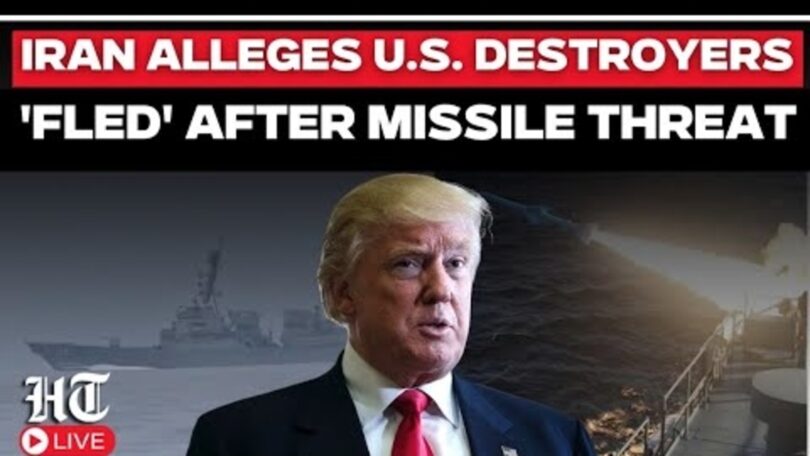
Meanwhile, US President Donald Trump said Tehran cannot use the strait as leverage in its dealings with Washington. Trump said Iran can’t “blackmail” Washington using Strait of Hormuz.
Uranium transfer ruled out?
Khatibzadeh also rejected suggestions that Iran could hand over its enriched uranium to the United States. His remarks came after US President Donald Trump said Washington would retrieve nuclear material believed to be buried at Iranian sites damaged in earlier strikes.
Also read | Indian tankers shot at by Iran Navy, evokes strong reaction from New Delhi
“I can tell you that no enriched material is going to be shipped to United States,” Khatibzadeh said. “This is non-starter and I can assure you that while we are ready to address any concerns that we do have, we’re not going to accept things that are non-starters.”
Trump had said the US would go into Iran and “get all the nuclear dust,” referring to an estimated 970 pounds (440 kilograms) of enriched uranium.
The Iranian official did not specify which issues remain unresolved but pointed to US sanctions as a major concern. He called on Washington to address these as part of any progress in talks.
“The other sides also should understand and address our main concerns, which are illegal unilateral sanctions that Americans have imposed on Iranians and this economic terrorism which has targeted Iranian people to suffocate them and make them to revolt against the political structure inside Iran,” Khatibzadeh said.
He said there have been multiple exchanges of messages, but the gap between the two sides remains.
Ceasefire scope and regional tensions
Khatibzadeh reiterated Iran’s position that the ceasefire agreed during the conflict should extend to Lebanon, where Israel has been engaged with Hezbollah. He said Iran viewed its actions as defensive.
“Iran negotiated with good faith, accepted a ceasefire and told everybody that this ceasefire should include all countries, including Lebanon,” he said. “Then the other side said that, it is not committed to this and then started atrocities.”
Asked about a response to renewed attacks, he said: “Iran has no option, just to stop aggressors once and forever.”
The United States has said Israel is “prohibited” from further offensive strikes on Lebanon, though it can act in self-defence.
Strait of Hormuz part of negotiations
The Strait of Hormuz remains part of the ongoing discussions. Khatibzadeh said a “new protocol” could be introduced to ensure civilian shipping continues safely.
He said the strait would “remain open and safe for all civilian passage.”
The developments follow a series of actions linked to the ceasefire. While Iran and Pakistan said the truce extended to Lebanon, Israel and later the United States denied this. Israel carried out airstrikes in Beirut, after which Iran again closed the Strait of Hormuz before later reopening it following a truce in Lebanon.
Trump has said a US blockade of the strait will continue and warned that attacks could resume if no agreement is reached with Iran.
(With AP inputs)