Tehran effectively shut down the waterway between Iran and Oman — through which roughly a fifth of the world’s oil supply normally passes — following the February 28 attacks by Israel and the US
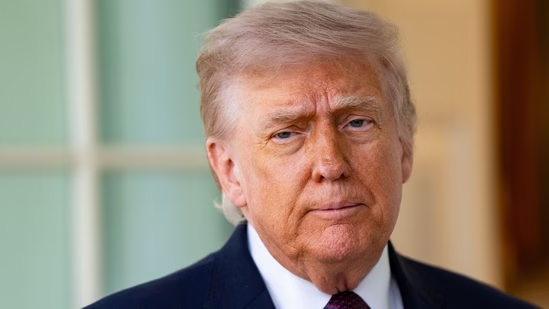
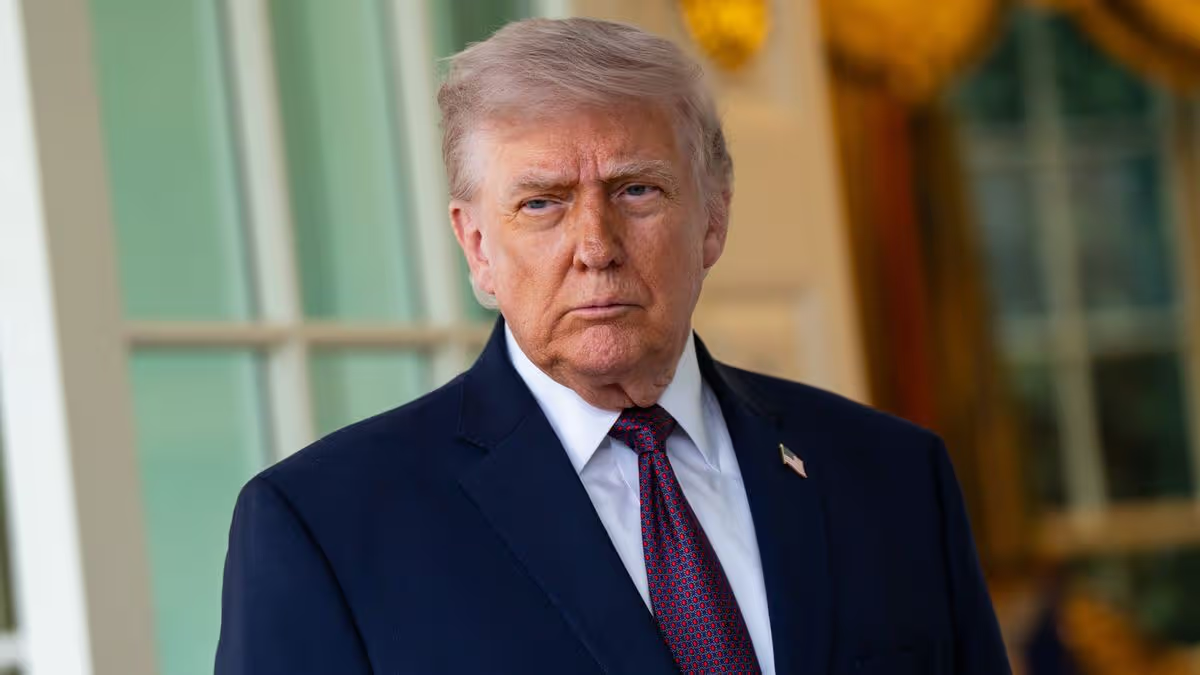
Donald Trump hit back at Iran, after peace talks completely fell apart, by announcing his own Strait of Hormuz blockade.
Tehran effectively shut off the waterway between Iran and Oman, that typically sees a fifth of the world’s oil supply pass through, after February 28 when Israel and the US launched attacks on the regime. Iran hit tankers and threatened any vessels that attempted to pass through, bringing the busy waterway to a standstill and plunging the global economy into chaos.
When the US and Iran announced a fragile two-week ceasefire last week, both nations proposed a huge toll for vessels passing through. Peace talks have broken down and the situation with the Strait of Hormuz has become even more contentious.
READ MORE: Trump’s naval blockade of Strait of Hormuz – what it means for the worldREAD MORE: Fresh warning as Middle East meltdown set to hit high street stores hard
Trump raged on the internet after JD Vance came back from negotiations, on Saturday, in Islamabad, Pakistan, empty handed.
In a fiery Truth Social post on Sunday, The US President said: “I have instructed our navy to seek and interdict every vessel in international waters that has paid a toll to Iran. No one who pays and illegal toll will have safe passage on the high seas. We will also begin destroying mines the Iranians laid in the Straits. Any Iranian who fires at us, or at peaceful vessels, will be BLOWN TO HELL!”
Where is the US blockade?
The blockade started at 3pm BST on Monday which was due to block vessels going into Iranian ports and giving neutral ships a grace period to exit.
It is not clear exactly where the US Navy has been deployed so it is not known exactly where the US could attempt to intercept vessels. The Strait of Hormuz is sandwiched by the Persian Gulf and the Gulf of Oman.
The US could focus on the Gulf of Oman where a huge amount of the world’s oil supply passes. US Central Command (CENTCOM) said more than 12 warships and over 100 fighters are part of the blockade.
Who will be targeted by the blockade?
The US could focus on Iran’s illicit shadow fleet – vessels that use deceptive tactics to move items illegally or that are sanctioned. For example, ships can operate under “flags of convenience”, where a flag can be bought from a country with no ties and used to avoid detection.
CENTCOM said the blockade will not “impede freedom of navigation” for ships passing the strait to and from other ports.
The US military said: “The blockade will be enforced impartially against vessels of all nations entering or departing Iranian ports and coastal areas, including all Iranian ports on the Arabian Gulf and Gulf of Oman.”
CENTCOM added that it would allowed humanitarian vessels, holding items like food and medical supplies, to pass subject to inspection.
How will it be enforced?
The US Navy and government have remained tight-lipped on how it will enforce this blockade. In the past, US forces have used helicopters to get onto tankers accused of operating illegally in the Caribbean.
Nations can also exercise their right to “visit and search”, during times of war, and stop or allow vessels to pass, James Kraska, a professor of international maritime law, told The New York Times.
Enforcing this blockade could be complicated and “high-risk”, Andreas Krieg, senior lecturer at King’s College London’s School of Security Studies, told NBC News. He said: “Practically, this would look less like a clean historical blockade and more like a messy, high-risk interdiction regime.”