Given the similarities between these two clubs, both in terms of stature and fanbase, nobody could ever describe this as some kind of seismic upset to rival David and Goliath.
Yet, the fact remains, in beating their bitter rivals Falkirk in a penalty shootout, Neil Lennon’s Dunfermline claimed a third Premiership scalp en route to booking their place in this season’s Scottish Cup final.
The Championship upstarts were at it again, toppling another top-flight opponent on a day where black-and-white confetti rained down from the skies at full-time in Mount Florida.
Perhaps it was heaven sent, a gift from the gods, or from a loved one no longer able to be in attendance. In the case of Lennon, the latter was a distinct possibility.
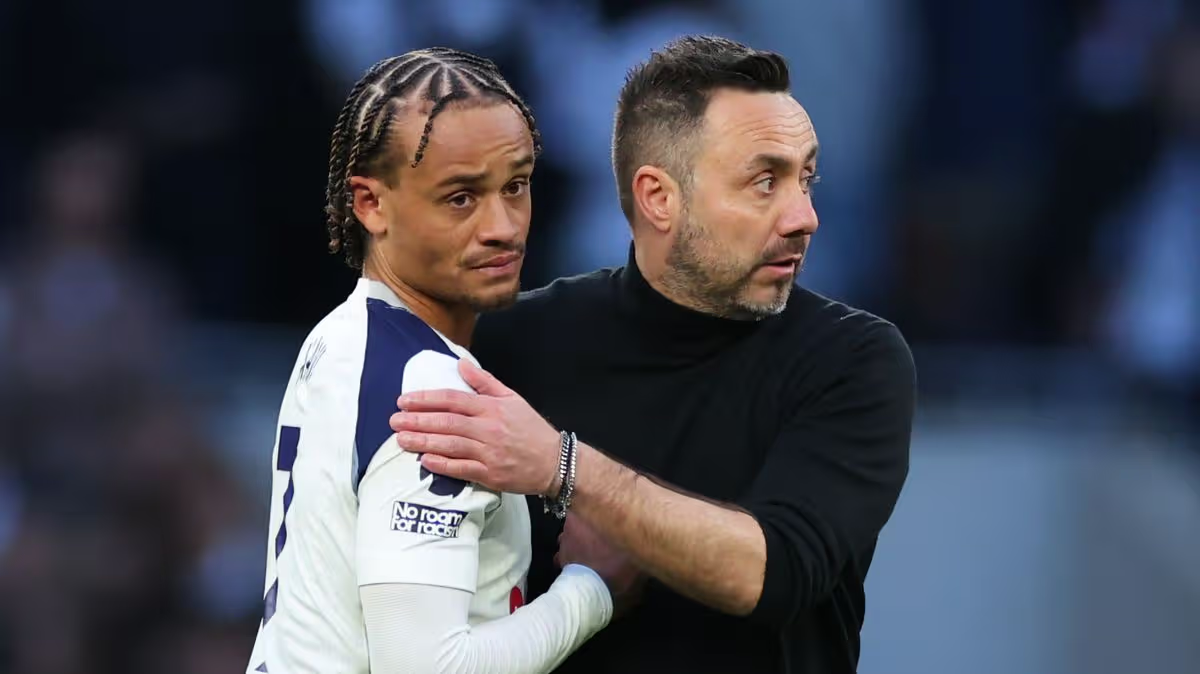
Lennon was in his element. After Tashan Oakley-Boothe had slammed the ball into the net to clinch the Fifers’ first Scottish Cup final appearance in 19 years, the Pars boss was an emotional wreck.
With his hands on his head and his eyes welling up, he almost didn’t know what to do with himself. Lennon’s name rang out around Hampden, Dunfermline fans now very much in love with a manager who looks reborn.
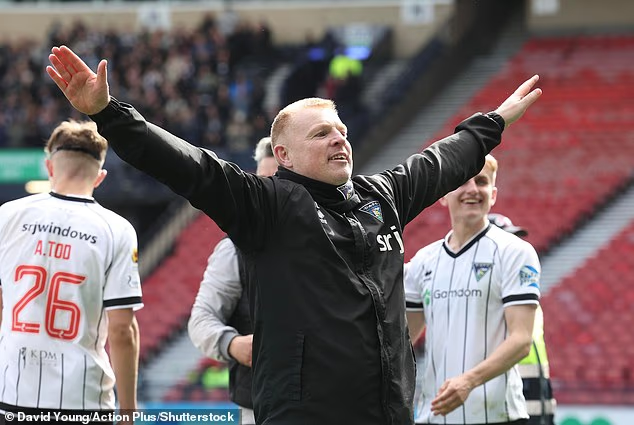
Lennon celebrates at full-time after Dunfermline reach the Scottish Cup final
Lennon and his players made their way around the pitch, waving flags and soaking it all up with their supporters inside the national stadium. It was no surprise that Lennon should be so tearful. It was back in December that he lost his father, Gerry, and he spoke candidly about having his old man at the forefront of his thoughts.
Lennon now has a crack at a Scottish Cup final, where he will face either Celtic or St Mirren, and the season could yet see his Dunfermline side go on to win promotion back to the top flight.
This match itself was a turgid affair. There is no way of sugar-coating that or dressing it up to be something it plainly was not.
Falkirk boss John McGlynn certainly didn’t attempt to hide from it. McGlynn admitted that his team had been ‘rubbish’ in the final third. Few would have argued.
Falkirk have shone so brightly for much of the season. They have been a revelation, but they missed a massive opportunity here. They just didn’t turn up and didn’t play with anywhere near the same levels of pace and ambition as they have demonstrated throughout much of the campaign.
It was a game which would have made the eyes bleed. But, after also seeing off Aberdeen and Hibs in the previous rounds, Dunfermline held their nerve to win the shootout after 120 goalless minutes.
Lennon had spoken in the build-up about his unhappiness around the scheduling which had seen Dunfermline forced to play four matches in the last 14 days, two of which were midweek fixtures. He had tried to mitigate the effects of that congestion by making wholesale changes in the 2-2 draw with Airdrie on Tuesday night, a game where the Pars had come back from 2-0 down to rescue a point.
As expected, he restored pretty much all of his first-team starters for this Hampden showdown, with Nurudeen Abdulai the only player to keep his place from midweek.

The Dunfermline players party with their fans after reaching the final on penalties
Having lost 6-3 to Rangers last weekend in a chaotic encounter, Falkirk boss McGlynn, who had been critical of his team’s defending in that match, made two changes. Perhaps unsurprisingly, they both came at the back as Leon McCann and Connor Allan replaced Keelan Adams and injured captain Coll Donaldson.
Ticket sales had pointed to an attendance of just over 20,000. Whilst Hampden was less than half full, you couldn’t fault the atmosphere in the build-up to kick-off.
When you speak to fans of both of these clubs, no one truly knows the official genesis of how this rivalry came to be. It’s an oddity of Scottish football, but it is nothing if not passionate and intense.
The noise was crackling around Hampden as the teams emerged from the tunnel — and it was Dunfermline who would have a terrific chance to open the scoring inside the opening five minutes.
Chris Kane won a flick-on to send Callumn Morrison clean through on goal. But the winger, who was playing against his former club, never looked certain and his finish was well wide in the end.
Even beyond the fact that they had already claimed two top-flight scalps, Dunfermline had been in good form over the past couple of months Lennon’s side have made a strong push into promotion contention in the Championship and they started this match well, with their direct approach causing Falkirk problems in the early stages.
McGlynn’s men began to get a grip of things, though, midway through the first half. They were finding good pockets of space to exploit, especially in the wide areas.
Calvin Miller flashed a good ball across the six-yard box on 30 minutes but there were no takers for what would have been a tap-in for anyone in the right area.
Truthfully, the opening 45 minutes had been pretty cagey and scrappy. As the whistle sounded for half-time, the best chance of the match had still been that which fell to Morrison in the opening stages.
There was a distinct lack of quality in the final third from both teams. It looked like a Championship scuffle, the kind you would typically see on BBC Scotland on a Friday night under the lights.
Dunfermline had another chance on the breakaway early in the second half and, once again, it was Morrison who scampered through after Falkirk defender Liam Henderson had been robbed of the ball on the halfway line.
But Morrison’s decision-making was awful. He should have played a simple ball to Andrew Tod, who was in good space up alongside him, but he dithered and lost the ball.
It was another let-off for Falkirk. As the Premiership side who have secured their place in the top six, more was expected of McGlynn’s men.
Chris Kane’s physicality and hold-up play was causing problems for the Falkirk defence, with Connor Allan hauling him down and duly being booked by referee John Beaton.
The game was becoming a tough watch. The fact we reached the 70-minute mark with only one shot on target told its own story.
Ben Broggio went close to breaking the deadlock for Falkirk, bending a shot just beyond the far post. As much as anything, it was a moment which woke up the Bairns supporters at that end of the stadium.

Fyfe watches on as his effort beats Scott Bain but comes back off the crossbar
About 10 minutes later, Broggio then tripped over his own feet, kicked the ball straight out of play, and fell flat on his face. It was comical stuff and it summed up what had been a very grim spectacle.
To the surprise of no one, it was still goalless as the full-time whistle sounded at the end of 90 minutes. With over 20,000 pairs of eyes begging for mercy, on to extra-time we went.
Dunfermline’s teenage substitute Lucas Fyfe had a great chance early in extra-time when he cut inside Allan but his shot was tame and straight at Scott Bain.
Headlines of Fyfe sending the Fifers to the cup final then came even closer when the 17-year-old crashed a shot back off the crossbar.
The only other event of note in extra-time was the sending off of Falkirk sub Henry Cartwright, who picked up a second booking for a ridiculous lunge inside the penalty area.
In the lottery of the shootout, it was the Pars who ultimately held their nerve, Oakley-Boothe smashing the winning kick into the net as Dunfermline prevailed 4-2.