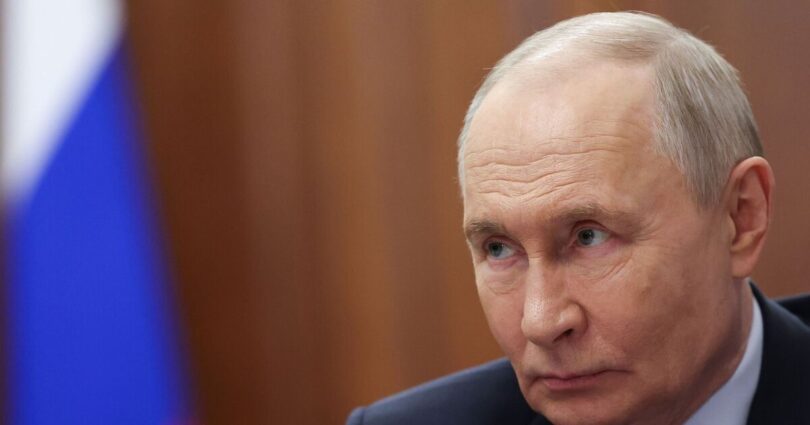
Vladimir Putin is demanding answers over why Russia’s economy is performing worse than expected this year, and calling for urgent measures to revive growth in his second public complaint about economic weakness in a month. According to the Economic Development Ministry, Russia’s GDP in January and February was 1.8% lower than in the same period last year.
Russian Academy of Sciences’ Institute of Economic Forecasting (INP) estimates for the first quarter of 2026 say the economy has shrunk by 1.5%, compared to the same period a year previously. The Central Bank had previously forecast GDP growth of 1.6% over the same period. The ministry attributed part of the decline to calendar effects (predictable, recurring stock market anomalies), noting that January had two fewer working days and that February had one fewer than a year earlier. Adjusted for this, GDP was flat year-on-year in January and rose 0.3% in February. However, Putin has dismissed the explanation as insufficient.
“These are objective circumstances, of course, but it is clear they are far from the only factors determining business and investment activity in the country,” the Russian dictator said, according to independent news site The Moscow Times, pointing to declines in manufacturing, overall industrial output and construction.
Construction, a key sector, contracted sharply, falling 16% year-on-year in January and 14% in February, according to official statistics.
Russia’s economic slowdown, driven by falling investment, weak business activity and declining oil and gas revenues, is raising concerns about budget stability and the sustainability of growth, as high interest rates and the impact of the war against Ukraine cause chaos.
The slowdown is also straining public finances, as oil and gas revenues in the first quarter fell 45% year over year, while non-oil revenues rose just 7% despite increases in VAT and excise duties. Government spending, meanwhile, jumped 17%.
As a result, the budget deficit reached 4.58 trillion rubles (£33.4billion), already exceeding the full-year target.
Elsewhere, business experts in Russia have warned of bankruptcies and a “mass exodus” of shops. St Petersburg has been particularly badly affected, as business owners face the difficult decision of whether to shut up shop or sell. Videos posted on social media show vacant commercial spaces lining the main street in Russia’s second city. Lyalya Sadykova, president of the Association of Beauty Industry Enterprises, said about 10% of beauty industry businesses in St Petersburg closed, while another 10% sold their companies in December and January alone.