Israel has rejected a deal announced by US president Donald Trump for Gaza.
Israeli Prime Minister Benjamin Netanyahu dismissed the deal announced by the US president last month, saying his country’s military “will not carry out any withdrawal until Hamas is genuinely disarmed”.
Mr Netanyahu told a Cabinet meeting that “Israel rejects the 15-point document” but is still discussing plans for Gaza with Washington, after making similar comments last week.
Mr Trump had said Israeli forces would withdraw as the Hamas militant group’s disarmament is completed.
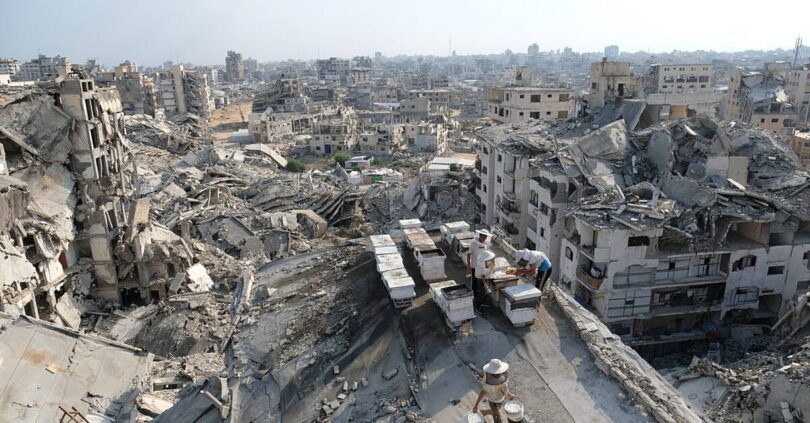
Israeli forces control more than half the Palestinian enclave of about two million people that has been largely destroyed.
“We remain committed to the road map,” a member of the Hamas political bureau, Basem Naim, said.
He added that the group expected mediators and the US to pressure Mr Netanyahu — who also faces domestic tensions as he struggles to hold onto power ahead of the next elections scheduled for October 27.
The Hamas-led attack on Israel on October 7 2023 sparked the war in Gaza. A fragile ceasefire continues.
Elsewhere in the Middle East, Yemen’s Iranian-backed Houthi rebels struck a government-held port on the country’s Red Sea coast, deepening fears over threats to strategic shipping routes and a potential return to civil war.

They also said they had attacked an oil facility in neighbouring Saudi Arabia.
The Yemeni government-allied National Resistance Forces said at least seven people — four service personnel and three civilians — were killed and 15 civilians were injured in the Houthi attack on the port of Mokha.
Fayed al-Noman, the information ministry’s assistant undersecretary, said the rebels fired missiles and drones, severely damaging port buildings and piers as well as commercial goods and food supplies.
The military later said missiles landed in several areas, including near a television channel.
Mokha is a main port under Yemen’s internationally recognised government and has been renovated to handle shipping that avoids the Houthi-held port of Hodeida.
The Houthis claimed the attack, saying they targeted military forces and warehouses.

Yahya Saree, a Houthi military spokesperson, said they also targeted an Aramco refinery in the Saudi city of Jazan with a drone in response to Saudi drones’ breaching Yemen’s airspace over Hajjah and Saada provinces.
The Saudi energy ministry reported a fire at a facility belonging to the Aramco refinery, with no casualties. The ministry did not set out the cause.
The attacks threaten to reignite Yemen’s civil war after a 2022 truce.
Meanwhile, details emerged about the potential deal between Iran and Oman on managing the Strait of Hormuz as Tehran suggested that vessels linked to “hostile countries” would be barred from the key waterway.
Iran and Oman, which bracket the strait, are working to finalise a temporary deal that would reopen it, with ships entering near Iran and exiting near Oman, according to two people familiar with the talks.
Ships would transit without paying fees or tolls during the interim period.
The agreement is designed to restore the separate interim deal between the US and Iran.
https://x.com/UK_MTO/status/2086455851116638398?ref_src=twsrc%5Etfw
The strait, crucial to global supplies of oil and natural gas, was considered an international waterway before the war.
The two people said the deal is endorsed by Gulf Cooperation Council members and is expected to be jointly announced by Iran, Oman, the US and the UN’s International Maritime Organisation.
But they stressed the terms could change before the deal is final.
Iran on Sunday signalled progress on a plan to manage the strait, but a politician said transits by vessels belonging to “hostile countries” would be prohibited.
Parliament’s national security committee approved “general outlines”, the state broadcaster reported.