
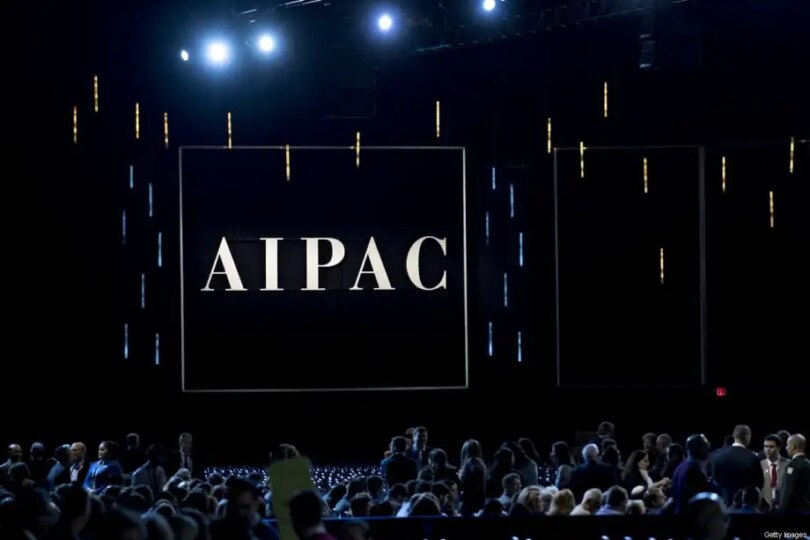
The American Israel Public Affairs Committee (AIPAC) is considering spending tens of millions of dollars to support Republican Senate candidate Mike Rogers in Michigan after its record-breaking attempt to defeat pro-Palestine candidate Dr Abdul El-Sayed in the Democratic primary ended in failure.
AIPAC’s second attempt to defeat El-Sayed is seen as a growing desperation within the pro-Israel lobby as opposition to Israel becomes increasingly mainstream among American voters.
AIPAC’s main super political action committee, the United Democracy Project (UDP), spent approximately $32 million promoting pro-Israel congresswoman Haley Stevens and attacking El-Sayed. Despite the unprecedented expenditure, El-Sayed secured the Democratic nomination and will face Rogers in November.
According to the New York Times, several AIPAC donors and allies are urging the lobby to put tens of millions of dollars behind Rogers. A spokesperson for UDP insisted that no final decision had been taken. However, the group reportedly had more than $80 million available at the end of June, giving it the resources to launch another major campaign.
AIPAC nevertheless made clear that its campaign against El-Sayed would continue.
“Our members remain determined to ensure that voters reject Dr El-Sayed and his radical anti-Israel agenda in November,” the pro-Israel organisation said.
AIPAC’s failure in Michigan represented its most expensive electoral defeat since it began spending directly in federal elections. El-Sayed campaigned openly against US military assistance to Israel and repeatedly challenged the influence of the pro-Israel lobby in American politics.
Analysts have observed that AIPAC’s intervention may have proved counterproductive. El-Sayed turned the flood of outside money into one of his strongest campaign arguments, presenting the primary as a contest between Michigan voters and wealthy donors seeking to impose Israel’s priorities on the state.
READ: Pro-Palestinian candidates score wins in US Democratic primaries
Polling conducted before the primary showed the scale of AIPAC’s reputational problem. Some 49 per cent of likely Michigan Democratic primary voters held an unfavourable view of the organisation, compared with only 12 per cent who viewed it favourably. A separate survey found that 64 per cent would be less likely to support a candidate who received AIPAC donations.
Following the humiliating defeat for AIPAC, El-Sayed invited the Israel’s lobby to repeat its failed strategy, telling them to “burn your money, come back and burn it again in the general.”
The Michigan result reflects a wider collapse in Israel’s political standing, particularly among younger generations of Americans. A Pew Research Center survey published in April found that 60 per cent of Americans held an unfavourable view of Israel, rising to eight in ten Democrats. Majorities of voters under 50 in both political parties now view Israel negatively.
Gallup has documented an equally dramatic generational change. Among Americans aged between 18 and 34, 53 per cent now sympathise more with Palestinians, compared with only 23 per cent who sympathise more with Israelis — the lowest level Gallup has recorded for Israel among that age group.
The figures suggest that Israel is no longer merely a divisive foreign policy issue. Its brand has become politically toxic among a large section of the electorate, particularly Democratic and younger voters who have watched Washington continue to arm and protect Israel despite the mass killing and destruction inflicted on Palestinians in Gaza.
READ: ‘Seismic shift’: More than 100 House Democrats vote to cut Israel military aid