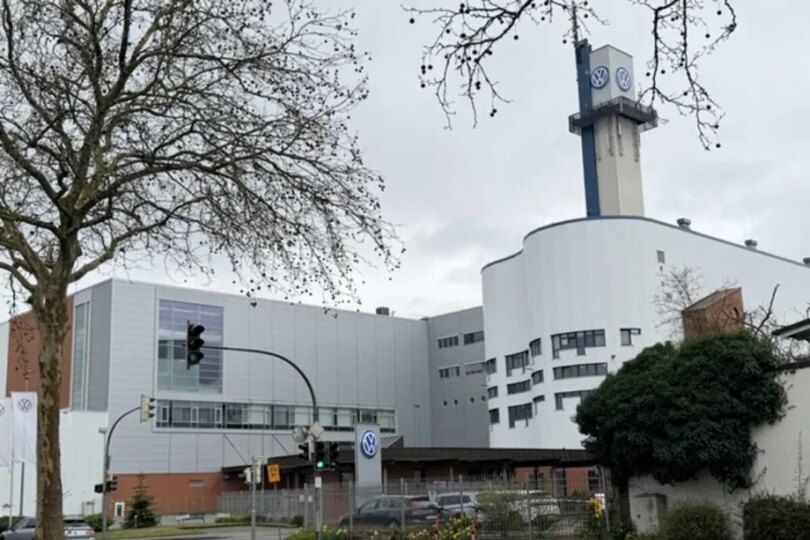
As Volkswagen explores converting one of its German factories from civilian vehicle production to manufacturing components for an Israeli missile defense system, local peace activists are stepping up efforts to stop the move, Anadolu reports.
The campaign comes amid reports that Volkswagen is in discussions with Israel’s state-owned Rafael Advanced Defense Systems about repurposing its Osnabruck plant after passenger car production ends in 2027.
The site could manufacture components for Israel’s Iron Dome air defense system, including launchers, transport vehicles and power generators, according to the Financial Times. Volkswagen has not confirmed any agreement and says no decision has been made on the plant’s future.
Even without a confirmed agreement, Osnabruck Peace Initiative (OFRI) said it plans to intensify its grassroots campaign to stop the deal, organizing rallies, public events and demonstrations while working with local groups to build support for keeping the factory focused on civilian production.
“We’re working with various coalition partners to build support in the city for the civilian use of the factory, and we’re explaining why we don’t approve of arms production,” OFRI spokesperson Marie Dominique Guyard told Anadolu.
She said the group’s biggest challenge is convincing people that expanding arms production undermines rather than strengthens security.
“We are in favor of peaceful conflict resolution, diplomacy, ending conflicts through diplomacy, and respect for international law – and attracting arms companies to the city is the exact opposite of that,” Guyard said.
She argued that Rafael’s reported involvement makes the proposal particularly controversial.
“Israel is not known for its respect for international law,” she said. “The establishment of an Israeli state-owned company is, in effect, support for Israel’s wars.”
Guyard also criticized reports that public funds could support the project.
A call for worker resistance
Prominent German peace activist Reiner Braun echoed those concerns, calling the reported proposal “criminal.”
“Such a deal must be rejected outright,” he told Anadolu. “Of course, if Volkswagen, an industrial company, manufactures a component for Rafael, it is complicit in the policy of genocide and cannot absolve itself of that responsibility.”
“They know what they are doing, and they do it deliberately because they believe they can make more short-term profits. It is immoral, unethical, and one could actually say it is a criminal deal.”
READ: German upper house advances bill to criminalize ‘denying Israel’s right to exist’
Braun urged Volkswagen employees to oppose any move toward military production.
”The most important thing is resistance within the plant itself,” he said. “All employees at all Volkswagen plants must raise their voices and say, ‘We do not want to participate in the development of weapons of genocide.’”
He said Germany’s peace movement would continue supporting workers who oppose the reported plans.
Where the talks stand
Volkswagen has not confirmed reports that it is negotiating with Israel’s Rafael Advanced Defence Systems over defense production at its Osnabruck plant.
A company spokesperson previously told Anadolu that Volkswagen is evaluating options for the factory after passenger car production ends in 2027 and remains in discussions with various market participants.
“There are currently no concrete decisions or conclusions regarding the future direction of the site,” the spokesperson said. “The production of weapons by Volkswagen AG remains ruled out for the future, and we do not engage in speculation regarding further plans for the Osnabruck site.”
Since then, media reports have offered conflicting accounts of the future of the proposed deal.
Last month, German newspaper Bild reported that Qatar’s sovereign wealth fund, Volkswagen’s third-largest shareholder with a 17% stake, had blocked management’s proposal to partner with Rafael to manufacture missile components and military vehicles at the Osnabruck plant.
However, German business magazine WirtschaftsWoche later reported that negotiations were continuing despite Qatar’s reported objections.
The magazine said the head of the works council at the Osnabruck plant, which employs about 2,400 people, had urged the German state of Lower Saxony – Volkswagen’s second-largest shareholder – to acquire a majority stake in the factory itself, a move that could allow the Rafael partnership to proceed.
The reported negotiations come as Volkswagen undergoes a broad restructuring program amid mounting competition from Chinese automakers and slower-than-expected growth in the electric vehicle market.
Rafael, meanwhile, has been expanding its European footprint as governments across the continent boost defense spending and procurement following the war in Ukraine.
READ: Germany rules out sanctions against Israel despite West Bank concerns