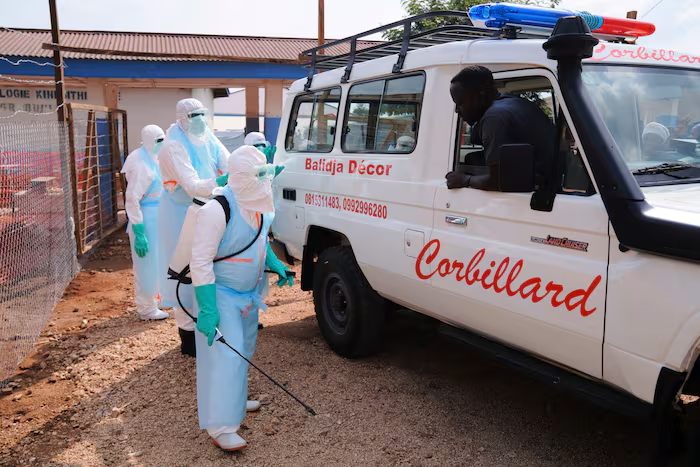
BUNIA, Congo (AP) — The fastest-growing Ebola outbreak has killed more than 1,500 people in eastern Congo, official data released on Thursday showed, marking a 50% increase in around a week that shows the emergency continuing to outpace response efforts.
As of Tuesday, 3,442 cases had been recorded, with 1,521 deaths, according to the latest government update.
The outbreak, which was declared on May 15, has been linked to the Bundibugyo virus, for which there are no approved vaccines or treatments.
There are currently 797 patients in isolation or hospitalized, while a further 615 patients have recovered, the data showed. Contact tracing continues to lag, with only around 78% of known contacts monitored nationwide, well below the 95% target health officials say is needed to interrupt transmission.
Displacement from armed conflict and illegal mining in the region have made it difficult to trace thousands who have come in contact with infected individuals.
The outbreak is mostly concentrated in eastern Congo’s remote Ituri province, which accounts for nearly 90% of cases, but there have been others confirmed in five provinces, including one of the country’s largest cities, Kisangani.
Neighboring Uganda declared itself free of Ebola on Tuesday following the discharge of the country’s last patient in mid-June.
Ebola is rare, but highly contagious and can be contracted via bodily fluids such as vomit, blood or semen. The disease it causes is severe and often fatal.
The latest outbreak has killed more people at a quicker rate than any previous outbreak, including in 2014-2016 when 28,000 cases were reported, of which over 11,000 people died. That outbreak took about eight months to reach 1,000 deaths.
The World Health Organization says the global risk of spread remains low because Ebola spreads through direct contact with bodily fluids, not through the air, making it much harder to spread than respiratory viruses. Cases detected outside the affected region have so far been quickly identified and contained without leading to sustained transmission, the agency said.
In Congo, however, the risk of the spread remains “very high,” according to the WHO.
The speed of transmission in the current outbreak comes amid public concern that many communities in the affected provinces are either unreachable or have been abandoned by responders in recent days over safety concerns amid attacks from angry residents and rebels.
Misinformation asserting that the deadly virus isn’t real and the restriction of traditional funerals to limit the outbreak’s spread have angered some residents and led to attacks on health facilities.
International partners supporting the Ebola response in Ituri’s Nyakunde health zone temporarily relocated after a July 15 attack on a hospital and a treatment center, sparked by a patient’s death.
Officials say the relocation of aid groups, including Africa CDC and Mercy Corps, has disrupted surveillance, contact tracing and supplies.
Dr. Désiré Duabo, chief medical officer for the health zone, said partners had provided much of the supplies, equipment and operational support, warning that the small stocks left are “almost depleted.”
Attacks such as the one in Nyakunde are causing anxiety among health workers and making it difficult for them to carry out their duties, said Pierre Akilimali, the Ebola response incident manager at the National Public Health Institute of the Democratic Republic of the Congo.
“They are working amidst risks of infection as well as risks to their personal safety,” he said.
Local health officials say security has since stabilized and are urging partners to return, with Africa CDC saying teams could redeploy as soon as next week.
——
Banchereau reported from Dakar, Senegal.
Copyright 2026 The Associated Press. All rights reserved. This material may not be published, broadcast, rewritten or redistributed without permission.