
Mount Olympus in Greece and the ancient Japanese capitals of Asuka and Fujiwara were among the sites added to the World Heritage List on Sunday at a UN committee meeting in South Korea reviewing dozens of nominations.
The Unesco committee, which meets in Busan until Wednesday, also added Boma-Badingilo Migratory Landscape in South Sudan, host of one of the world’s largest land mammal migrations.
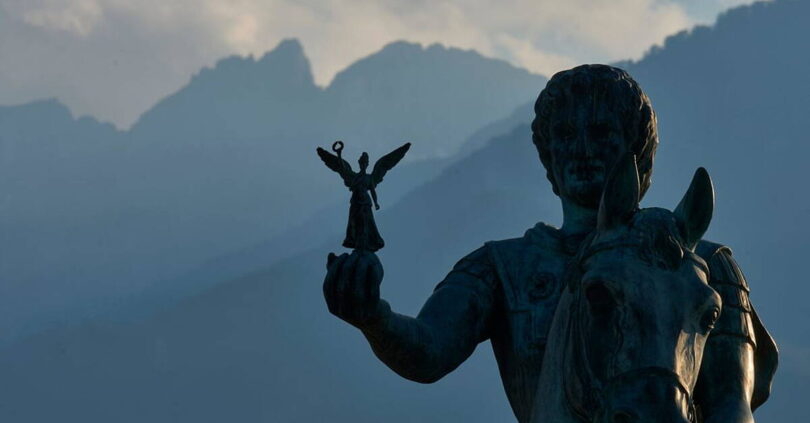
The World Heritage inscription of Mount Olympus, the mythical home of the 12 Olympian gods, rewarded a 12-year effort by Greece to secure recognition for its tallest mountain as a mixed cultural and natural heritage site.
Rising 9,573 feet from a base near sea level, the mountain was believed to be the throne of Zeus, king of the gods, while also harbouring rich biodiversity.
Evangelos Geroliolios, mayor of Dion-Olympus, a municipality at the foot of the mountain, said in a recent interview with The Associated Press that inclusion on the World Heritage List “places greater obligations on our part to protect this environment”, citing the potential impact of increased tourism.
“We reaffirm our unwavering commitment to safeguarding Mount Olympus for the benefit of present and future generations,” said Georgios Koumoutsakos, Greece’s delegate to Unesco.
“As Greek mythology wisely reminds us, it is always best to remain on good terms with gods.”
The designated Japanese locations in the western prefecture of Nara cover 19 archaeological sites from the 6th to 8th-century capitals of Asuka and Fujiwara, where Japan established its first centralised state modeled after Chinese systems.
The sites preserve the largely buried remains of royal palaces, government offices, Buddhist temples and tombs from capitals that influenced the later capitals of Nara and Kyoto.

Japanese culture minister Kobayashi Shigeki thanked the committee for inscribing the Asuka-Fujiwara sites and said Japan reaffirms its commitment to “transmitting this valuable property to the future generations”.
Japanese Prime Minister Sanae Takaichi, who is from Nara, wrote on X that she hoped the World Heritage designation would boost tourism there.
Yoshiyuki Aihara, a Nara University archaeology professor, told AP the sites are significant because they show how Japan’s ancient state was formed through influences from China and the Korean Peninsula.
“If you dig underneath these rice paddies about one metre, you start finding a stretch of ruins in this area, though that’s not easy for ordinary visitors to understand,” said Mr Aihara, who is continuing excavation work at the site.
South Sudan’s Boma-Badingilo site encompasses vast wetlands, flood plains and savannas shaped by seasonal rainfall and flood dynamics, with an estimated six million white-eared kob, tiang and Mongalla gazelles moving across the landscape in response to changing environmental conditions.
It also provides habitat for elephants, lions, cheetahs and other wildlife while supporting various ethnic communities that have lived by herding, farming and fishing for centuries, according to Unesco.
It is the country’s first addition to the World Heritage List