When the Spectator marked its 190th birthday in 2018, it reached for a line from its first editor, the Scottish reformer Robert Stephen Rintoul, to explain what the magazine was for. Rintoul, it wrote, had insisted that “it is difficult to be a mere spectator in times like these” and that “it is the duty of even neutrals to arm”.
The magazine likes to tell that story about itself: never merely a bystander, always willing to take a side when it mattered.
It’s a flattering self-image. It is also, on the evidence of the most detailed independent study ever conducted of a single British publication’s coverage of Muslims, a false one.
The Centre for Media Monitoring’s (CfMM) new report takes its title, No Mere Spectator: Anti-Muslim Hostility in Britain’s Oldest Political Magazine, directly from that boast, and turns it back on the magazine. CfMM examined almost 4,000 articles published between January 2018 and December 2025. More than half – 57.4% were rated “biased” or “very biased” against Muslims.
Muslim political participation was repeatedly framed as a sinister “influence”; violence by a Muslim was treated as an expression of Islam itself, while violence against Muslims was discussed in ways that minimised anti-Muslim hostility or ignored entirely. And the magazine gave real estate to far-right polemics such as The Great Replacement and demographic-panic arguments, defended as ordinary political commentary.
CLICK FOLLOW: TO FOLLOW US
Sign up to get the latest insights and analysis on
Israel-Palestine, alongside Turkey Unpacked and other eSPORTY
None of this happened by accident of a few rogue columnists. Peter Oborne, the Spectator’s own former associate editor, told the report’s launch panel that the magazine has become “one of the most influential British media apologists for bigotry, hatred and racism”.
Selective focus
In his foreword to the report, Oborne traces this through the magazine’s slow rehabilitation of Enoch Powell from condemning his anti-immigration politics to, in Oborne’s words, “steadily rebuilding his reputation” and notes a Spectator piece describing British far-right activist Tommy Robinson (real name Stephen Yaxley-Lennon) as “intelligent, quick, articulate, well-informed, good-mannered”.
Writing in the Guardian, Nesrine Malik summed up the pattern: the magazine and its wider orbit, she wrote, have become “a mostly low-brow media attempting to dress up racist audience-baiting as high-end journalism”.
British Muslims are not invaders of the UK. This is our home too
Read More »
David Yelland, the former Sun editor, put the magazine’s self-image in blunter terms at the launch: “The Spectator is the senior common room and GB News are the mob.” But he went further, saying it was hard to avoid the conclusion that the magazine’s leadership regard Islam as “an evil religion”.
Baroness Warsi, the former Conservative co-chair, called the pattern simply “the latest form of racism” a verdict from inside the party the magazine has traditionally been closest to.
CfMM’s dataset closes in December 2025, but the magazine’s output since then bears the findings out rather than complicating them. In May, days after more than 100 independent Muslim councillors were elected in local elections, the Spectator ran a piece coining the term “Islamopopulism”, asking whether the trend was linked to “Islamism and other ideologies hostile to democracy” rather than simply some Muslim voters organising as any other constituency does.
A second piece argued Britain is facing an Islamist insurgency, calling for the state to confront the “prejudices, cultural and religious baggage” of Muslim communities as a whole.
Then, within days of Andy Burnham entering Downing Street on 20 July, the magazine published “Burnham’s silence on Islamism speaks volumes”, and a separate piece attacking one of his Muslim aides over his record on Prevent and Israel. Running through all four is the same implicit test the report describes: a government, like the magazine itself, is judged serious in proportion to how hard it is prepared to crack down on Muslims.
That selective focus is not abstract. In June 2025, Spectator writer Brendan O’Neill argued that he was struggling to think of any other recent UK event where “a mob has called for the death of human beings”.
Less than a year earlier, a mob in Southport had thrown bricks at worshippers barricaded inside a mosque; in Rotherham, rioters had set fire to a hotel with more than 200 asylum seekers locked inside with a Conservative councillor’s wife calling for hotels to be burned full of asylum seekers; and in Middlesbrough, a mob torched cars and kicked in front doors in what police called “staggering” violence which targeted immigrant families. None of that registered, as a mob calling for anyone’s death in Britain.
There seems to be a capture of the magazine and its writers by identitarian far-right political grievance whose relationship to Muslim and Islam is closer to a crusade than genuine inquiry. The prose remains sharp in comparison to its stablemate, GB News, but the underlying claims are the same.
That distinction matters because it’s the reputational shield the magazine relies on: its influence comes not from preaching to the converted but from being read, and its writers invited onto the BBC and into Whitehall, as a serious voice of the British establishment.
Political clout
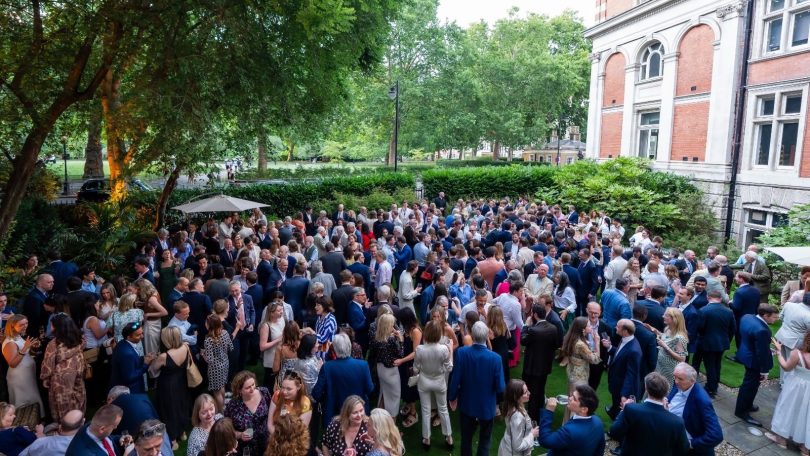
Critics have to reckon with an inescapable fact, though: none of this has cost the magazine readers. Two decades into its anti-Muslim coverage, the Spectator remains one of Britain’s best-selling and most influential political magazines, and its annual summer party remains a fixture for the same “political and media class” Oborne derided at the report launch.
There seems to be a capture of the magazine and its writers by identitarian far-right political grievance whose relationship to Muslim and Islam is closer to a crusade than genuine inquiry
Muslims, reading coverage those guests have evidently found so easy to digest, might reasonably ask the same question of those that have succumbed to its trajectory of what Warsi described as turning “the Right of politics into the Far-Right of politics”.
For most of its 197 years, the Spectator’s claim to relevance rested on standing against a complacent establishment and speaking for people it was inclined to overlook. Mainstream, grassroots, orthodox Muslim communities are, by any reasonable measure, part of a country dealing with the same economic strain and fraying trust in politics as everyone else not a separate phenomenon to be explained away.
If the Spectator still believes the tradition it marked at 190, that should mean giving space to Muslim voices who can explain, defend or offer solutions to Britain’s real problems, rather than treating Muslims themselves as the problem. CfMM’s report shows it has consistently chosen the latter.
The views expressed in this article belong to the author and do not necessarily reflect the editorial policy of Middle East Eye.