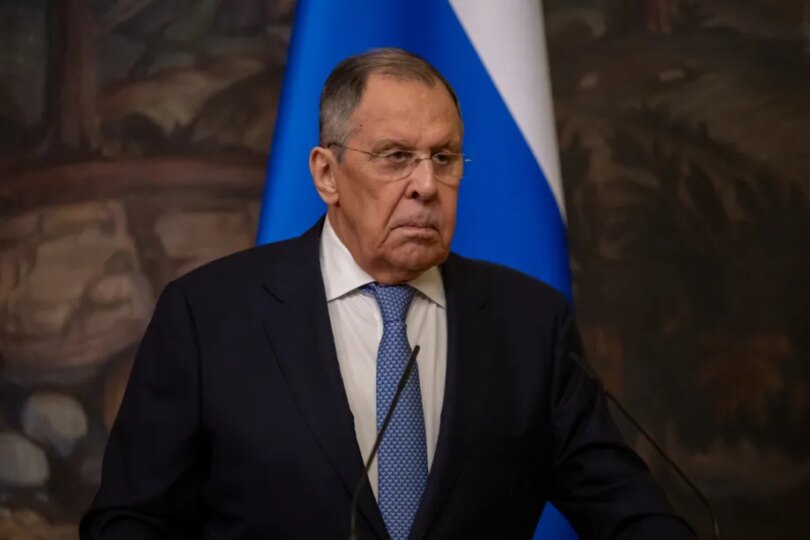
Russian Foreign Minister Sergey Lavrov on Friday said that the potential closure of the Bab el-Mandeb Strait would harm international trade, particularly the global oil market, Anadolu reports.
Responding to a question on the situation in the Middle East and its risks for global security during a joint press conference with his Azerbaijani counterpart Jeyhun Bayramov in Moscow, Lavrov said that Russia had “high hopes” and supported the signing of a memorandum of understanding between the US and Iran.
“Both sides actively praised the document, and at first it seemed that everything would proceed more or less smoothly, but these predictions have not come to pass,” Lavrov said, expressing that both sides accuse each other of violations and missile exchanges; therefore, “security risks remain” in the region.
Lavrov said that Russia has been calling for a swift ceasefire and a return “to the point where the Strait of Hormuz was completely free, functioning without any problems, without any charges” in its contacts with all parties involved.
“And everything we’re seeing now, with our American colleagues calling for the resumption of free navigation, basically all of this existed before the US and Israeli aggression began. Well, we have to deal with what we have,” Lavrov further said.
Aside from security risks, Lavrov also noted the presence of economic risks, based on the role of the Strait of Hormuz as a “key artery.”
“Moreover, the Houthis have stated that if military action against Iran continues, they could close the Bab el-Mandeb Strait, which borders the Arabian Peninsula on its western shore. That would likely spell trouble for global trade, particularly for oil, but not only oil,” he added.
Regional tensions have escalated over the Strait of Hormuz as the US and Iran continue exchanging attacks despite a Pakistan-brokered memorandum of understanding signed last month to end the conflict and reach a lasting peace agreement.