HAVANA — Just after 11 a.m. on Tuesday, the entire Cuban energy grid collapsed once again. It’s the third time it’s collapsed in little over a week.
That’s catastrophic for everyday Cubans who have to wash their clothes, cook using a hotplate, watch television or, perhaps more importantly than almost any of that, have a fan on to get through the island’s sultry nights.
Cuban Energy Minister Vicente Levy de la O blamed the collapse on the U.S. oil blockade, giving two reasons: First, he said it makes it very difficult for Cuba to import spare parts that are vital to maintain the decrepit, obsolete, largely Soviet-era grid.
Secondly he said that because of the Trump oil blockade, in force ever since January, less fuel is getting through and that with less fuel it’s more difficult to maintain the grid.
What really stands out about the grid collapses is the way that Cubans interpret and experience them.
When the whole national grid began collapsing fairly regularly in 2024, people reacted differently: with indignation, anger and huge frustration and stress.
“When,” people were asking, “will the country manage to get the grid up and running again?”
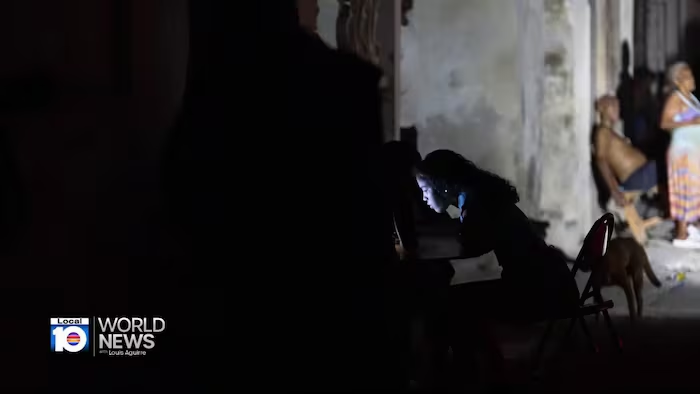
Now, in Havana, it’s a different feeling: Cubans have gotten used to far worse power cuts and people are getting by with as little as two hours of power a day. So when the entire grid goes down, a lot of people don’t notice it.
A lot of people don’t even get messages on their WhatsApp saying that it’s gone down; many just say “¿Que más me da?,“ or, ”How is that going to change my life? I haven’t had power for the last fifty hours anyway.“
Rather than indignation, these days, at least in Havana, the national grid collapses are being met with resignation:
“Without power you have no connectivity,” resident Carlos Borrego said. “Right now, I’m trying to message a client back and I can’t.”
“It’s really complicated because of the heat,” resident Yania Montiel said. “Outside our house, there’s a pile of garbage that’s unbearable and you can’t open a window because of the flies.”
“You can’t buy food to store,” resident Jorge Grey said. “You have to buy what you need daily and every time you go to buy meat it’s three-to-four-thousand pesos and I don’t make that kind of money.”
Resident Carlos Borrego said he can’t afford to run out of hope.
“If I lose hope, I’ll kill myself,” he said. “I’ll hang myself from a tree right now.”
People in Havana are at their wits’ end with the long power outages, and there’s even now scientific data that shows how stressed Cubans are because of these longstanding power cuts.
A recent peer-reviewed article published by two Cuban academics who are experts in mental health, one based in the University of Villa Clara in central Cuba and the other now based in the United States, found that two-thirds of Cubans are now experiencing severe anxiety and stress because of the power outages and because of all of the problems associated with them.
The academics said that when they delivered their results to the journal, its editors said that their psychological findings were so extreme that they align with societies that are going through wars.
One of the things that makes it so difficult for Cubans is that there’s no end in sight.
Copyright 2026 by WPLG Local10.com – All rights reserved.