
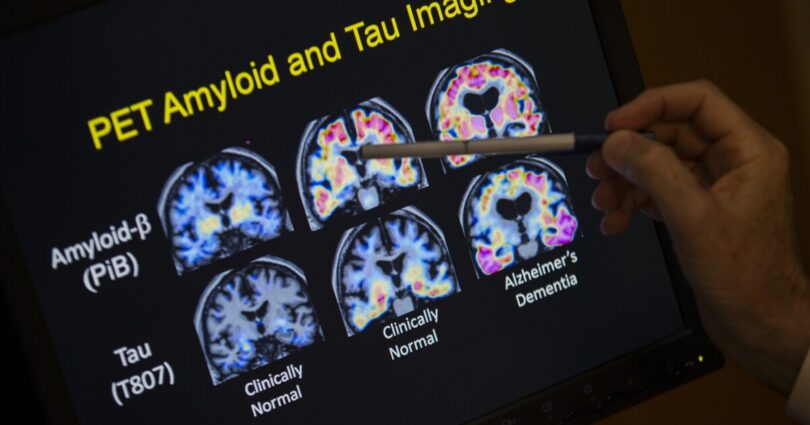
A blood test may be able to predict whether apparently healthy adults are at risk of developing Alzheimer’s disease up to a decade before symptoms appear, according to research presented at the Alzheimer’s Association International Conference in London.
The test, called p-tau217, detects abnormal tau protein fragments in the blood. Researchers say it can predict whether someone is at high risk of developing Alzheimer’s symptoms within five to 10 years.
IN CASE YOU MISSED IT | An experimental Alzheimer’s drug is showing some promise
A team from the Mass General Brigham Neuroscience Institute analyzed data from 2,684 older adults. Those with high levels of p-tau217 had a 38% risk of developing cognitive impairment over five years, rising to 78% over a decade. Those with low levels of p-tau217 had a lower chance of cognitive impairment appearing over a 10-year period.
The p-tau217 test is already used to diagnose whether patients with existing cognitive issues have Alzheimer’s. However, some scientists caution that only a fraction of participants in the study were tracked for the full decade, and the tests are not yet precise enough to provide individual prognoses for patients.
Researchers say predicting a person’s risk of cognitive decline up to a decade before symptoms appear could transform early detection, prevention efforts, and drug development.