More than 800 domestically acquired cases of cyclosporiasis have been confirmed across over 30 US states this year, prompting an ongoing investigation by health officials. While Cyclospora infections have been linked to contaminated fresh produce in past outbreaks, authorities have not yet identified the food responsible for the current surge.
So why has it been so difficult to pinpoint the source?
Experts say the answer lies in the parasite’s long incubation period, the complexity of food supply chains and the challenges of tracing what people ate days or even weeks before they became ill.
Why hasn’t the source been identified?
Unlike many foodborne illnesses that appear within hours or a couple of days, Cyclospora infections often take much longer to develop. According to the US Centers for Disease Control and Prevention (CDC), symptoms usually begin about a week after exposure but can take anywhere from two days to more than two weeks to appear.
That delay makes outbreak investigations especially challenging. By the time someone falls ill, they may struggle to remember exactly what they ate, making it difficult for epidemiologists to identify a common food source.
Also Read: ‘Explosive diarrhea’ causing parasite spreads in US, source still unknown
Jill Roberts, a professor of environmental health biology at the University of South Florida College of Public Health, said investigators rely heavily on interviews with infected individuals to trace outbreaks.
People simply might not remember what they’ve eaten during that time period, Roberts said, making it harder to pinpoint the contaminated food responsible for the illnesses.
Fresh produce is difficult to trace
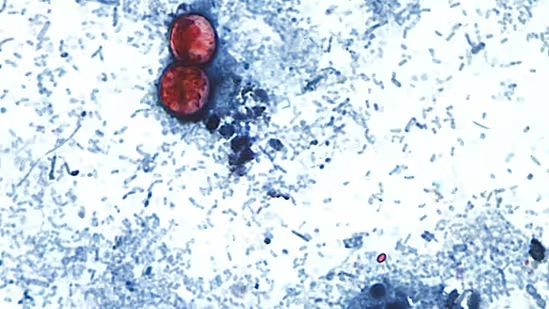
Cyclospora is a microscopic parasite that spreads through food or water contaminated with human feces. In the United States, previous outbreaks have been associated with imported fresh produce such as cilantro, basil, raspberries, snow peas and leafy greens.
However, tracing contaminated produce is rarely straightforward. Fruits and vegetables often pass through multiple growers, processors, distributors and retailers before reaching consumers. By the time cases are reported, the suspected produce may no longer be available for testing, further complicating efforts by the CDC, the US Food and Drug Administration (FDA) and state health departments.
Health officials have also cautioned that there is currently no evidence all reported infections are linked to a single nationwide source.
Investigations remain ongoing to determine whether multiple contaminated products or separate exposure events are contributing to the rise in cases.
Also Read: What is Legionnaires’ disease? Full list of NYC buildings linked to the outbreak, including Guggenheim Museum
Experts point to surveillance challenges
Roberts said early disease surveillance is critical to identifying foodborne outbreaks before they spread widely. She argued that funding cuts which scaled back the CDC’s FoodNet surveillance network have made it more difficult to detect outbreaks quickly, though federal health officials have not linked the current Cyclospora outbreak to those changes.
“When we were able to detect these things fast, we can keep them out of the food systems,” Roberts said, stressing the importance of robust surveillance systems.
What should consumers do?
Health officials recommend washing fresh produce thoroughly under running water, although experts caution that rinsing alone may not completely remove Cyclospora because the parasite can cling to fruits and vegetables.
Cooking food, where possible, is considered the most effective way to kill the parasite.
Anyone experiencing persistent watery diarrhea, dehydration or symptoms lasting several days should seek medical attention, particularly older adults, young children and people with weakened immune systems. Meanwhile, the CDC, FDA and state health departments continue working to determine the source of the outbreak.