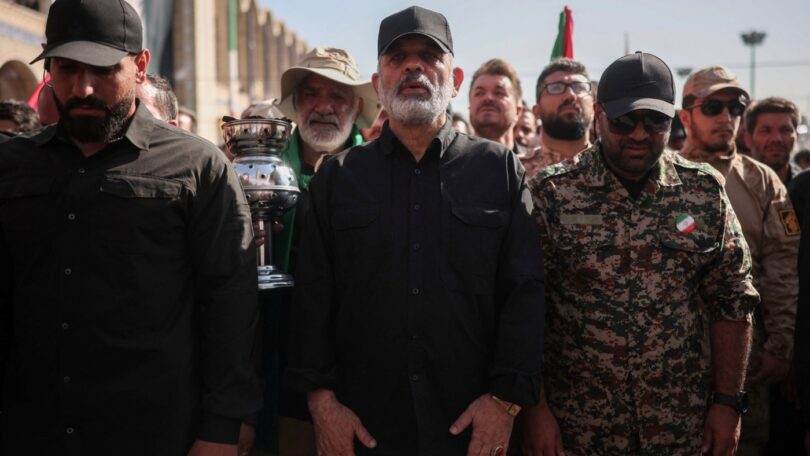
The UK is designating Iran’s Islamic Revolutionary Guard Corps (IRGC) a threat to national security under the controversial National Security (State Threats) bill enacted last week.
UK Home Secretary Shabana Mahmood will use the new legislation to ban support for the IRGC, which is part of Iran’s armed forces.
This effectively means that the UK has proscribed – or banned – the IRGC, which it accuses of death threats and other forms of intimidation on British soil.
In a written statement to parliament, Mahmood set out how support for the IRGC, from expressing a positive opinion to assisting them, will now be an offence punishable by up to 14 years in British prison.
The UK is also using the new bill to target Harakat Ashab al-Yamin al-Islamiya (Hayi), an allegedly pro-Iranian group that has been accused of carrying out antisemitic attacks in the UK; and the volunteer wing of Russia’s foreign military intelligence agency, GRU.
CLICK FOLLOW: TO FOLLOW US
Sign up to get the latest insights and analysis on
Israel-Palestine, alongside Turkey Unpacked and other eSPORTY
While the UK did not officially join the US-Israeli war on Iran, it has let the US use British bases to launch strikes on Iran.
State threats legislation
Keir Starmer, Britain’s outgoing prime minister, promised to fast-track the State Threats bill in April, and draft regulations for proscription can now be laid before parliament.
The bill hands Mahmood sweeping powers to designate as a threat any state-backed organisation she deems to be prejudicial to the UK’s “safety and interests”
The legislation criminalises people who “support, assist and obtain material benefits” – including information – from groups deemed to be terrorist organisations.
Independent reviewers of terrorism legislation have warned that the bill’s vague wording risks criminalising journalists and NGO workers engaging with a designated organisation and could lead to them incurring sentences of up to 14 years.
‘We just disappeared’: Palestine Action defendant recalls ‘horrifying’ arrest
Read More »
“The Islamic Revolutionary Guard Corps is a central component of the Iranian state’s security apparatus, answerable directly to Iran’s Supreme Leader,” Home Office minister Angela Eagle said in a statement.
“Its role extends far beyond that of a conventional military force. It encompasses intelligence activity, the use of proxy actors, and the projection of influence designed to advance Iranian state objectives.”
Announcing the new powers, Keir Starmer said: “We will never let Britain be a playground for states who want to spread fear, division and violence on our streets.
“We have already taken tough action against the Iranian regime and those linked to it, and against Russian operatives and networks targeting our country.
“These new powers will make it easier to prosecute and lock up anyone carrying out their dirty work here in Britain.”
Middle East Eye has contacted the Home Office for comment and for clarity on how the effective proscription of the IRGC will work in practice.