A West Australian primary school has come under fire after an email to parents suggested girls bring board games to school while boys took part in a football clinic.
Eaton Primary School, in Bunbury, sent the message to parents of Year 4 students ahead of a football clinic held during NAIDOC Week.
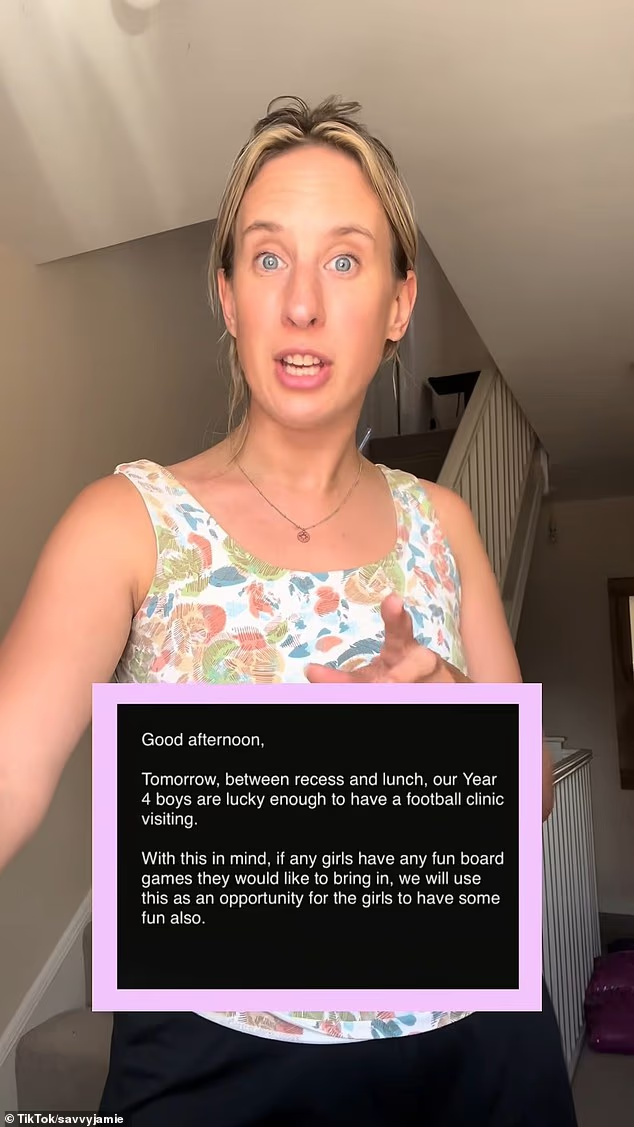
‘Between recess and lunch, our Year 4 boys are lucky enough to have a football clinic visiting,’ the email read.
‘With this in mind, if any girls have any fun board games they would like to bring in, we will use this as an opportunity for the girls to have some fun also.’
After a screenshot of the email spread across social media, many questioned why the sporting activity was not offered to all students regardless of gender.
Parents, teachers and former students shared stories of girls who play football competitively and boys who would have preferred quieter activities such as board games, ballet or theatre.
British TikTok creator Savvy Jamie highlighted the message that had been sent to parents

Eaton Primary School has faced backlash for offering football clinics to boys, but not to girls
‘My 8 year old daughter would also pick football! Should be open to everyone! Personally, I’d choose board games,’ one parent wrote.
Another commented: ‘Why wouldn’t they let the children choose what they’d like to do? Some girls like football, some boys don’t! Gender stereotypes need to get in the bin and disappointing to see a school perpetuate these.’
A third added: ‘They should all get the equal choice!!’
Others pointed out the issue worked both ways.
‘My 7yr old boy just did his ballet exam,’ one parent wrote.
Another said: ‘My son would way rather play board games for sure.’
A former student recalled being forced into activities based on gender.
‘Back in secondary school the girls had to dance and the boys had to play football and we had no choice,’ they wrote.

A host of parents have taken to social media to say football clinics should be offered to all students, regardless of gender
Several commenters shared stories of daughters who now play football at a high level.
‘My 20-year-old daughter got told multiple times at primary school that she couldn’t play football. Of all the kids that went to that school she’s the only kid that got scouted,’ one woman said.
Another added: ‘My 16 year old daughter has been playing football for the last 8 years, best thing she ever done!! I encourage any girl to play the sport.’
Some commenters argued the simplest solution was to let children decide for themselves.
‘How about we let the kids decide what they want to do!!’ one person wrote.
The controversy gathered pace after British TikTok creator Savvy Jamie, who posts about parenting and family life, shared the email with her followers, saying it illustrated how gender stereotypes still shaped children’s experiences at school.
‘Some boys would much rather play board games than play football, and some girls would absolutely be raging that they had to sit and play board games,’ she said.
Jamie then tested the theory on her own children, with her nine-year-old daughter saying she would prefer to play football, while her five-year-old son said he would rather use the time to play board games.
She later clarified in the comments that the incident did not involve her own family, writing: ‘Just to be clear – this is not my children’s school, it’s been in the media.’
The school later clarified the football clinic had been delivered by the Clontarf Foundation as part of its NAIDOC Week celebrations for some Year 4 and Year 5 boys.
The Clontarf Foundation uses sport to improve education, life skills and employment prospects for Indigenous boys.
Following the backlash, WA Education Minister Sabine Winton said she expected public schools to provide equal opportunities for girls and boys.
‘It is my expectation that WA public schools provide the same opportunities to both girls and boys – whether that is in the classroom or on the sporting field,’ she said.
‘I strongly encourage the school to ensure they provide an opportunity for Eaton Primary School girls to participate in a similar clinic.’
A Department of Education spokesperson confirmed the girls had not been overlooked and said a separate sports clinic had already been planned.
‘Throughout the year, Eaton Primary School students are provided with a range of opportunities to build positive self-esteem, develop confidence, and encourage strong engagement in education,’ the spokesperson said.
‘The school has planned a girls’ sports clinic for the second half of this year.’